
Where should you take your first pitch when raising in New Zealand: the biggest investor network, the nearest club, or the group that knows your sector? Those aren't always the same place. A long list of names won't help much if you're knocking on the wrong door.
Start with the right angels, not the longest email list. National investment organisations can offer wider connections. Regional clubs can bring local knowledge and hands-on support. Mission-focused groups give eligible founders a more targeted route.
For founders searching for angel investors NZ offers several distinct channels, each with its own process and trade-offs. The networks below are worth considering based on your location, product and next funding milestone, not as a league table.
Before you pitch, make sure an angel round suits the business. This guide to crowdfunding versus angel rounds for founders can help you weigh a broad campaign against a smaller group of involved shareholders. Then pick a clear entry point.
Best for Kiwi-founded technology businesses seeking a national investment pathway. Icehouse Ventures has roots in Ice Angels, which it describes as New Zealand's first angel network. Its broader venture operation means founders should distinguish between access to an investor network and investment from a particular fund.
Icehouse Ventures describes a network of more than 3,000 co-investors, with investment activity spanning early-stage companies through later growth. Its remit includes SaaS, deep tech, agritech and medtech, making it relevant beyond a narrow software niche.
Use the organisation's raise-capital channel with a concise account of your product, customers and funding need. Explain what this round will prove and why that proof should make the next round easier.
For a SaaS founder, that might mean stronger customer retention or a repeatable sales process. A medtech founder may need to explain technical validation and the route to market instead. The ambition can be large; the next step needs to be concrete.
Use this guide to seed funding in New Zealand to sharpen your funding-stage assumptions before making contact. A large network isn't a promise of a large cheque.
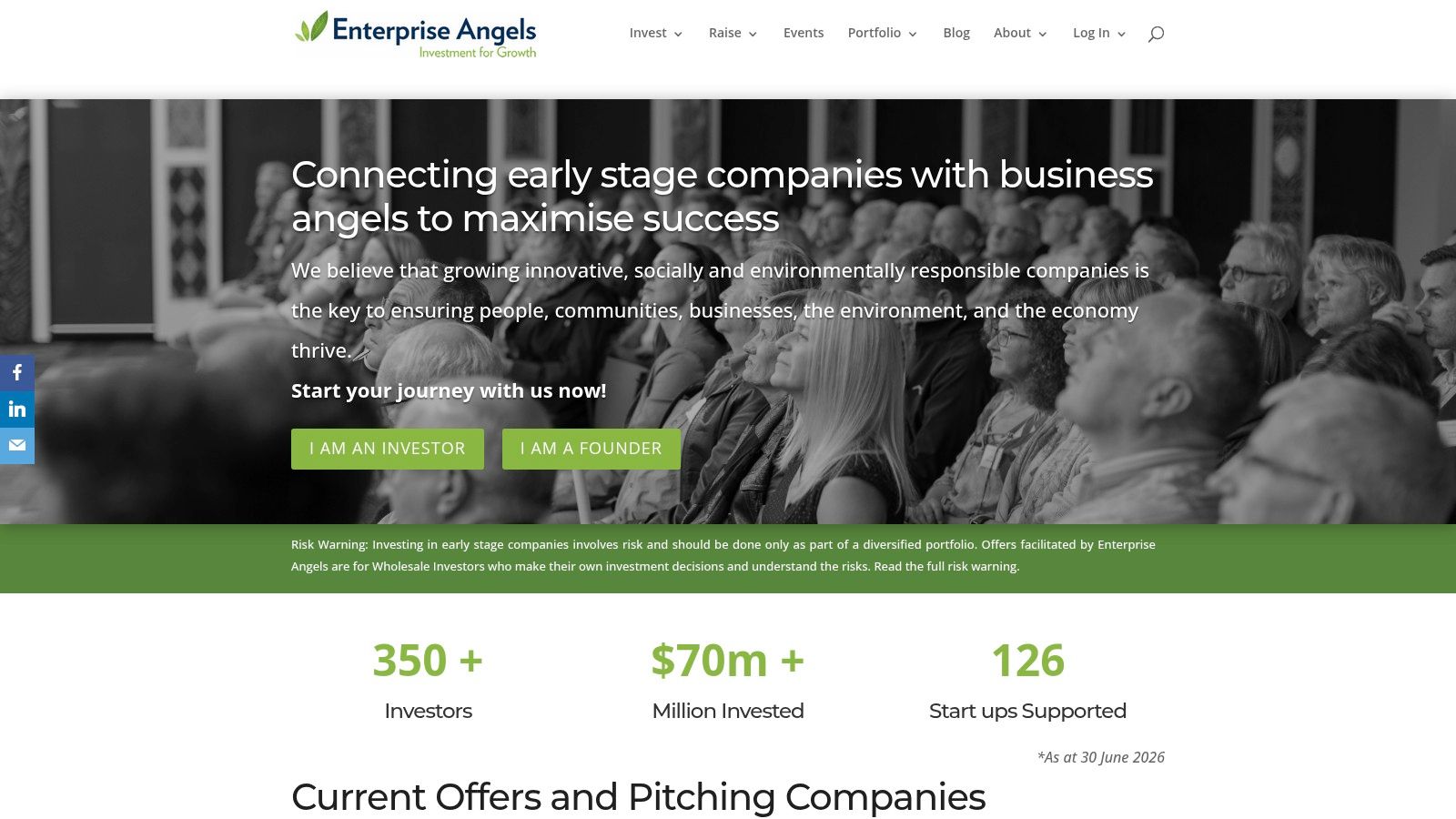
A founder who wants a staffed process, rather than a loose chain of introductions, should consider Enterprise Angels. Based in Tauranga, it connects early-stage companies with investors through screening and due diligence.
Enterprise Angels reports more than 350 investors, over NZ$70 million invested and 126 startups supported as at 30 June 2026. Those figures describe its reported network history, not the amount available for your round.
Its structure can suit founders who want investor expertise, mentoring or governance support alongside cash. Investors may also participate through fund structures or, when available, secondary share sales. Those are different routes, so don't assume every offer reaches the same investor pool.
Prepare a clear deck, then make sure the supporting material tells the same story. Your revenue figures, cap table, financial model and use of funds shouldn't require a diplomatic summit to reconcile.
The pitch deck template is a useful starting point for organising that story. Keep the main pitch readable, with detailed evidence ready for due diligence.
Practical rule: Treat screening as the start of an investment decision, not an admin hurdle before the money arrives.
The trade-off is process and eligibility. Facilitated investment offers are for eligible wholesale investors, membership or administration charges may apply, and applying doesn't guarantee interest. Ask which costs apply to the founder, which apply to investors, and who owns the next step.
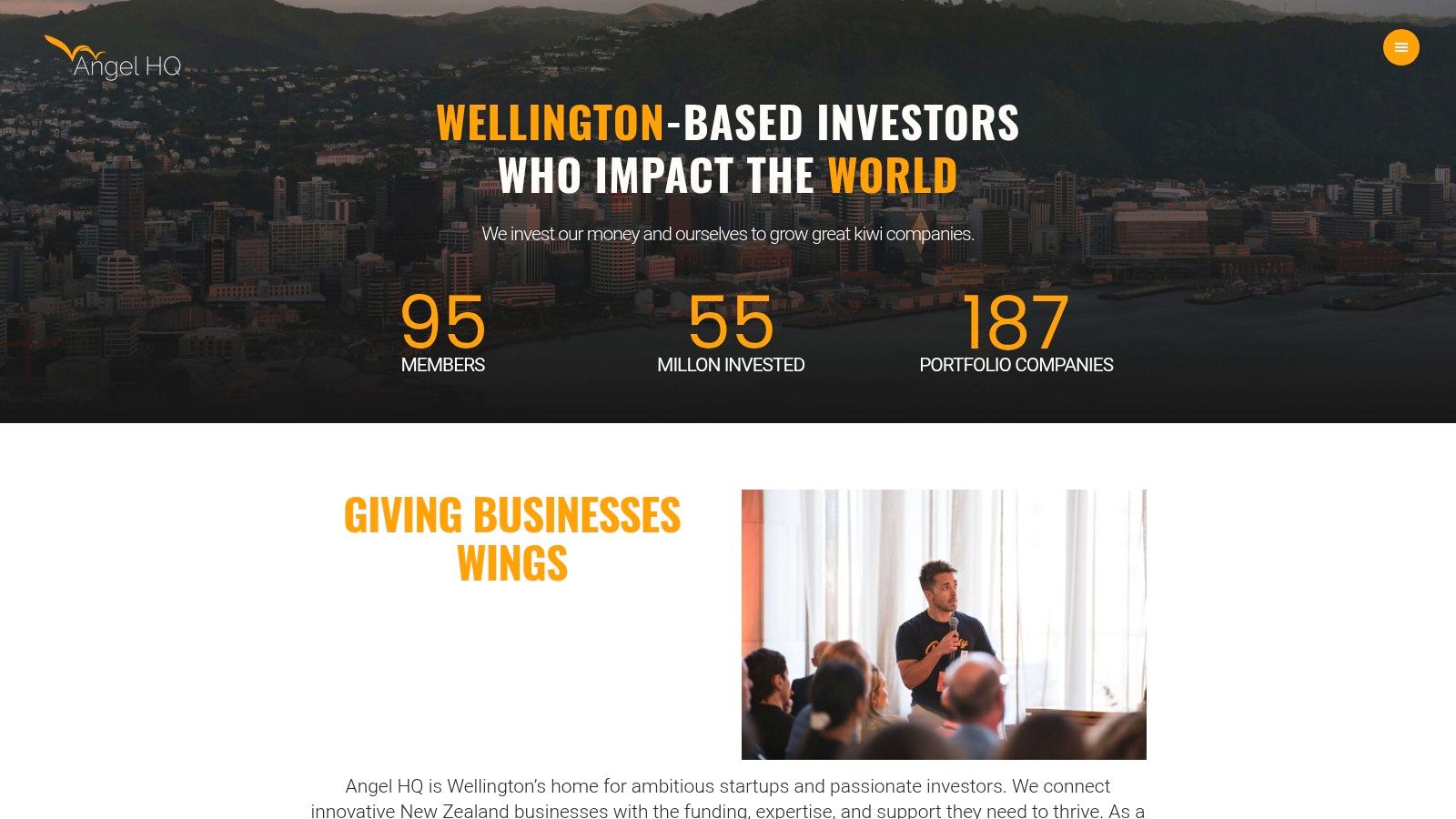
Wellington and lower North Island founders have a direct regional starting point in Angel HQ. Local access matters when you want investors who can meet the team, understand nearby industries and make useful introductions.
Angel HQ says its club has backed more than 180 companies. It provides separate pathways for founders and investors, while members can contribute industry knowledge, connections and advice.
That combination makes it worth considering when you want engaged shareholders rather than capital alone. Still, local proximity isn't investment fit. A Wellington address won't rescue a weak customer case.
Enter through the founder pathway and explain why Angel HQ makes sense for your business. Name the kind of help you need beyond funding, such as enterprise sales advice, sector contacts or board experience.
The main advantage is a regional community with an established portfolio history. The limitation is the same regional focus: founders elsewhere may have a stronger first approach closer to home.
Don't confuse an interested member with a committed round. Ask who will coordinate the deal, what needs checking and when members decide whether to participate.
Not every founder needs to pitch for money straight away. Sometimes the useful first move is to have someone pull apart the weak bit of the plan before you present it to investors.
Flying Kiwi Angels supports New Zealand startups through advice, connections and potential funding. Its public updates describe founder pitches, due-diligence discussions and co-investment with other New Zealand angel groups.
Its ADI Clinic gives founders a route to early feedback. That makes it a useful channel for a team with a product and a real problem, but an investment story that still needs work.
Use an advice session to test a specific issue. Perhaps buyers like the demo but won't commit, or your funding request doesn't quite match the milestone you've set.
Bring the relevant evidence and ask a direct question. You'll get more from a focused discussion than from racing through every slide while everyone watches the clock.
An advice session is a chance to improve the business case. It isn't a quiet promise to invest.
Flying Kiwi Angels' collaborative approach may also help a suitable raise reach other local investors. But standard cheque sizes aren't published, and neither a clinic nor a pitch guarantees a funding outcome.
Its informal style may appeal to founders who want frank discussion. If you need a highly formal process, clarify the steps, decision-makers and expected communication before committing your fundraising calendar.
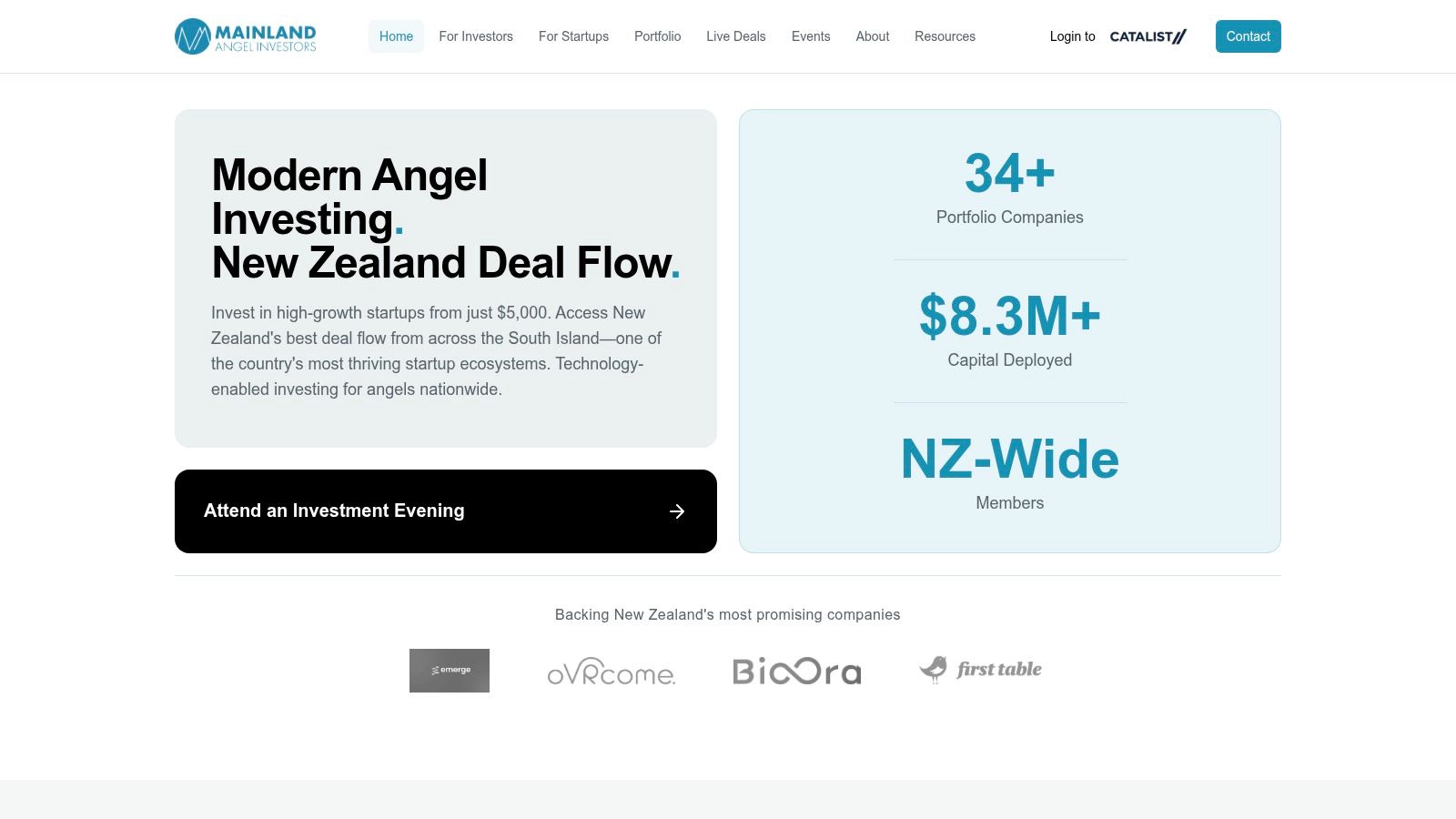
For South Island founders, Mainland Angel Investors offers a regional deal-flow channel with wider investor reach. It accepts investors nationally and internationally, with digital deal rooms, online screening, portfolio tools and hybrid events.
Mainland Angel Investors describes an application, screening, pitching and due-diligence process that typically takes 8–12 weeks. That's useful planning guidance, not a guaranteed closing date.
Its stated interests include technology, AI and machine learning, agritech, health tech, biotech and fintech. For founders outside the main centres, hybrid participation can help reduce the need to make every conversation an in-person trip.
The published NZ$5,000 minimum is per investor, subject to eligibility, not a promised startup cheque size, according to Mainland Angel Investors' website. Build your round around likely aggregate commitments, not the smallest amount an individual member can invest.
For an AI business, explain what customers pay for and what protects the product beyond access to the same models everyone else can use. For agritech, spell out testing conditions and the path from trial to purchase.
Plan cash flow around uncertainty. Don't make payroll depend on a process finishing at the earliest suggested date.
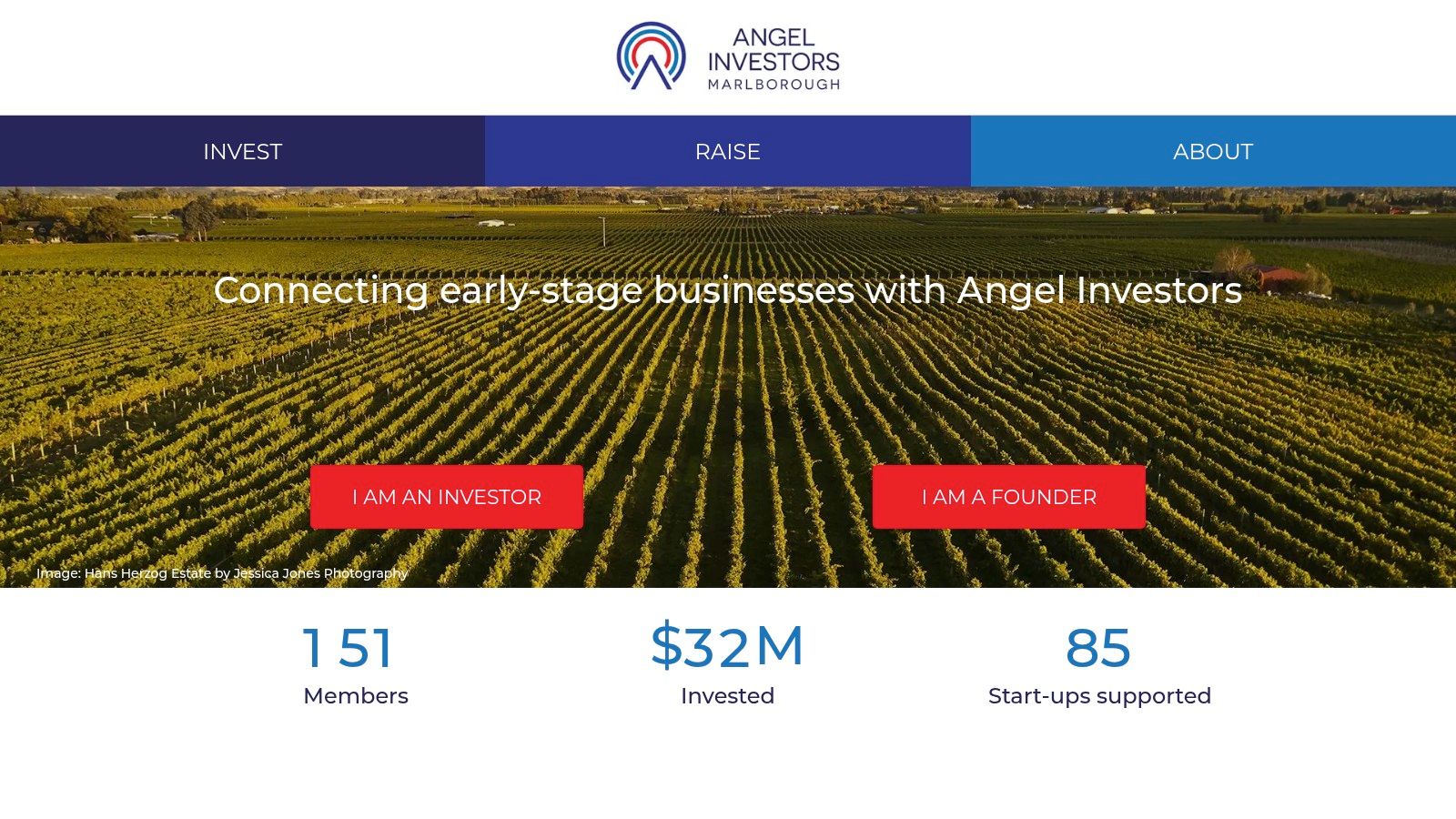
A regional investor can be useful because they understand the customer, not just because they live nearby. That's the case to test with Angel Investors Marlborough, particularly for businesses rooted in Marlborough and surrounding regions.
Angel Investors Marlborough was founded in 2017 and brings together wholesale investors and allied business professionals. It connects entrepreneurs with early-stage investors and offers education and deal-learning activities within New Zealand's wider angel community.
For an agriculture, climate or regional innovation venture, local knowledge may help investors assess the commercial problem. That doesn't mean AIM has a guaranteed sector mandate or will fund every locally relevant idea.
Say you've built software for agricultural operators. Explain who uses it, who signs the purchase order and what must happen before they buy. A clever demo is useful, but it doesn't replace a buying process.
Use AIM's published meeting information to understand the current contact route. Then send a short introduction that explains the regional connection and your funding purpose.
Worth testing: Can this investor community help you reach buyers or assess industry risk, as well as provide capital?
AIM's strength is access to regional relationships and business knowledge. Its limits are practical: a standard founder-facing cheque range isn't published, investor eligibility requirements apply, and member interest will determine participation.
If your business has little connection to the region, a national or specialist channel may be a better first call. Local relevance should be genuine, not a thin coat of Marlborough paint on the deck.
Leadership fit comes before geography at ArcAngels. Its national, member-based focus is on early-stage businesses led or managed by women, rather than startups from a single city.
ArcAngels is listed by NZGCP as a funding resource for women founders. That targeted remit gives eligible businesses a clear reason to investigate it alongside generalist angel groups.
For a founder, the potential benefit is an investor community focused on women-led businesses and familiar with the funding barriers they can face. The trade-off is narrower eligibility, while current cheque sizes and investment timelines aren't readily specified.
Enquire directly about current criteria, investment activity and the founder submission process. Establish what led or managed by women means for eligibility before building your fundraising schedule around the group.
Then make the commercial case with the same rigour you'd bring anywhere else. Show customer demand, margins, product defensibility and the milestone this round should fund.
Don't treat mission fit as a substitute for investment fit. Both need to work.
Ask about follow-on participation too. A supportive first conversation matters, but you also need to understand how members assess later rounds and whether they can introduce other investors when the business needs more capital.
| Network | Base / Region | Investment focus | Notable strength |
|---|---|---|---|
| Icehouse Ventures / Ice Angels | New Zealand | Kiwi-founded technology companies, from early stage to growth | Network of more than 3,000 with potential co-investment and follow-on pathways |
| Enterprise Angels | Tauranga, New Zealand | Early-stage companies | Structured screening and due diligence through an established investor network |
| Angel HQ | Wellington and lower North Island | New Zealand businesses seeking funding and support | Regional connections combined with investor expertise and advice |
| Flying Kiwi Angels | New Zealand | Startups seeking advice, connections and potential funding | Pitch feedback and reported co-investment with other angel groups |
| Mainland Angel Investors | South Island, with wider investor reach | Technology, AI/ML, agritech, health tech, biotech and fintech | Digital deal tools and a published founder process |
| Angel Investors Marlborough (AIM) | Marlborough and nearby regions | Early-stage ventures, including regional innovation | Local investor relationships and connection to the wider angel community |
| ArcAngels | New Zealand | Early-stage businesses led or managed by women | Targeted investor community for women founders |
Choose your opening channel by region, stage and the help you need. A Wellington founder seeking engaged local investors might start with Angel HQ. A South Island team may find Mainland's process useful, while a founder still testing the pitch could benefit from Flying Kiwi Angels' advice route.
For a broader technology raise, investigate Icehouse Ventures. Enterprise Angels offers a staffed screening pathway, AIM brings a regional community, and ArcAngels provides a targeted route for eligible women-led businesses. None is automatically the best choice for every company.
Capital today doesn't guarantee support tomorrow. The Catalist NZ Angel Market Report FY25 records NZ$8,244,186 in follow-on funding, which shows that backing existing portfolio companies remains a meaningful part of angel activity.
Ask how members decide on later investments, whether they reserve capital and what milestones they expect. Also clarify pro-rata rights, cheque-size limits and who might lead a future raise. These are commercial questions, not signs that you lack confidence.
Choose a clear entry point, keep one current set of documents, and record the next agreed action after each conversation.
You can browse investor contacts by sector to extend your search, but use a contact list to find fit, not to launch an email confetti cannon. Coordinate approaches where networks share deals, and keep your funding terms consistent.
Build visibility alongside those private conversations. We cover the New Zealand and Australian tech sector, and companies can list or feature their business in our directory while they work on a raise. That supports discovery, but it doesn't replace customer proof, investor diligence or a sound funding plan.
We publish independent coverage of app companies, SaaS tools and AI startups across New Zealand and Australia. Visit NZ Apps to explore founder resources and add or feature your company in our directory, so founders and operators can discover your business alongside your fundraising work.
Add your NZ or Australian app or tech company to the NZ Apps directory and get discovered by founders and operators across the region.
Get ListedReach tech decision-makers across New Zealand and Australia. Sponsored and dofollow editorial links, permanent featured listings, and sponsored articles on a DA30+ .co.nz domain.
See Options