
Which chatbot builder fits your next stage, not just your current experiment? A startup may need a fast web widget that captures leads. A regulated organisation may need regional hosting, audit controls, voice support, or careful handoffs to people. Those are different buying decisions, even when both products are called chatbot builders.
This list compares ten distinct routes, from social-first automation and no-code lead capture to enterprise conversational AI and a New Zealand-founded provider. Each entry looks at core features, pricing approach where supplied, integrations and channels, the best fit, practical limits, regional considerations, and one implementation point. The aim isn't to crown one universal winner. It's to help founders and operators avoid buying a platform whose machinery is far larger than the job.
New Zealand businesses are already using conversational AI widely. A 2026 Datacom AI Index survey found AI adoption reached 91% of NZ businesses, yet only 4% said AI was transforming core operations, down from 8% the year before. 15% were scaling AI across the organisation, while 68% relied on general-purpose assistants such as ChatGPT, Gemini, and Claude, according to Datacom adoption reporting. The opportunity is practical deployment, not another novelty bot.
NZ Apps helps founders and operators research technology providers across New Zealand and Australia. That local lens matters when data location, support coverage, procurement, and regional channel habits affect the decision. For the technical side, this chatbot integration guide is a useful companion.
Intercom makes the most sense when customer support already sits close to the product. Its Fin AI Agent works with the Intercom helpdesk or can sit on top of another helpdesk, while the wider platform provides a shared inbox, help centre, visual Workflows, proactive messaging, and SDK and API endpoints. For a product-led SaaS company, that combination removes a common source of friction: keeping the bot, knowledge base, and human queue in separate systems.
Fin uses outcome-based pricing, with caps per conversation. That makes the commercial model easier to forecast than an opaque bundle of model calls, though costs can rise when the bot hands conversations to people often or fails to resolve the first question. Intercom also offers configurable hosting regions, including Australia, which gives ANZ buyers a useful data-location option. Confirm the exact storage path for every feature, though. Some advanced external-action connectors may remain limited to US regions.
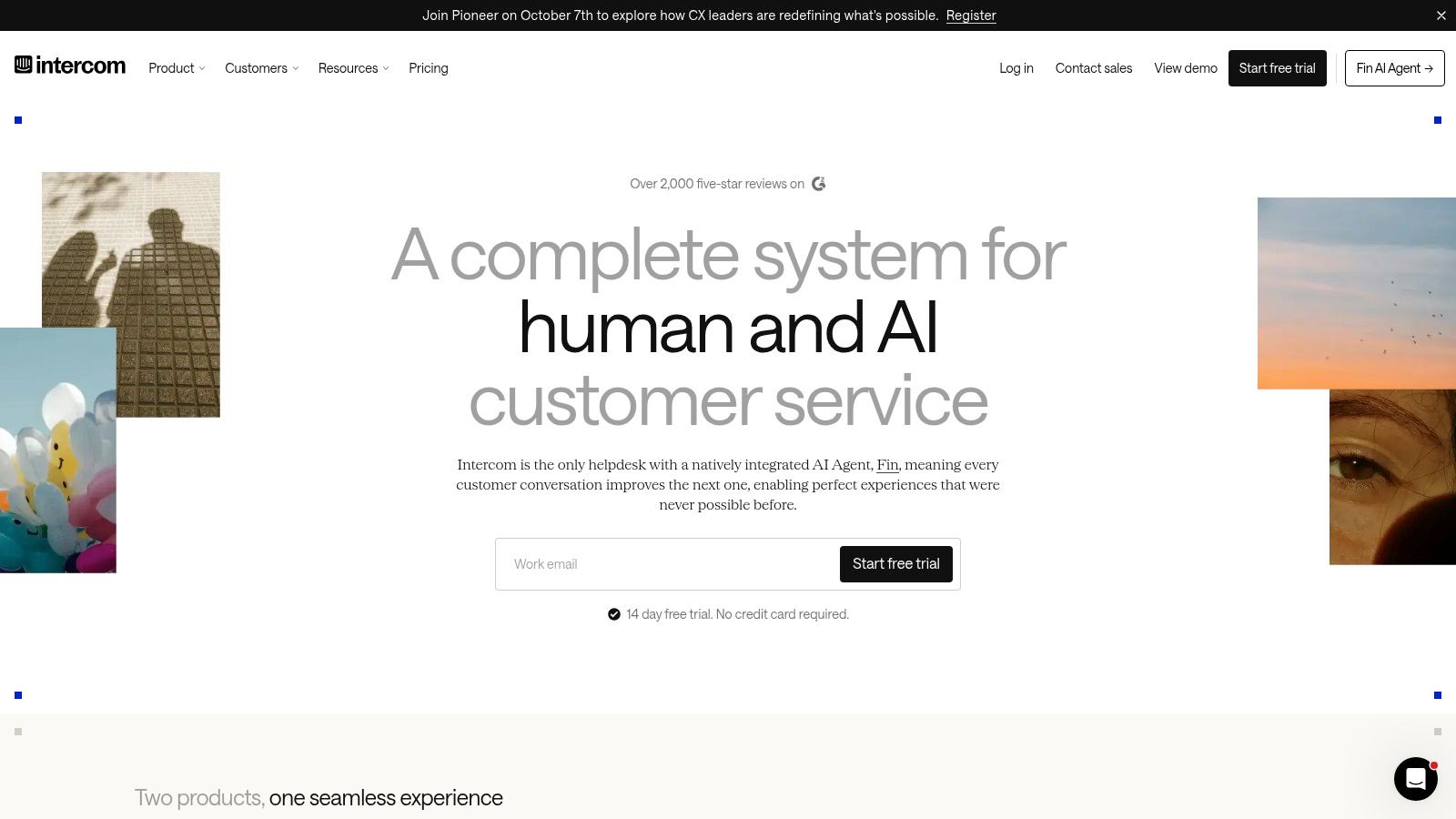
The platform is strongest when the bot needs to answer product questions, guide onboarding, surface help content, and pass a difficult case to a support agent with context intact. Teams researching AI customer service tools for NZ businesses should examine that handoff closely, rather than judging the widget alone.
Practical rule: Model Fin on both resolved conversations and human handoffs. A low headline fee means little if your support team still carries the same queue.
Intercom can be too much for a small business that only needs a lead form or a simple FAQ flow. It works best when support is a core operating function, not a side task managed from a shared inbox.
Dialogflow CX is the serious engineering choice in this group. Google Cloud built it for complex, multi-turn conversations across text and audio, with support for web experiences, apps, phone systems, and IVR. The flow-based design gives technical teams control over states, routes, conditions, and recovery paths. Its generative features add flexibility, but the structured flow model remains important when a conversation must follow a reliable process.
The platform fits organisations already using Google Cloud, especially those that want IAM, monitoring, quotas, runtime controls, and a mature cloud operating model. Telephony and speech capabilities can simplify the architecture because the team doesn't need to assemble every voice component from separate vendors. APAC regionalisation and Google Cloud data residency options also deserve attention from NZ and Australian buyers. Regional availability can differ by feature, so ask for a written service and data map.
Dialogflow CX isn't a casual no-code tool. A non-technical team may find the concepts and cost structure demanding, particularly as usage spans different SKUs. Teams evaluating natural language processing for NZ products should include someone who understands cloud billing and conversation architecture.
Start with one voice or chat journey. Map intents, entities, failure routes, and escalation rules before building the full service. Otherwise, the visual editor can become a maze of branches that looks impressive but is hard to maintain.
Build note: Treat every flow as a small software system. Give it an owner, test its failure paths, and document what happens when the bot cannot identify intent.
Dialogflow CX is a strong route for voice, regulated workflows, and deep Google integration. It isn't the sensible first purchase for a founder who wants a landing-page bot live this week.
Copilot Studio is a natural fit for organisations that already run on Microsoft 365, Teams, Power Platform, and Azure identity. Its visual builder lets teams create agents, connect Microsoft and third-party systems, publish to web, apps, and social channels, and trigger actions through Power Automate and Dataverse. The appeal is less about the standalone bot and more about the surrounding Microsoft estate.
Security teams can work with familiar controls through Azure AD, while operations teams can manage usage and billing centrally. The catch is the Copilot Credits model. Licensing, credit consumption, premium features, and model choices need active monitoring. A bot that looks inexpensive in a test environment can create an unwelcome bill once employees or customers start using richer actions at length.
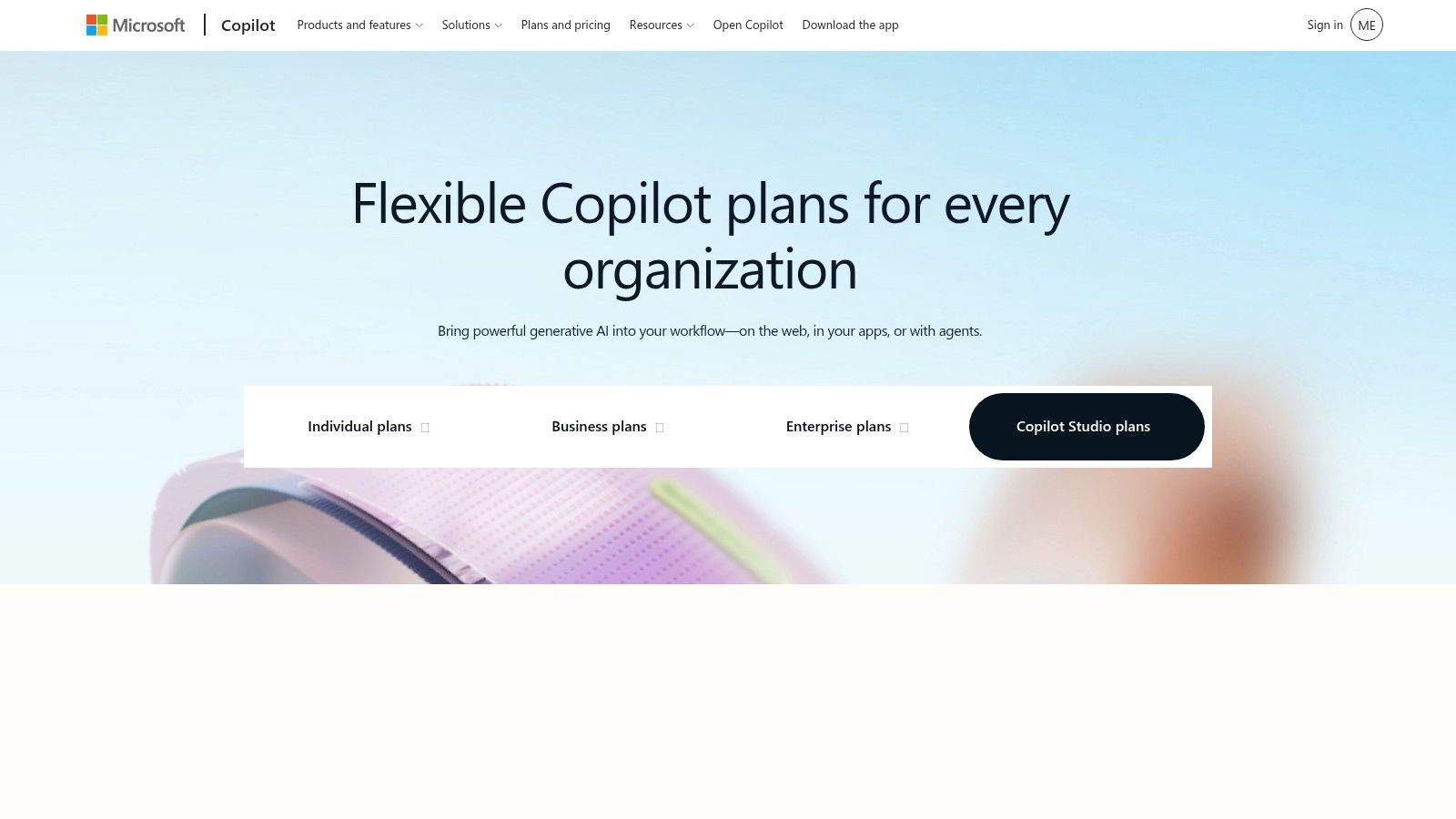
Copilot Studio works well for internal IT, HR, sales operations, and customer workflows that already touch SharePoint, Teams, Dynamics, or Power Automate. It can also help a small team move quickly if someone already knows the Microsoft stack. Without that knowledge, the platform's apparent simplicity can be misleading.
Use admin reporting from the first pilot. Set credit guardrails, restrict premium actions, and separate experiments from production agents. That small bit of discipline prevents a conversational project from becoming a billing puzzle.
Watch the boundary: Low-code doesn't mean low-governance. Decide who can publish an agent, connect a data source, or approve an external action.
For NZ and Australian organisations with Microsoft commitments, Copilot Studio deserves a close look. For a lean startup using neither Microsoft 365 nor Power Platform, its ecosystem advantage may become extra weight.
Botpress takes a modern, AI-first approach with a visual studio, knowledge-base ingestion, vector database support, and a built-in helpdesk called Botpress Desk. That makes it appealing to product teams that want to design the bot, feed it business knowledge, and support human handoffs without stitching together several separate products.
The web chat widget and conversation analytics cover the essentials for a customer-facing deployment. Paid tiers use per-conversation billing, which links spend more closely to activity than a purely seat-based model. Documentation and frequent product changes can help a capable team move quickly, especially when a developer is available to handle the edges.
Botpress's main regional question is hosting. Data is globally distributed by default unless the vendor agrees otherwise, so an NZ or Australian organisation with residency requirements should ask where prompts, documents, transcripts, logs, and backups are processed. Don't treat a general security page as the answer to a specific contract question.
Advanced actions still need developer skills. The visual editor gets a team a long way, but authentication, complex APIs, custom business rules, and careful error handling can pull the project into code.
A good first build is a narrow knowledge assistant with a defined escalation route. Import a controlled set of documents, test ambiguous questions, and inspect unsupported answers before connecting the bot to systems that can change customer records.
Botpress is a useful middle ground. It offers more design freedom than a basic lead-capture tool, without automatically forcing a large enterprise programme. Its fit depends on whether your team can handle the technical work that appears after the demo.
Voiceflow is built around conversation design. Its collaborative canvas helps teams map multi-step tasks, test paths, reuse components, and deploy through web chat or APIs. Agencies, product teams, and service designers often value that visual clarity because conversation logic is easier to discuss when everyone can see the same flow.
The platform supports knowledge bases and reusable components, while channel-agnostic deployment lets a technical team place the experience inside a custom interface. Telephony and social channels are available through partners, but that flexibility brings another responsibility. You must provision and monitor speech-to-text, text-to-speech, and telephony services separately.
Voiceflow shines during discovery and prototyping. A founder can test whether a customer understands a workflow before spending time on a full integration. It also suits agencies that need to show a client how a conversation branches, where a human takes over, and which content the agent uses.
Higher tiers are sales-led, so enterprise buyers need a direct pricing conversation. Ask what counts as usage, how environments are separated, and whether partner channel costs sit outside the platform fee.
“A polished conversation map is not a production integration.”
That distinction matters. Voiceflow can make a complex dialogue easy to understand, but your team still needs to build authentication, API permissions, monitoring, and fallback behaviour. Use it to validate the experience first, then prove the system connections with real data.
For ANZ startups, Voiceflow is attractive when design quality and deployment flexibility matter more than a single bundled helpdesk. It may feel like overkill for a simple WhatsApp campaign, while a team with several channels can find its structure reassuring.
Landbot is one of the clearest choices for a marketing team that needs a web or WhatsApp bot without a long engineering cycle. Its visual builder, templates, shared inbox, and practical sales flows make it easy to create lead qualification, booking, enquiry, and support journeys. Paid plans include A/B testing, while higher tiers add deeper CRM integrations and webhooks.
Pricing is published, with separate treatment for chats and AI chats. That transparency helps a small business plan a pilot and understand overage risk before launch. A WhatsApp automation add-on is available, but it and some integrations sit behind higher plans, so the entry price doesn't tell the whole story.
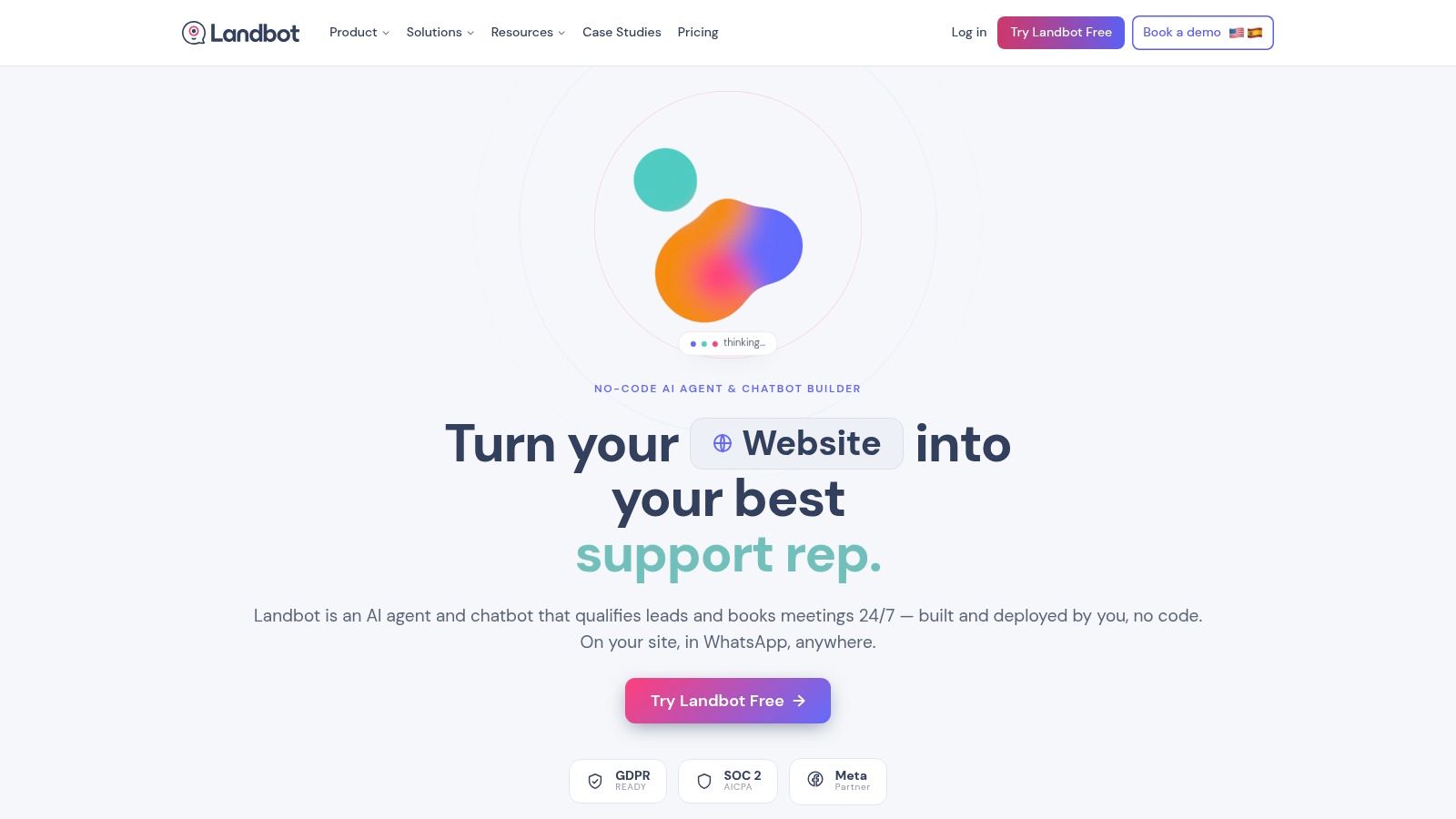
Landbot works best when the conversation has a clear shape. Ask a question, collect information, route a lead, book a meeting, or answer a defined set of enquiries. It becomes less comfortable when the bot must reason across several systems, maintain long context, or take complex actions.
The integration effort is manageable for common CRM and webhook patterns, but custom work still needs technical help. Test your actual CRM fields and failure cases, not only the happy path shown in a template.
Good first use: Build one high-intent landing-page journey, send every uncertain answer to a person, and review the transcripts before adding more branches.
Landbot is a sensible starting point for many NZ and Australian SMEs. It doesn't pretend to be a full contact centre, and that's part of its appeal. A focused tool can beat a grand platform when the job is focused too.
Manychat starts where customers already spend time. It connects social and messaging channels including Instagram, TikTok, Messenger, WhatsApp, SMS, and email, with visual flows for DMs, comments, broadcasts, and segmentation. Ecommerce brands, creators, and growth teams use it to turn social engagement into a guided conversation rather than a trail of manual replies.
The platform includes templates, shared inbox features, role-based permissions on paid tiers, and AI responses for DMs and comments. Tiered pricing uses active-contact allowances and trials, while WhatsApp and SMS bring provider-driven message fees outside the core platform price. Those channel charges can matter more than the subscription if a campaign spreads quickly.
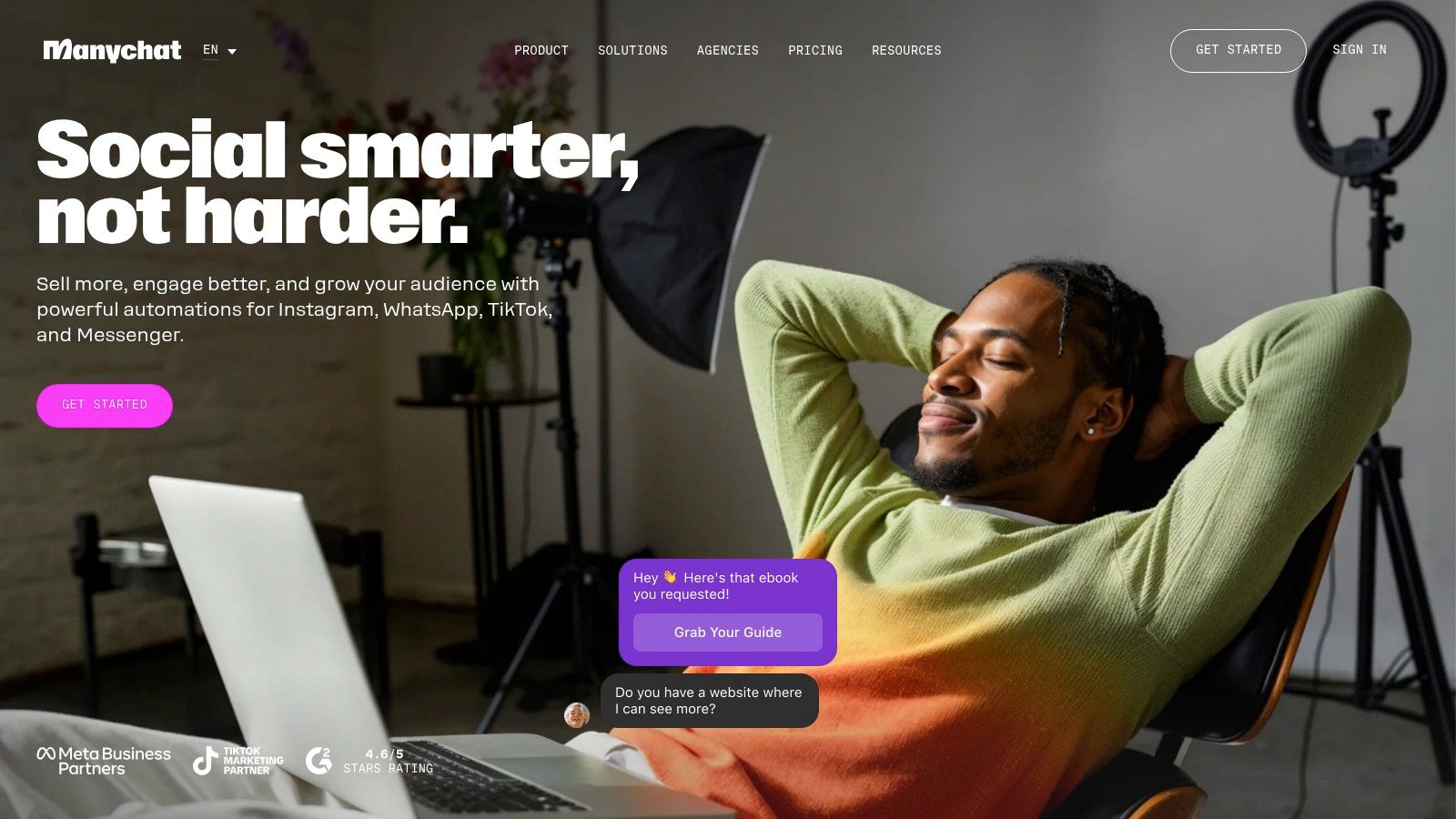
Manychat is excellent for comment-to-DM campaigns, product prompts, event reminders, and lead capture from social posts. It isn't a full helpdesk, and it won't replace a serious case-management system when an issue crosses billing, fulfilment, account access, and compliance.
Plan the human route before launching a broadcast. Who sees replies? Where does a sensitive question go? Can an agent access enough context without searching several systems?
Manychat also suits Australian and NZ businesses that sell through social channels, but channel availability and message rules vary by market and provider. Confirm the exact account, region, and message type during setup.
For a social-first brand, this is often the cleanest path. For an internal assistant or multi-system service agent, it isn't the right tool. Trying to make it one can create a brittle stack of workarounds.
Ada is aimed at organisations that want customer-service automation to resolve issues, not merely answer questions. Its workflows can connect to external systems, while omnichannel coverage spans web, chat, social, and handoffs to voice. Enterprise controls, analytics, professional services, and deployment playbooks support larger programmes where several teams need a shared operating model.
That depth has a price beyond the licence. Ada is quote-only and generally suits mid-market and enterprise organisations rather than small teams with modest ticket volume. Professional services can reduce the burden on an internal team, but they can also make the buying process heavier than a self-serve product trial.
Ada earns consideration for a bank, insurer, utility, telco, airline, or large retailer that needs governance and complex integrations across several service channels. NZ already has examples of large-scale chatbot use. A 2022 report said Tower Insurance's Charlie handled about 10,000 utterances a day, around 2,000 conversations daily, while Air New Zealand's Oscar managed about 2,000 sessions every day, as reported by Scoop's coverage of NZ chatbot deployments.
Those examples show the category can handle operational service demand. They don't mean every SME needs an enterprise platform. Start by estimating your real conversation volume, integration count, and governance burden. If those are small, Ada may become a costly coat of armour.
The right test is not whether Ada can do everything. It can. The test is whether your organisation can operate the parts you need.
IBM's offering suits buyers who need more than a conversational front end. watsonx Assistant handles conversational assistants, while watsonx Orchestrate coordinates workflows and agent activity. Depending on plan and region, IBM provides cloud, hybrid, and sovereign deployment options, along with observability and evaluation features such as trace inspection.
That governance focus matters in regulated sectors and large internal environments. IBM Cloud compliance programmes and the wider services ecosystem can support complex rollouts, especially where the organisation already has IBM skills, procurement relationships, or hybrid infrastructure.
The drawback is weight. Naming and plan changes can confuse smaller buyers, pricing is sales-led, and setup usually takes more planning than a SaaS-first builder. Teams exploring AI business automation in New Zealand should ask not only whether IBM can meet the requirement, but who will own the platform after launch.
IBM becomes attractive when data controls, auditability, workflow coordination, and deployment choice carry more weight than a quick web widget. It can also make sense where a chatbot is one piece of a broader automation programme.
Run a technical discovery before signing. Map identity, document access, logging, model evaluation, human escalation, and the systems the assistant may change. A demo can hide those decisions.
For a small startup, the platform may be far too heavy. For a regulated organisation with a mature technology team, that same seriousness may be the reason to shortlist it.
Ambit brings a local vendor perspective to the comparison. The New Zealand-founded platform combines scripted natural language processing, retrieval-augmented generation, and generative AI. That hybrid design gives teams a way to keep important answers inside controlled flows while using retrieval and generation for broader questions.
The builder integrates with business systems and supports no-code and low-code work. Ambit's contract terms restrict data storage to the EU, UK, Australia, or New Zealand unless agreed otherwise, which is a meaningful point for ANZ buyers who need a clear regional conversation with a vendor. Confirm the exact services, subprocessors, backups, and support access covered by the contract.
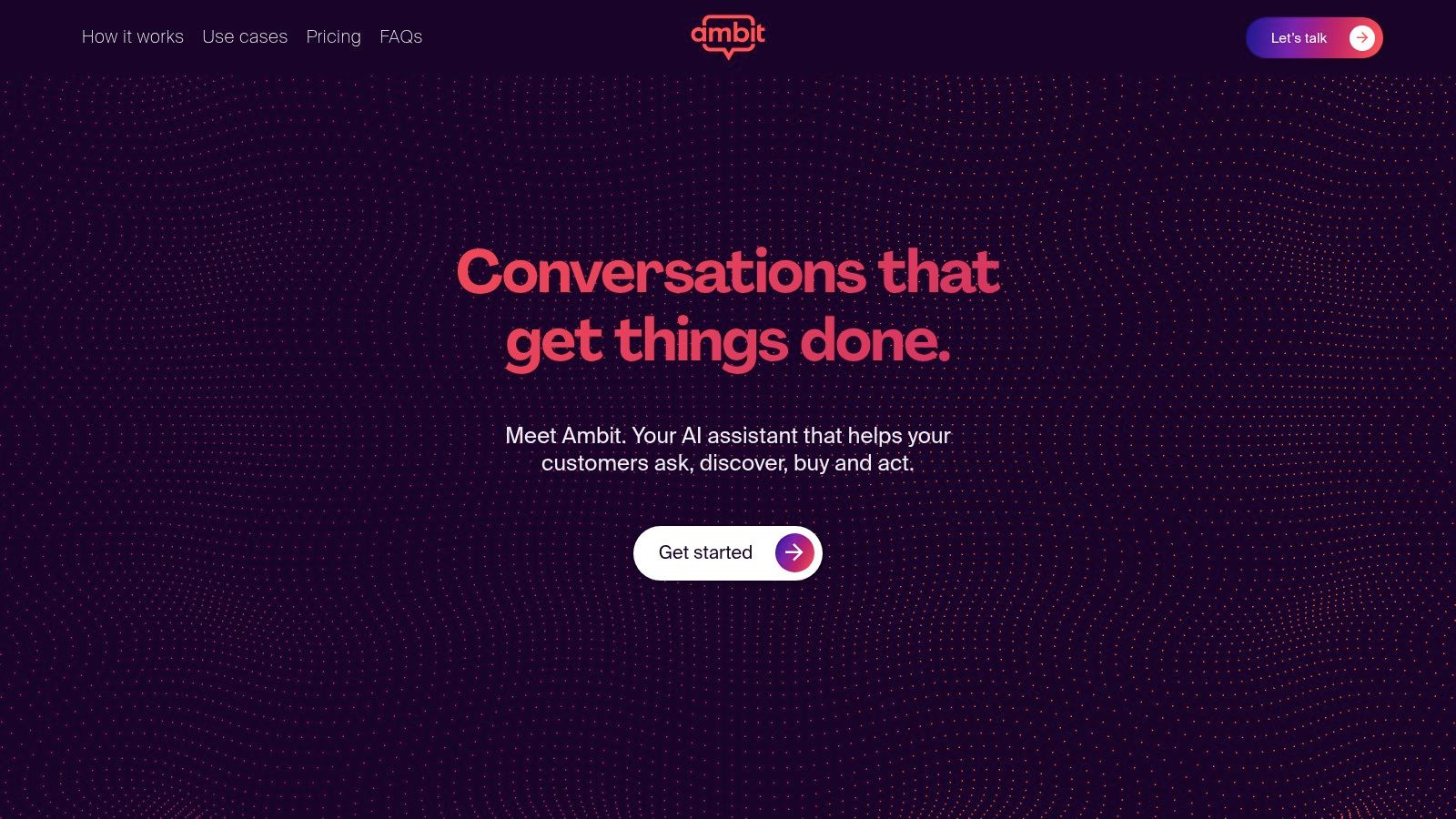
A local provider can make procurement, communication, and industry context easier. Ambit may suit NZ and Australian brands that want a regional relationship and a balanced approach to generative answers. Rule-based controls can reduce the risk of a bot inventing an answer, especially around policies, eligibility, or account processes.
The trade-off is a smaller ecosystem than global platforms such as Google, Microsoft, or IBM. There may be fewer third-party tutorials, connectors, and independent implementation resources. Pricing is quote-based, so ask for a clear scope covering channels, integrations, data handling, support, and changes after launch.
Ambit is worth considering when regional assurance is part of the product requirement, not a nice extra. It won't be the obvious pick for every startup, but that's precisely why local vendor fit deserves a place on the shortlist.
| Platform | Core features ✨ | Quality ★ | Price & Value 💰 | Target & USP 👥 / 🏆 |
|---|---|---|---|---|
| Intercom (with Fin AI Agent) | Fin outcome-based AI, Workflows, shared inbox, configurable hosting region ✨ | ★★★★☆, mature CX stack | 💰 Per-outcome AI; predictable caps but can add up | 👥 Product-led SaaS & scale-ups / 🏆 Native helpdesk + AI, AU hosting |
| Google Dialogflow CX | Flow-based & generative CX, telephony/IVR, GCP regionalisation ✨ | ★★★★☆, enterprise SLA & tooling | 💰 Multiple SKUs; requires careful cost modelling | 👥 Technical teams on GCP / 🏆 Telephony + GCP observability |
| Microsoft Copilot Studio | Low-code visual builder, M365/Teams connectors, Copilot Credits ✨ | ★★★★☆, strong governance & integration | 💰 Usage-based Copilot Credits; nuanced licensing | 👥 Microsoft-standardised orgs / 🏆 Deep M365 & Azure AD fit |
| Botpress | GPT-native visual studio, KB/vector DB, built-in Desk ✨ | ★★★★☆, AI-first with helpdesk | 💰 Outcome/conversation billing on paid tiers | 👥 Product teams & CX orgs / 🏆 Single vendor for bot + helpdesk |
| Voiceflow | Collaborative visual canvas, reusable components, API deploy ✨ | ★★★★☆, excellent prototyping | 💰 Free->paid; enterprise pricing sales-led | 👥 Designers, agencies & product teams / 🏆 Collaboration & prototyping |
| Landbot | No-code web & WhatsApp builder, templates, A/B testing ✨ | ★★★★☆, fast to launch | 💰 Transparent per-chat & AI pricing; predictable | 👥 Marketing, lead-gen, SMBs / 🏆 Clear pricing & quick deployment |
| Manychat | Social-first flows, 60+ templates, DM/comment AI replies ✨ | ★★★★☆, social commerce focused | 💰 Tiered pricing; extra carrier fees for SMS/WhatsApp | 👥 Ecommerce, creators & growth marketers / 🏆 Multi-channel social automation |
| Ada | Resolution-oriented AI, omnichannel, enterprise controls & services ✨ | ★★★★★, proven at scale | 💰 Quote-only; enterprise-targeted | 👥 Large ANZ enterprises / 🏆 Enterprise-grade resolution + services |
| IBM watsonx Assistant / Orchestrate | Assistants + orchestration, trace inspection, hybrid deploy ✨ | ★★★★★, governance & compliance | 💰 Sales-led; heavier setup and licensing | 👥 Regulated sectors & large enterprises / 🏆 Hybrid/sovereign deployment options |
| Ambit (NZ) | No/low-code builder, RAG + scripted flows, ANZ data controls ✨ | ★★★★☆, localised & balanced approach | 💰 Quote-based; vendor-led contracts | 👥 NZ/AU brands & regulated SMEs / 🏆 Local vendor support + ANZ data assurances |
The right chatbot builder starts with the job, not the feature page. Write one sentence that describes the first task the bot must handle: qualify a lead, answer product questions, check an order, resolve a support issue, or route an internal request. If that sentence contains several unrelated jobs, split it. A narrow first release gives you a cleaner test and makes it easier to see whether the platform helps or merely adds another inbox.
Estimate conversation or contact volume before comparing plans. Landbot and Manychat can suit focused marketing and social work, where the channel itself drives the experience. Intercom fits product-led support teams that want an AI agent and human helpdesk in one stack. Botpress and Voiceflow suit teams that need more design flexibility and can handle some technical work.
For deeper technical control, voice, governance, or regional requirements, consider Dialogflow CX, Copilot Studio, Ada, IBM watsonx, or Ambit. That isn't a ranking. Each sits at a different point on the trade-off curve. Dialogflow CX brings strong Google Cloud and telephony foundations. Copilot Studio fits Microsoft estates. Ada targets larger service operations. IBM carries more governance and deployment weight. Ambit offers a New Zealand-founded route with ANZ-focused data-location terms.
Check the parts that vendors often separate from the headline subscription:
New Zealand's service pain makes this operational view especially important. ServiceNow reported that people in New Zealand spent 24 million hours on hold in 2024, while online chat bots resolved issues in 1.4 hours on average, compared with 2.5 hours by phone and 2.8 hours by email. The report also said digital channels were on average 75% faster than phone or email, according to ServiceNow's New Zealand customer experience research. A faster channel only helps when the bot knows its limits and hands off cleanly.
Use real support or lead questions, including typos, vague requests, angry messages, and questions your team wishes customers would ask more clearly. Set escalation rules before launch. Review failed conversations, unsupported intents, abandoned paths, and answers that sounded confident but lacked evidence.
Trust deserves equal weight with convenience. One NZ's 2026 national AI trust report surveyed 1,000 New Zealanders aged 18 and over and reported a plus or minus 3% margin of error, as described in the One NZ AI Trust Report. Adobe's 2025 New Zealand consumer survey found 61% of respondents were increasingly using or wanted to use AI, 75% were excited about agentic AI, and 62% had used AI assistants more than once, based on 1,001 respondents surveyed in February 2025, according to Adobe's New Zealand consumer findings. Familiarity is growing, but users still need disclosure, consent, sensible data handling, and an easy path to a person.
Pilot rule: Launch the smallest useful journey, not the widest possible bot. Reassess costs and failure patterns before you add channels or connect more systems.
Choose the builder that matches your operating capacity. A small team may get more value from a clear web or social workflow than from a powerful agent platform nobody has time to maintain. A regulated organisation may make the opposite choice. The best fit is the one your team can govern, improve, and support after the launch announcement has faded.
NZ Apps helps founders and operators research app and technology providers across New Zealand and Australia, including AI, automation, SaaS, and customer-service tools. Use the directory and regional editorial coverage to compare providers for your next chatbot project, then visit NZ Apps to build a more informed shortlist.
Add your NZ or Australian app or tech company to the NZ Apps directory and get discovered by founders and operators across the region.
Get ListedReach tech decision-makers across New Zealand and Australia. Sponsored and dofollow editorial links, permanent featured listings, and sponsored articles on a DA30+ .co.nz domain.
See Options