
A small Wellington store can lose a ready-to-buy customer with one poor payment choice. The products are in the cart, the delivery address is correct, and then the checkout shows a method the shopper doesn't trust, or hides the bank option they use every day. The tab closes. The sale goes with it.
That's why ecommerce payment platforms deserve more attention than a quick scan of transaction rates. Fees, bank rails, fraud exposure, currency conversion, and settlement timing all shape the result. A New Zealand merchant may need POLi or Online EFTPOS for local bank payments, while an Australian shopper may expect cards, digital wallets, or BNPL. Overseas buyers bring their own habits.
New Zealand has a long electronic-payments history. EFTPOS trials began in 1984, and the Bank of New Zealand introduced merchant terminals through a pilot programme in 1985, according to the Reserve Bank of New Zealand's payment history. Today, local ecommerce sits across cards, wallets, bank payments, and instalments. This list starts with the bank rails many global roundups skip, then matches each provider to the store, stack, and customer mix it can serve. For checkout context, see this practical guide to Quikly conversion strategy.
POLi is a direct bank-payment method for New Zealand shoppers. The customer selects POLi at checkout, chooses their bank, and completes the payment through a familiar banking flow rather than entering card details. That makes it a useful companion to cards, not a replacement for them.
For a domestic NZ store, this can improve the payment mix and reduce exposure to card chargebacks. A push-payment model changes the risk profile because the customer authorises the transfer through their bank. It also avoids making every local shopper route through a card network. The trade-off is visible in the checkout experience. A card or wallet payment can feel faster, and some customers may hesitate if they don't recognise the bank flow.
Practical rule: Keep cards and wallets visible. Add POLi as a clear local option rather than forcing every shopper down one payment path.
POLi works well with plugins or an API beside existing card processing. It's especially relevant for a WooCommerce store, a custom NZ build, or a merchant comparing open banking options in New Zealand. Check the current commercial terms directly through the POLi payments pricing and support page, because fees and bank coverage can change.
POLi's limitation is geography. It's mainly useful for domestic New Zealand payers, so an Australian or international audience still needs cards, wallets, or another local method. Use it when local bank familiarity matters, then measure completed payments separately from card conversion.
Worldline NZ suits merchants that want a local gateway with bank-based payment capability built into the same relationship. Its CLICK gateway handles card processing, while Online EFTPOS lets customers pay through a participating bank app. That gives a merchant one integration with more than one route to payment.
The appeal is less about a flashy checkout and more about local plumbing. Worldline works within New Zealand's banking and payments environment, with developer tools, APIs, and local support. A merchant with a custom storefront can build around that foundation, while a smaller business can use the gateway through an available integration.
Online EFTPOS can reduce reliance on card payments for domestic traffic, but coverage depends on participating banks and customer awareness. A button can exist and still underperform if shoppers don't know what it does. Label it plainly, explain the bank-app handoff, and watch where customers drop out.
A local payment method only helps when customers recognise it at the moment they need to choose.
Worldline is a sensible fit for a growing NZ retailer, a custom WooCommerce build, or a business that needs local acquiring rather than a purely global dashboard. It's less attractive for a merchant that wants a huge international method catalogue from day one. Review the Worldline NZ platform and developer options before committing to the integration path.
The practical question is simple. Do most of your buyers pay from New Zealand bank accounts, and can your team support a more locally focused integration? If yes, Worldline deserves a serious look.
eWAY is a straightforward choice for a New Zealand small or medium-sized business that wants a known gateway and bank alignment. It connects with merchant facilities from ANZ, ASB, BNZ, Westpac, and Kiwibank, which can make the setup feel familiar to an operator already working with one of those banks.
The important distinction is that eWAY generally sits alongside a separate merchant facility. That isn't automatically a problem. Some businesses prefer to keep their acquiring relationship visible and separate from the gateway layer. Others want one provider, one dashboard, and one support queue. The latter group may find an all-in-one platform easier to run.
eWAY also provides fraud protection through Fraud Lite and operates with PCI DSS Level 1 compliance. Its cart plugins make it practical for common ecommerce systems, while larger merchants can use more customized integration options. The platform's strength is steadiness rather than a wide collection of adjacent software tools.
A sensible eWAY setup should answer three operational questions before launch:
For a local store with conventional products, NZ customers, and a bank relationship already in place, that clarity can be more valuable than a long feature list. Review the eWAY NZ gateway services and ask for the complete fee schedule, not only the processing headline.
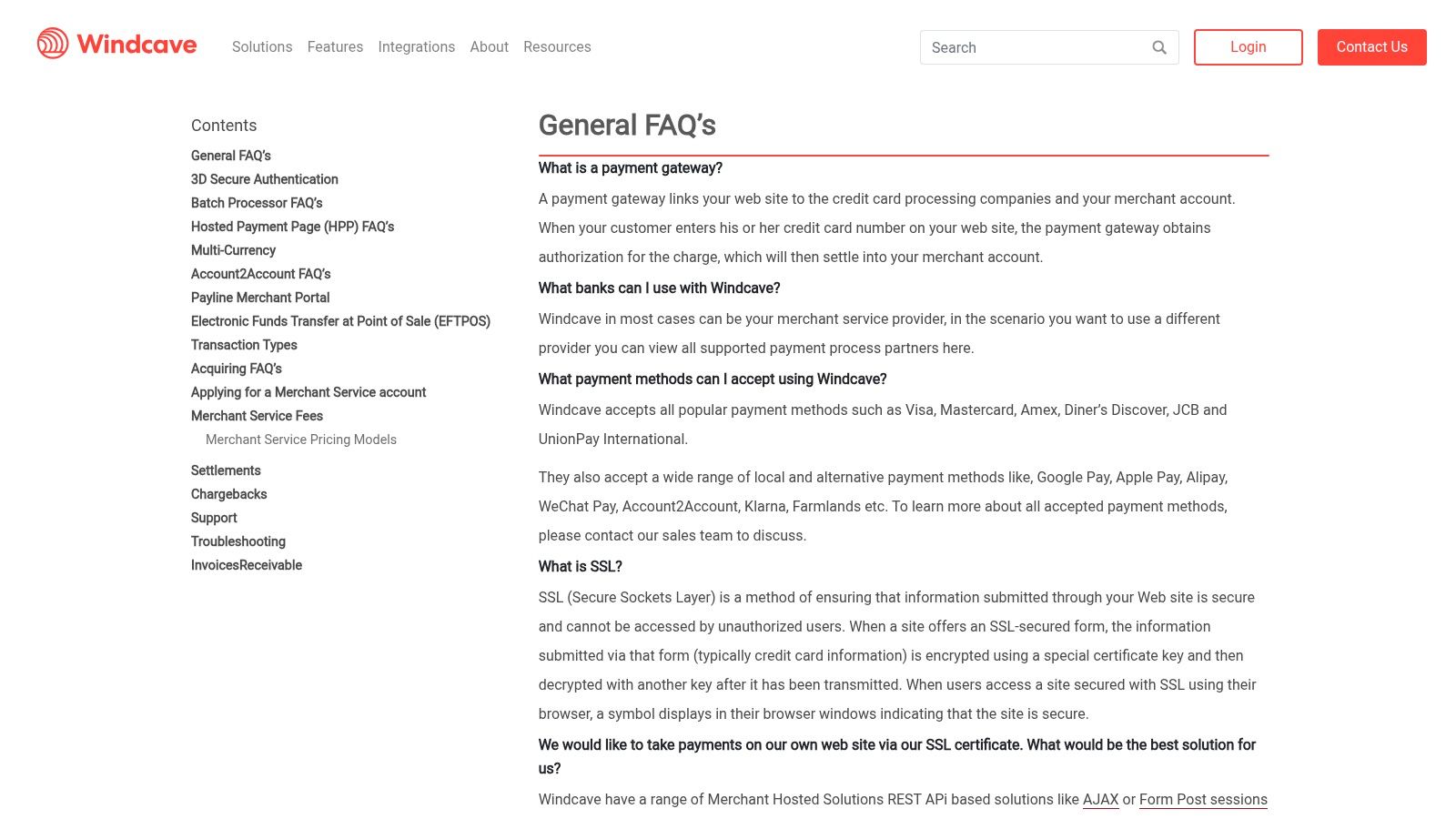
Windcave is built for merchants whose payment setup extends beyond a simple online cart. The NZ-founded gateway and acquirer supports hosted payment pages, APIs, tokenisation, payment links, Account2Account payments, and online plus terminal transactions. That combination matters for retailers with stores, kiosks, phone orders, events, or mixed fulfilment.
Its card coverage is broad, including Visa, Mastercard, Amex, UnionPay, JCB, and Diners or Discover. It also supports 3-D Secure, NZD settlement, and cart plugins such as WooCommerce. A marketplace or business with stored payment credentials can use tokenisation, while a smaller team can start with hosted pages rather than building every payment screen from scratch.
Windcave's pricing can use blended or interchange-plus models, depending on the arrangement. That makes a direct fee conversation essential. A cheaper headline rate can be offset by gateway, acquiring, currency-conversion, refund, or dispute costs. The Commerce Commission explains that interchange made up about 60% of Mastercard and Visa merchant service fees in 2024, while the wider annual cost of accepting those card payments was roughly NZ$1 billion. Read the Commerce Commission's interchange fee explanation before comparing quotes.
Windcave isn't the fastest self-serve signup. Pricing is often bespoke, and the developer experience is less instant than Stripe's. But for a retailer, marketplace, or mixed online and physical operation, local acquiring and operational depth may win. These Shopify gateway tips from Grumspot are useful if Shopify is part of the stack.
Shopify Payments is the obvious starting point for a Shopify merchant in New Zealand. It keeps payment setup, payouts, refunds, chargebacks, and fraud controls inside Shopify Admin. That sounds mundane until a busy store has to reconcile orders, payment events, fulfilment, and customer support across separate systems.
The native connection also supports Shop Pay, Apple Pay, and Google Pay. Those express paths matter on mobile, where every extra field feels like a small tax on patience. Shopify Payments also supports multicurrency storefronts and subscription apps, which helps a store selling beyond New Zealand.
The main benefit is simplicity. Shopify says using its native payment service removes third-party gateway transaction fees in most cases, but merchants still need to inspect processing rates, refunds, disputes, currency conversion, and payout terms. A native dashboard doesn't make the underlying costs disappear.
Good fit: A Shopify store selling mainly to NZ and AU customers, with a small operations team and no unusual marketplace settlement needs.
The weakness appears when the business outgrows Shopify's boundaries. A custom app, a multi-vendor marketplace, or a non-Shopify sales channel may need more control. Very high-volume or high-value merchants should also request a custom quote rather than assume the default rates are ideal.
Start with the Shopify Payments NZ documentation, then review your theme's wallet buttons and mobile checkout. If you're adding specialist features, compare the needs of a Shopify checkout app with the native flow before introducing another layer.
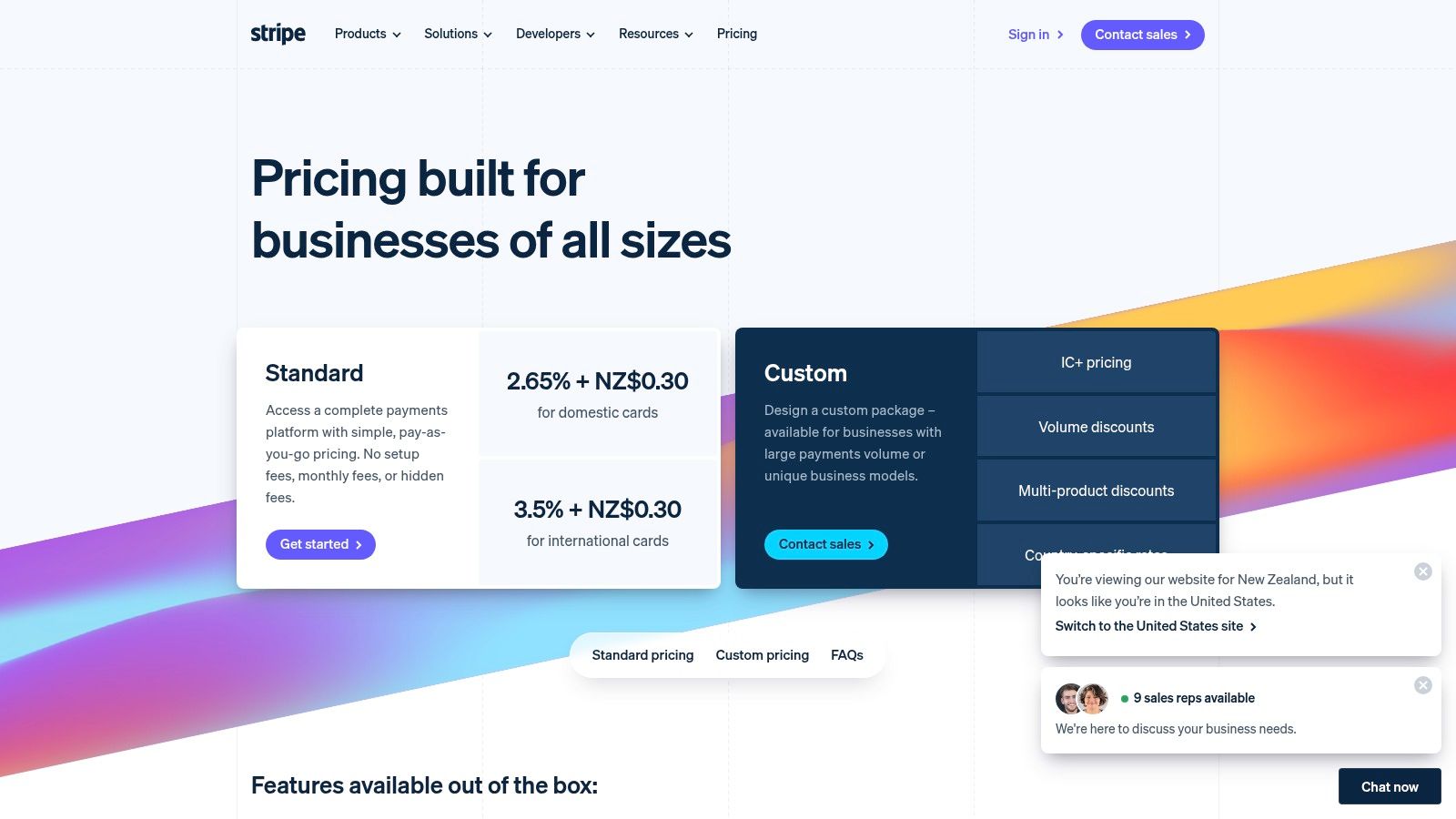
Stripe is the strongest general-purpose choice here for a SaaS company, marketplace, or ecommerce business with an active product team. It combines payments with Checkout, Payment Links, billing, subscriptions, invoicing, Radar fraud tools, SDKs, webhooks, and Connect for marketplace payouts.
That breadth changes the question. You're not only choosing a card processor. You're choosing the payment layer your developers will connect to customer accounts, plans, invoices, failed-payment recovery, and internal reporting. A custom store can use hosted Checkout, while a product team can build a more controlled payment experience with Elements and APIs.
Stripe supports NZD pricing and settlement, plus more than 100 global payment methods and wallets through its wider platform. Those capabilities help a merchant sell across borders, but they also make the setup easier to overbuild. Turn on the methods your customers use. Don't cover the dashboard in payment logos and hope conversion follows.
For a SaaS or marketplace, test these flows before launch:
Stripe can be quick to launch and can grow with a serious product, but costs can rise with high average order values, international cards, disputes, and currency conversion. The Stripe NZ pricing page should be read with the full fee schedule, not treated as the entire commercial picture. Teams comparing local and international setups may also find this guide to NZ payment processing solutions useful.
Stripe is a strong default for a developer-led business. It's not always the cheapest answer for a simple local shop.
Braintree is a good middle ground for a team that wants cards, PayPal, and wallets through one developer-led integration. It's a PayPal service, so the platform is especially relevant when a merchant expects customers to arrive with PayPal accounts as well as card details.
The Drop-in UI can shorten the path to a working checkout, while SDKs support a more controlled experience. Tokenisation and 3-D Secure 2 help separate sensitive payment data from the merchant's own systems. Braintree also supports subscriptions and marketplace or split-payment workflows through its platform tools.
The attraction is focus. A merchant can accept PayPal and cards without wiring two completely separate checkout experiences. That's useful for an international store where PayPal familiarity may matter to some buyers, yet card acceptance still needs to remain prominent.
Braintree is more developer-led than Shopify Payments and offers fewer no-code tools than Stripe. A founder without engineering support may spend more time on implementation, testing, webhooks, dispute handling, and reporting. Enterprise features may also need implementation help.
Don't compare Braintree by logos alone. Test the exact PayPal, card, wallet, refund, and recurring-payment paths your customers will use.
It can suit a custom storefront, SaaS product, or marketplace with an engineering team that wants a unified payment integration. A basic Shopify merchant may find the native route cleaner. Review the Braintree platform and confirm NZ availability, settlement details, and commercial terms before building around it.
The platform's headline pricing may look competitive for NZ merchants, but the final bill still depends on customer location, payment type, disputes, and conversion needs. A tidy integration is valuable. So is knowing what happens when a payment fails on a Friday afternoon.
Airwallex is most useful when an NZ or AU merchant receives money in several currencies and wants fewer forced conversions. It combines payment acceptance with multi-currency business accounts, FX tools, payouts, Checkout, Payment Links, Elements, subscriptions, and invoicing plugins.
The platform supports more than 160 payment methods across more than 180 markets, according to its NZ payments offering. Those figures describe breadth, not a promise that every method is available for every merchant. Enablement, geography, risk review, and product fit still matter.
For a cross-border retailer, the key benefit is treasury control. If a customer pays in a currency the business also uses for supplier invoices or overseas payouts, like-for-like settlement can reduce unnecessary FX movement. That can matter more than shaving a small amount from a domestic card rate.
Airwallex works well for a Shopify or custom store with international demand, a subscription company billing customers across regions, or an operator managing several entities. Its broader account and FX features can reduce the number of services finance teams juggle.
The downside is complexity. The product set evolves quickly, and a domestic-only merchant may gain little from the extra machinery. Before launch, map the flow from customer payment to balance, conversion, payout, refund, and accounting export. Don't stop at the checkout screen.
Airwallex is a strong candidate when cross-border economics drive the decision. For a purely domestic NZ store, a simpler gateway may create less work.
Adyen is aimed at merchants that have moved beyond a small, single-market checkout. It combines global acquiring and gateway services with NZD settlement, multi-region support, online and point-of-sale payments, marketplace tools, and advanced risk management through RevenueProtect.
Its method coverage extends to more than 200 payment methods, according to the Adyen platform overview. That range can help a merchant enter new markets without stitching together a different processor for every country. It also gives larger teams room to study payment performance by region, device, issuer, and method.
Adyen's unified commerce model is useful for a retailer that sells online and in physical locations. Marketplaces can consider Balance Platform for seller and funds workflows. The attraction is control across a complicated operation, not a quick button added to a basic store.
That control comes with weight. Onboarding is sales-led, and Adyen is generally a better fit for mid-market or enterprise volumes than for a new merchant testing product-market fit. A small team may find the implementation effort hard to justify.
Use Adyen when the payment problem is organisational, regional, or operational. Don't choose it only because the brand appears in global enterprise roundups.
Ask for details on acquiring regions, settlement currencies, risk configuration, dispute handling, local methods, and support ownership. A merchant with several entities or a mixed POS and ecommerce stack may gain real value. A single NZ storefront may not need this much aircraft.
PayPal works best as an additional payment method, especially for international shoppers who already trust the wallet. PayPal Checkout can shorten the path for returning users, while the business product also supports card processing, subscriptions, invoicing, and dispute management.
That familiarity can matter when an overseas customer sees a store they haven't used before. They may be more comfortable authorising PayPal than typing card details into an unfamiliar checkout. It's a trust signal, but it shouldn't crowd out local bank methods or express card wallets.
PayPal also integrates with major ecommerce carts and custom checkouts. A small exporter can add it without rebuilding the whole payment stack. A larger merchant can connect subscriptions and invoicing, then keep PayPal activity visible in its own account and dispute workflows.
The downside is cost and control. PayPal can be more expensive than local gateways for domestic NZ transactions. Payouts or reserves may also be conservative for higher-risk merchant profiles, so cash-flow planning matters. Read the PayPal Business NZ terms closely and ask how refunds, reserves, disputes, and currency conversion affect your actual balance.
A merchant selling mostly to New Zealand customers may prefer POLi, Online EFTPOS, Shopify Payments, or a local gateway for the core flow. PayPal can then sit beside those methods for export traffic. If fees are starting to pinch, this guide to reducing transaction costs offers a useful prompt for reviewing the stack.
| Provider | ✨ Core features | ★ UX / Quality | 💰 Value / Price | 👥 Target audience | 🏆 USP / Strength |
|---|---|---|---|---|---|
| POLi (NZ) | ✨ A2A bank payments at checkout; plugin/API | ★★★, different flow vs cards | 💰 Low domestic fees; fewer chargebacks | 👥 NZ ecommerce (domestic buyers) | 🏆 Cost‑efficient domestic A2A |
| Worldline NZ (CLICK / Online EFTPOS) | ✨ CLICK gateway, Online EFTPOS, developer APIs | ★★★★, local bank integration & support | 💰 Competitive for domestic; bank coverage matters | 👥 Merchants needing deep NZ banking rails | 🏆 Local payments network operator |
| eWAY (NZ) | ✨ Gateway, fraud tools, cart plugins; bank alignment | ★★★, familiar SMB experience | 💰 Straightforward pricing; merchant facility often required | 👥 NZ SMBs with bank merchant accounts | 🏆 Reliable, quick onboarding for SMBs |
| Windcave | ✨ Local gateway + acquiring, tokenisation, A2A, omnichannel | ★★★★, strong NZ expertise; sales‑led setup | 💰 Bespoke pricing; suited to complex needs | 👥 Businesses needing omnichannel & local acquiring | 🏆 Local acquirer with broad card scheme support |
| Shopify Payments (NZ) | ✨ Shop Pay, wallets, unified admin, multistore support | ★★★★★, optimised checkout for Shopify | 💰 No 3rd‑party gateway fees (on Shopify) | 👥 Shopify merchants in NZ | 🏆 Simplest, highest conversion for Shopify stores |
| Stripe (NZ) | ✨ Payments, Billing, Checkout, 100+ methods, robust APIs | ★★★★★, developer‑first, highly scalable | 💰 Transparent; can be costly at very high AOV/volumes | 👥 SaaS, marketplaces, scalable ecommerce | 🏆 Best developer tools & global scaleability |
| Braintree | ✨ Cards + PayPal, SDKs, tokenisation, split payments | ★★★★, developer‑friendly vaulted payments | 💰 Competitive; bundles PayPal support | 👥 Merchants wanting unified PayPal + card flow | 🏆 Single integration for PayPal and cards |
| Airwallex (NZ) | ✨ Global acquiring, multi‑currency accounts, FX tools | ★★★★, strong cross‑border tooling | 💰 Excellent FX economics for multi‑currency flows | 👥 Exporters & international merchants | 🏆 Payments + FX + accounts in one platform |
| Adyen | ✨ Enterprise acquiring+gateway, 200+ methods, unified commerce | ★★★★★, enterprise optimisation & risk tools | 💰 Sales‑led; best ROI at scale | 👥 Mid‑market & enterprise scaling globally | 🏆 Data‑driven acceptance & unified POS/online |
| PayPal (Business, NZ) | ✨ PayPal Checkout, cards, subscriptions, invoicing | ★★★, high buyer trust; wallet UX | 💰 Higher domestic fees; strong international reach | 👥 Sellers targeting PayPal users & exports | 🏆 Global buyer trust & one‑touch checkout |
There isn't one winner across NZ and AU ecommerce. The right choice depends on where customers live, how the store is built, how money settles, and who owns the payment operation when something goes wrong.
For a Shopify store selling mainly at home, start with Shopify Payments. It keeps the checkout, refunds, payouts, and reporting close to the store itself. Add a local bank method if your NZ audience uses it, then test the buttons on mobile. If the store has a meaningful Australian or overseas audience, add the wallets and international methods customers request rather than every available option.
For a SaaS business or marketplace, Stripe and Braintree deserve the closest comparison. Stripe gives product teams a broad toolkit for billing, subscriptions, fraud review, and marketplace workflows. Braintree keeps PayPal and cards together and may suit a team that wants a more focused developer integration. Both still need careful work around disputes, failed payments, refunds, and seller payouts.
For a cross-border seller losing money through currency conversion, Airwallex is the natural first conversation. Adyen becomes more relevant when the business has several regions, entities, channels, or a serious point-of-sale operation. Windcave remains a strong local candidate for complex NZ acquiring and omnichannel work, particularly when a bespoke commercial arrangement makes sense.
Price the whole chain. New Zealand card payments include interchange, scheme fees, acquiring, gateway charges, currency conversion, refunds, subscriptions, chargebacks, and card-not-present risk. The Commerce Commission says the July 2025 interchange decision is expected to reduce business costs by around NZ$90 million per year, with an average small-business saving of about NZ$500 annually, but interchange represents only part of the merchant service fee. Read the Commerce Commission's decision and payment-cost update and ask each provider which savings reach your account.
Security needs the same attention. Statistics NZ recorded 183 million electronic-card transactions worth NZ$11 billion across NZ-based merchants in December 2024, with an average transaction value of NZ$58. Those figures cover retail, services, and other non-retail activity, not online purchases alone, but they show the volume and everyday value range payment systems must handle. The Statistics NZ electronic card transaction release is useful context when you test authorisation, settlement, and reconciliation.
Then check fraud controls. Online fraud is approximately nine times more prevalent than card-present fraud, according to material submitted to the Commerce Commission. Separately, the Banking Ombudsman reported scam losses of NZ$194,269,962 from 1 October 2023 to 30 September 2024, based on reports from 11 of New Zealand's largest financial institutions. These are broader scam and fraud indicators, not a forecast of your store's losses, but they make 3-D Secure, tokenisation, velocity rules, manual review, refund authentication, and dispute support commercial concerns rather than technical decorations.
Take one concrete step this week. Request full fee schedules from two shortlisted providers, run a test transaction in NZD and AUD, confirm settlement timing, and check whether buy-now-pay-later options such as Afterpay are supported before you commit. The right platform should make the customer's payment feel easy while giving your team a clear answer when the money, refund, or dispute takes a less tidy path.
NZ Apps covers ecommerce tools and can help businesses plan builds that include secure payment gateway setup, product pages, shopping carts, customer accounts, and inventory features. Its app development work can also connect payment gateways such as Windcave and POLi with New Zealand bank APIs. Visit NZ Apps to compare regional technology providers and find practical support for your payment stack.
Add your NZ or Australian app or tech company to the NZ Apps directory and get discovered by founders and operators across the region.
Get ListedReach tech decision-makers across New Zealand and Australia. Sponsored and dofollow editorial links, permanent featured listings, and sponsored articles on a DA30+ .co.nz domain.
See Options