
Ever get that feeling you're standing on the edge of something big? That’s the New Zealand ecommerce scene right now. The digital high street is absolutely humming, but making a real go of it takes more than just flicking the switch on a website. You need to understand the unique pulse of the market here in Aotearoa.
In short, yes. The conditions are fantastic for new and existing businesses to find their groove online. But, like anything worth doing properly, there’s a bit more to it than just that simple answer.
It helps to think of the New Zealand ecommerce market not as a single, massive ocean, but as a series of connected harbours. Each one has its own currents and requires a bit of local knowledge to navigate. What flies in the big city markets of Auckland might not land the same way in Taranaki or the Bay of Plenty. Makes sense, right?
The game has changed. It's not just about convenience anymore; it’s about connection, value, and trust. Kiwi consumers are savvy. They’ll get behind a local brand with passion, but they also have a sharp eye for a good deal from an international giant. Your job is to find that sweet spot in between.
Let’s talk figures for a moment, because they paint a pretty compelling picture. The New Zealand ecommerce market is on track to hit an industry revenue of NZD 6.8 billion in 2025. This isn't some flash-in-the-pan trend; we're talking about steady, solid growth.
What’s really interesting is the entrepreneurial spirit fuelling this. The number of online businesses grew by 5.1% each year between 2020 and 2025, with around 11,577 businesses now operating online. You can find more insights on this growth from the full industry report on ibisworld.com.
This surge is powered by a few key things:
So, what does this all mean for you? It means there’s space. It means the pie is getting bigger. Sure, the big players like Woolworths and The Warehouse Group have the largest slices, but thousands of smaller businesses are thriving by serving specific communities and needs. This is where small businesses in New Zealand can truly shine.
The real opportunity isn't in trying to be the next mega-retailer. It's about being the best at what you do, for a specific group of people who are looking for exactly that.
Success in New Zealand ecommerce isn't about shouting the loudest. It’s about listening closely to what Kiwi consumers want and delivering it with a bit of local flavour. It’s a market that rewards authenticity and clever thinking. So, is now the right time? Absolutely. The real question is, are you ready to jump in?
Okay, let's get into what makes a Kiwi shopper actually click 'buy'. It’s the million-dollar question for anyone trying to make a go of it in New Zealand's ecommerce space. Honestly, getting this right is less about broad stereotypes and more about digging into what really makes local online buyers tick.
You have to get your head around their unique values. This isn't your average shopper. On one hand, there's a fierce, almost protective loyalty to homegrown brands. But on the other, there's a super-savvy eye for an international bargain.
This creates a fascinating dynamic. Shoppers want to support local, but they’re also feeling the pinch. Price has become a huge deciding factor. A recent Klaviyo survey simply confirmed what many of us in the industry already suspected: price is the top purchase driver for Kiwi consumers.
It's a bit of a balancing act. While local retailers are seeing most of the growth, international platforms are definitely making waves. Spending on overseas department and variety stores, for instance, shot up by a massive 33%, heavily influenced by global players like Temu.
This tells us that while Kiwis want to shop local, they are incredibly pragmatic. They’re on the hunt for value, better deals, and discounts. And you know what? It’s completely understandable.
This is where your strategy comes in. You can’t just rely on the "buy local" angle; you have to compete on value, too. This doesn't always mean being the cheapest, but it absolutely means clearly communicating what makes your product worth its price tag.
The modern Kiwi shopper is a value-hunter. They balance a genuine desire to support local businesses with a practical need to find the best possible deal, making clear value propositions more important than ever.
If you want to see this price sensitivity in action, just look at the major online shopping days. They're no longer just a trend; they're a core part of the annual shopping calendar for many New Zealanders.
What's really telling is that spending often dips right after these events. It suggests many Kiwis are strategically holding off on purchases, doing their Christmas shopping early to snag the best deals. They're playing the long game, and your business needs to be ready for these peaks.
This also touches on a crucial point for any online store. To make the most of these opportunities, it's vital to continually look for ways to improve ecommerce conversion rates, even if it means drawing insights from other sectors like fashion. A smooth, convincing checkout process is non-negotiable when shoppers are so focused on getting the deal done.
Let's talk about the device in their hand. The shift to mobile shopping isn't coming; it's already here. Kiwis are increasingly comfortable browsing and buying from their phones, whether they're on the couch or waiting for a flat white.
This means your website absolutely must be mobile-friendly. A clunky, slow-loading site on a smartphone is an instant deal-breaker. People just don't have the patience for it anymore.
And that lack of patience extends to delivery. While we're a nation that understands the challenges of island logistics, expectations are speeding up. Quick, reliable shipping—with clear communication—is no longer a bonus. It’s a fundamental part of the customer experience. Getting these details right is how you win them over for the long haul.
Alright, let’s talk tech. Picking your ecommerce platform feels like a huge decision because, well, it is. But it doesn’t have to be stressful. Think of it less like buying a house and more like finding the perfect ute—it needs to be reliable, do the jobs you need it to, and not cost a fortune to run.
We're going to break down the heavy hitters in the New Zealand ecommerce scene in plain English. We’ll skip the jargon and explain what the features actually mean for your business day-to-day. How easy is it to get set up? What are the real monthly costs?
Most importantly, how well does it play with the local tools that matter? We're talking about seamless connections to payment gateways like POLi or shipping carriers like NZ Post.
When you look at the numbers, a pretty clear picture emerges. The New Zealand ecommerce space definitely has its favourites.
As of 2025, Shopify is the clear leader, powering around 26,280 online stores, which is a massive 42.85% of the country's total. WooCommerce is the next most popular choice with over 14,500 stores. This shows a mature market where certain platforms have become the go-to for Kiwi businesses, usually because they're easy to use and have strong local support.
This decision tree visualises the core values driving Kiwi shoppers when they land on your digital storefront.
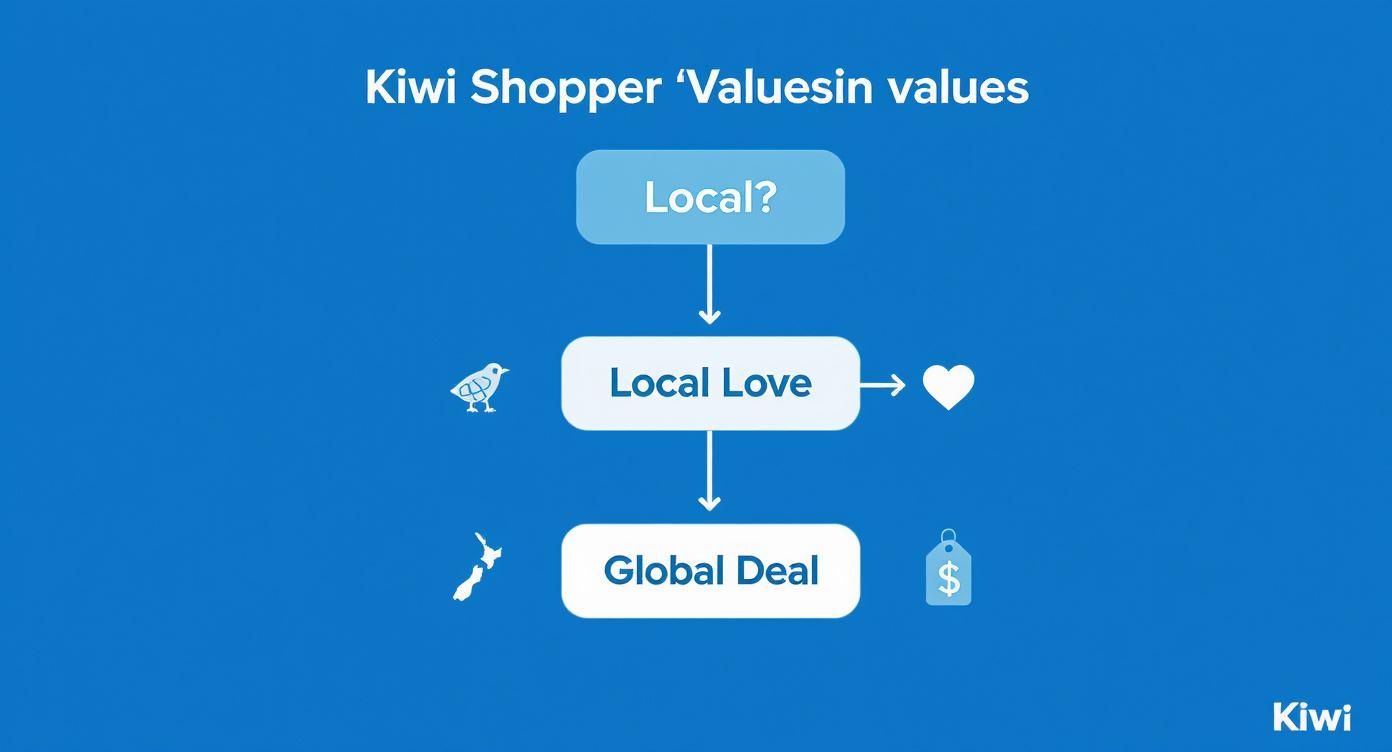
This simple choice highlights the tension we talked about earlier: Kiwi shoppers are constantly weighing up their desire to support local against the hunt for a better deal.
So, how do you choose? For most small to medium businesses in New Zealand, it often boils down to these two contenders.
Shopify: This is your all-in-one, ready-to-go solution. It’s incredibly user-friendly, secure, and handles all the technical headaches for you. You pay a monthly fee, and in return, you get a powerful, reliable store that just works. It's the perfect choice if you want to focus on selling, not on website maintenance.
WooCommerce: This is a plugin for WordPress, which means it’s endlessly customisable but does require a bit more hands-on effort. It's open-source and free to install, but you’ll need to pay for your own hosting, security, and potentially some premium extensions. This is the go-to for those who want total control and are comfortable with the technical side of things.
Ultimately, the choice depends on your business needs and how comfortable you are with technology. For a deeper dive into how these platforms stack up for the NZ market, check out our guide on Shopify vs WordPress in NZ.
To help you see the options at a glance, we've put together a quick comparison of the platforms most popular with Kiwi sellers.
| Platform | Best For | Typical Monthly Cost (NZD) | Key NZ Integrations |
|---|---|---|---|
| Shopify | Beginners and businesses focused on growth and ease of use. | $45 - $450+ | NZ Post, CourierPost, Xero, Afterpay, Laybuy, POLi |
| WooCommerce | Businesses wanting full customisation and control; content-heavy sites. | $30 - $200+ (hosting & plugins) | Integrates with most NZ services via dedicated plugins. |
| Squarespace | Creatives, artists, and service-based businesses with beautiful portfolios. | $40 - $75 | Limited direct NZ integrations; relies on Stripe/PayPal. |
| Wix | Small businesses and sole traders needing a simple, drag-and-drop website builder. | $35 - $65 | Growing list, includes major payment gateways like Stripe. |
This table gives you a starting point, but remember to look into the specifics of each platform to see which one truly fits your business model and budget.
Your platform is the foundation, but you need the right tools to build the rest of the house. Here’s a quick look at the essential software you’ll need to run a smooth New Zealand ecommerce operation.
Your toolkit isn't about having the most apps; it's about having the right apps. Each one should solve a specific problem, whether that's saving you time, making you more money, or keeping your customers happy.
A solid setup usually includes:
Putting these pieces together creates a robust system that lets you focus on what really matters: growing your business and connecting with your customers across Aotearoa.
Right, let's get into the nitty-gritty: moving money and moving boxes. This is where your ecommerce dream gets real. Nailing your payments, shipping, and legal details is what separates a polished, trustworthy online store from one that feels a bit amateur.
A seamless experience at this stage builds incredible trust and is a huge factor in whether a customer comes back for more.
First things first, let's talk about getting paid. You need to make it incredibly easy for someone to give you their money. It sounds obvious, but you’d be surprised how many businesses stumble at this final hurdle by not offering the payment methods New Zealanders actually use and trust.
It's no longer enough to just accept Visa and Mastercard. The payment game has evolved, and your checkout needs to reflect the modern Kiwi wallet.
Credit/Debit Cards: This is the absolute baseline. Every store must have a solid way to process card payments, usually through a payment gateway like Stripe or Windcave.
Buy Now, Pay Later (BNPL): Services like Afterpay and Laybuy are massive here. For many younger shoppers, seeing that Afterpay logo is a huge green light, turning a 'maybe later' into a 'buy now'.
Bank Transfers: Platforms like POLi give customers a secure way to pay directly from their bank account. It’s a trusted option for those who are a bit wary of putting their card details online.
Offering this mix isn't just a nice extra; it's a strategic move. It smooths out the final step of a sale and shows you really get how your customers manage their money.
Now, onto logistics. Shipping in New Zealand presents its own unique set of challenges. We're a long, skinny country with more than a few rural addresses dotted about. Getting a package from Kaitaia down to Bluff efficiently is a genuine art form.
Your choice of carrier directly shapes your customer's post-purchase experience. Do you go with the national giant, NZ Post, or a more specialised courier? For many businesses, the answer is often a strategic mix of a few options.
A smart shipping strategy isn't just about finding the cheapest rate; it's about managing expectations. Kiwis are generally pretty understanding about delivery times, but only if you're upfront and honest about them from the get-go.
To help you figure out what's best for your store, here’s a quick look at the main players you’ll be dealing with in the New Zealand ecommerce delivery network.
It can be tough to know where to start when choosing a shipping provider. This table breaks down some of the most common options for New Zealand businesses.
| Carrier | Best For | Tracking Capabilities | Rural Delivery Surcharge |
|---|---|---|---|
| NZ Post | Nationwide coverage, especially strong for rural and PO Box addresses. | Excellent and widely recognised by customers. | Yes, a standard part of their pricing structure. |
| NZ Couriers | Fast, reliable urban and business deliveries. | Real-time tracking with signature options. | Yes, typically applied to non-urban postcodes. |
| Aramex | Cost-effective local and regional deliveries for smaller businesses. | Good, with options for signature required. | Yes, often a significant factor in their costs. |
Ultimately, your choice will depend on your products, your customers' locations, and the experience you want to provide. Remember, "free shipping" is a powerful motivator, but it's never truly free. You either build the cost into your product price or absorb it. A popular strategy is offering free shipping over a certain threshold (e.g., "Free shipping on orders over $100"). This is a great way to encourage customers to add just one more item to their cart.
Finally, let’s quickly touch on the legal essentials. Getting this right from day one will save you a world of headaches down the track, and it’s not as intimidating as it sounds.
The two big ones you absolutely need to get your head around are:
GST (Goods and Services Tax): In New Zealand, you must register for GST if your business turnover is $60,000 or more in any 12-month period. If you’re under that, registration is optional, but it's something to keep a close eye on as you grow.
The Consumer Guarantees Act (CGA): Think of this as your rulebook for customer rights. It ensures the products you sell are of acceptable quality, fit for their purpose, and match the description you've given them. Understanding your obligations here is fundamental to running a reputable Kiwi business.
Honestly, a quick chat with a local accountant can clear up most of your questions in no time. They'll help you get set up correctly so you can focus on what you do best—selling your amazing products.
You’ve built a fantastic online store. Great stuff! But now, how do you actually get people to show up? Let’s be honest, just existing on the internet isn't a strategy. This is where smart, effective marketing tailored for a New Zealand audience comes into play.
Simply having a great product isn’t enough if nobody knows about it. It’s like setting up a beautiful stall in a hidden alleyway—you need to put up some signs and point people in the right direction. We’re talking about getting your store seen by Kiwis who are genuinely looking for what you sell.
This isn’t about flashy, expensive campaigns. It’s about being clever, authentic, and understanding the local vibe.
When someone in Auckland or Christchurch needs something, what do they do? They Google it. That’s why Search Engine Optimisation (SEO) is your secret weapon. SEO is the art and science of getting your website to appear high up in search results—without paying for ads.
It's all about using the right words and phrases (what we call keywords) that your potential customers are typing into their search bars. Think "wool socks nz" instead of just "socks," or "handmade jewellery Auckland" instead of just "jewellery." Being specific matters.
This process is a bit of a slow burn; it’s not an overnight fix. But getting your local SEO right means a steady stream of interested customers finding you organically. For businesses serious about ranking locally, getting expert advice on search engine optimisation in New Zealand can make a world of difference.
Where do Kiwis hang out online? Overwhelmingly, it’s still on Facebook and Instagram. These platforms are incredibly powerful for New Zealand ecommerce businesses, but only if you use them the right way.
It’s about building a community, not just blasting out sales messages. Share behind-the-scenes content, tell the story of your brand, and create posts that feel genuine, not like a corporate memo. A bit of Kiwi humour and personality goes a long way.
Here are a few ideas that work well in the NZ market:
The key to social media in New Zealand is connection over conversion. Focus on building genuine relationships and engaging your audience, and the sales will naturally follow. People buy from brands they like and trust.
Finally, think about what kind of content truly resonates with a Kiwi audience. We’re a nation that values authenticity and practicality. Does your content help, inform, or entertain?
Don’t just write product descriptions; tell the story behind the product. Why did you create it? What problem does it solve? Create blog posts or short videos that answer common questions your customers might have.
This approach does two things. First, it helps with your SEO by adding more relevant content to your site. Second, and more importantly, it positions you as an expert and builds a layer of trust that no amount of advertising can buy. It's about being a resource, not just a retailer.
The digital world moves at a blistering pace, and for anyone in New Zealand ecommerce, staying ahead isn't just a good idea—it's everything. Looking forward, it’s not about wild guesses; it's about understanding the real shifts in technology and human behaviour that are already starting to define what works.
So, where is this all heading? Think less about revolutionary overhauls and more about a smart evolution of what’s already happening.

If there’s one trend that’s definitely not slowing down, it’s the unstoppable rise of mobile commerce. Shopping from the couch, the bus, or the bach isn't just common anymore; it's the default for a huge number of Kiwis. Honestly, if your store isn't an absolute dream to use on a smartphone, you're already falling behind.
The numbers back this up in a big way. Mobile commerce is expected to account for a massive 66.2% of transaction value in 2024 and is set to keep climbing. This growth is being supercharged by better tech like 5G and widespread fibre broadband, making the mobile shopping experience smoother and faster than ever before.
Get ready to see more technology that actually solves real problems for customers. We're talking about clever tools that bridge the gap between browsing online and the real-world experience of seeing a product.
Augmented Reality (AR): Imagine a customer using their phone to see exactly how a new sofa from your store looks in their living room. Or "trying on" a pair of sunglasses virtually before buying. This isn't science fiction; it's already here and becoming much more accessible for smaller businesses to implement.
Smarter Personalisation: This goes way beyond just using a customer's first name in an email. It’s about using data to show people products they’ll genuinely love, based on what they've looked at before. Think of it as having a helpful shop assistant online who really gets their style.
These aren't just gimmicks. They are practical tools that build confidence and help customers make better purchasing decisions—a win for everyone involved.
Kiwis are becoming more and more conscious of where their products come from and the impact their purchases have on the planet. This isn't a niche concern anymore; it's quickly becoming a mainstream expectation.
For many shoppers, a brand's eco-credentials are now a key part of the decision-making process. It’s a genuine reason to choose one company over another, even if it costs a little more.
This means being transparent about your supply chain, using sustainable packaging, and clearly communicating your eco-friendly practices. It's about aligning your business values with your customers' values.
The New Zealand ecommerce market is set for some serious growth, projected to expand from USD 3.25 billion in 2025 to USD 5.09 billion by 2030. A significant part of that future will be shaped by businesses that authentically embrace sustainability. You can discover more insights about New Zealand's e-commerce growth on mordorintelligence.com.
Still got a few questions buzzing around? Good. It means you’re thinking through the important details. Let’s tackle some of the most common queries we get from people starting their own New Zealand ecommerce journey.
Getting these fundamentals sorted from the get-go can save you a world of pain down the track.
Honestly, probably not. In New Zealand, you only have to register for GST once your business turnover is set to exceed NZD $60,000 in any 12-month period. If you're just kicking things off, you can operate quite happily without being GST-registered.
That said, some businesses choose to register voluntarily before they hit that magic number. The main reason? So they can claim back the GST they pay on their own business expenses. It's always a good idea to have a quick chat with a Kiwi accountant to work out what makes the most sense for your specific setup.
This one’s easy: underestimating the complexity and cost of shipping. New Zealand's unique geography—long, narrow, and dotted with rural addresses—makes logistics a genuine puzzle that catches a lot of new business owners out.
Many fall into one of two traps:
It is absolutely vital to get a solid handle on your shipping options from day one. Understand things like rural delivery surcharges and create a transparent, fair shipping rate structure. Getting this wrong can seriously eat into your profits and leave customers feeling frustrated.
This is the classic "how long is a piece of string?" question, but the good news is you can get started for less than you might think. For the digital side of things, you don't need a huge war chest.
A basic monthly plan on a platform like Shopify will set you back around NZD $40-$50. Your domain name will be about $20-$30 per year, and then you’ll have small transaction fees on each sale.
The biggest variable, of course, is your actual product inventory. But just to get a professional, functioning store live and ready for customers? You can be up and running for under a few hundred dollars, plus your ongoing monthly platform fee. It's more accessible than ever before.
Ready to build a powerful online presence that truly connects with Kiwi customers? The team at NZ Apps specialises in creating custom websites and targeted SEO services that get your New Zealand ecommerce business seen. Schedule your free consultation with us today!