
Monday morning at a Wellington clinic, and the front desk has three windows open before the first patient is called. There's the appointment book. There's the recall list someone printed on Friday because the automated one stopped firing. And there's the prescribing module half the GPs trust and the other half still double-check against a paper script.
Nobody designed that workflow. It accumulated, one upgrade at a time, over about twenty years.
Here's the good news, though. New Zealand practices went digital early and stayed there. Peer-reviewed New Zealand health-informatics research recorded that by 2003, 99.8% of general practices had at least one computer and more than 70% were considered paperless, against roughly 17% of US primary-care physicians and 12% of Canadian physicians using electronic medical records at the time. You're not buying your first system. You're replacing, merging or extending one, and that's a far less forgiving purchase.
The money side deserves the same suspicion. Reducing claim denials with Clarity is a decent primer on how much revenue leaks through verification gaps, and the principle survives the trip to ACC and private billing here even though the rules don't.
So, ten options, grouped by sector. For each one I've flagged the New Zealand requirement that decides the purchase, and the cost that tends to stay hidden until month three.
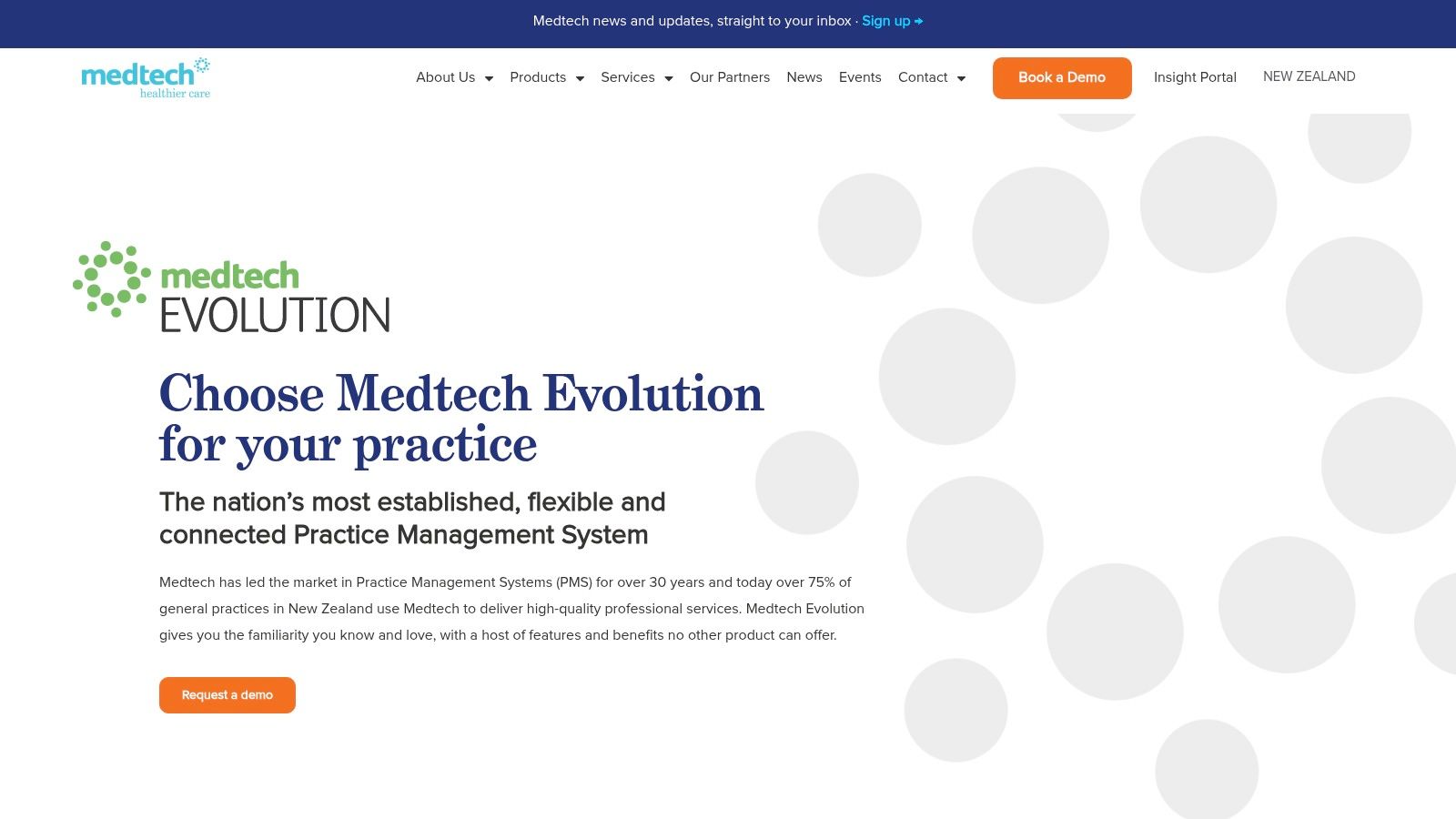
Medtech is the incumbent, and planning around that beats pretending it isn't there. MedTech32's reported share among New Zealand GPs climbed from 42% in 2001 to 61.5% in 2004, and a later Waikato study found 91% of respondents using it (University of Waikato research). Evolution is the route off that base, so migration terms deserve more scrutiny here than anywhere else on this list.
Clinical records, prescribing, practice admin and payment tools sit in one system, which is the whole argument for a big platform. Health New Zealand lists Medtech Evolution as an NZePS e-prescribing system, and the product appears in Shared Digital Health Record onboarding material. That second part matters, because the Shared Digital Health Record is described as a clinical data connector, and providers listed in Schedule 2 of the Health Information Privacy Code may access National Health Index information. Connectivity without permission control is just a bigger doorway.
What it gets wrong, or at least what nobody quotes you on:
If the team is weighing a rebuild, read custom software versus off-the-shelf before committing to either. Most practices discover the answer is a bought system with better configuration.
indici is the cloud-native option that grew up here rather than arriving with a translated menu. Primary and community care is the core, and the suite stretches into allied health, telehealth, pharmacies and community-care settings. Patients get a side of it through the myindici portal, which matters as more people expect to book, pay and read results without ringing the desk.
Health New Zealand lists indici as an NZePS-certified prescribing system. That one line does real work for a general practice, because e-prescribing isn't something you bolt on later.
Switching platforms is where the romance dies. A General Practice NZ and Te Whatu Ora survey reported by New Zealand Doctor found that up to 50% of GP2GP patient-record transfers failed, and roughly half of respondents named inadequate support as a significant problem. Transfer failures are a support problem wearing a technical costume.
Ask this in the demo: show me a failed transfer, then show me who owns the fix and how fast they answer.
Watch for three things. Published pricing is absent, so the quote is the only number that counts. The suite is broad, which is fine until a two-GP practice pays for modules it never opens. And modules vary by service type, so confirm yours in writing before signing.
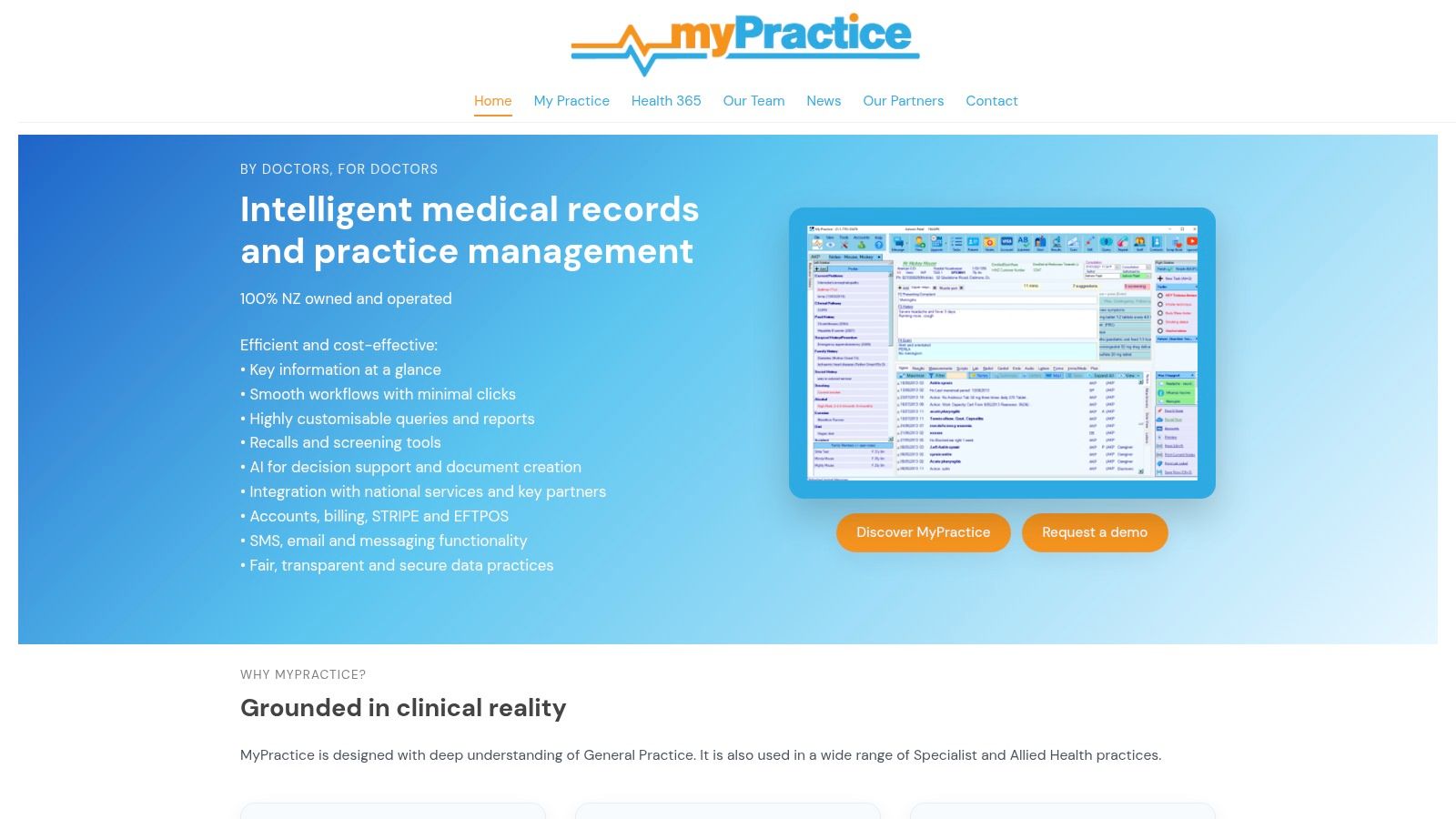
MyPractice is New Zealand-owned and built for general practice first, with specialist and allied-health rooms using it too. The claim worth testing is configurability: custom queries, recall and screening tools, billing and messaging that a practice manager can adjust without raising a ticket. Recalls are where a system earns or loses trust, because a recall that never fires is a patient who drifts away.
Every platform claims reporting. Fewer let you build the query you need, like which patients with a long-term condition haven't been seen in nine months.
Data portability deserves the same skepticism. Health New Zealand's approved health-record standards cover the structure, content and sharing of digital records, its Health Information Standards Organisation develops open, non-proprietary standards, and the NZ Core Data for Interoperability defines shared data concepts across the system. Ask for a real export file from a real practice, not a slide about APIs.
Health New Zealand lists MyPractice as an NZePS-certified prescribing system. Pricing isn't on the product page, and a walkthrough is the only way to judge whether the workflows match your funding model. Pin down migration scope and support hours before you compare anything else.
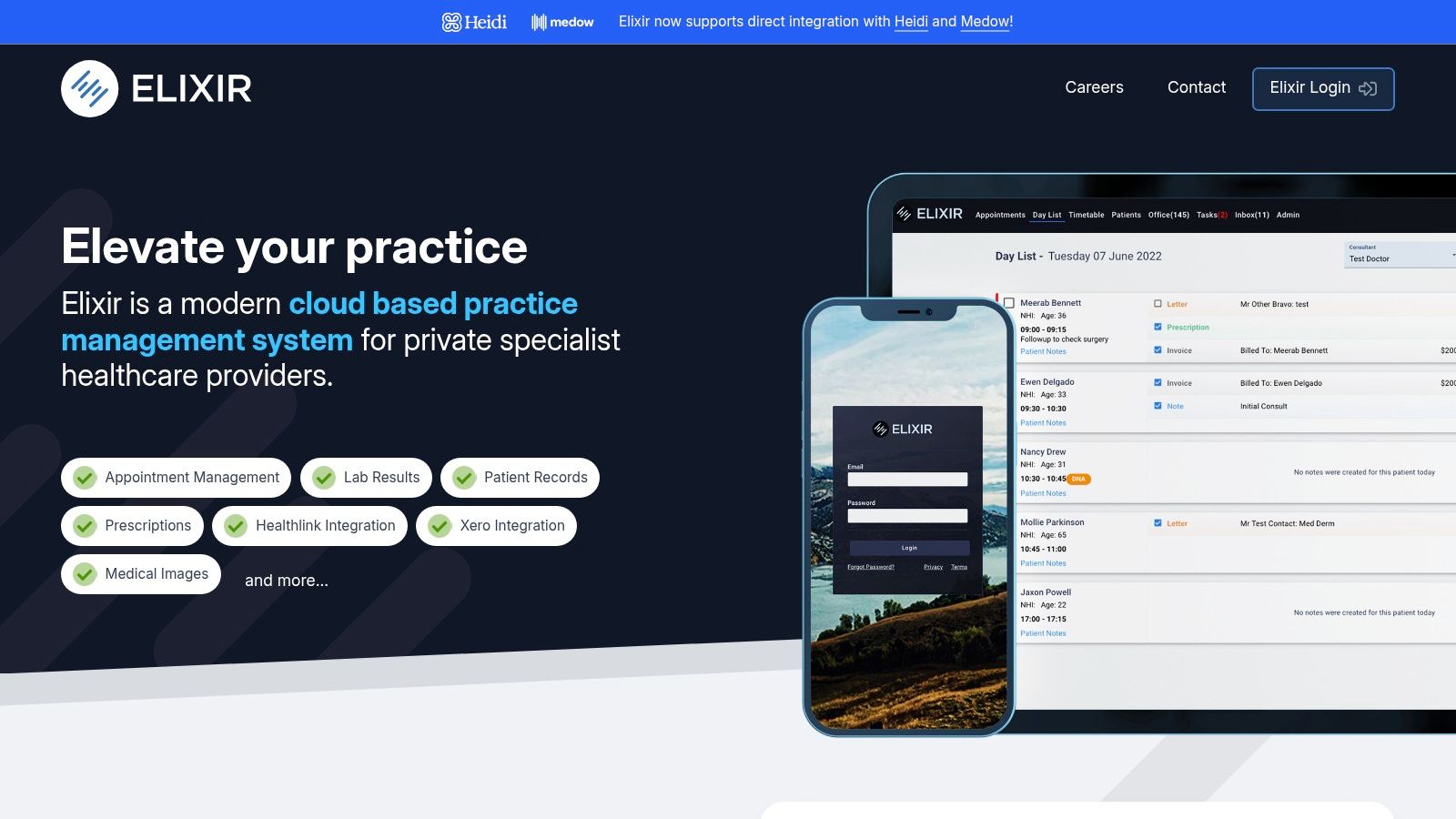
Elixir takes a narrower road: private specialist practice, not the whole of primary care. Appointments across several locations, patient records, correspondence, prescriptions and results arrive in one place, with Healthlink for results and Xero for the books, plus automated reminders doing the unglamorous work of getting people through the door.
New Zealand has moved past connector-by-connector plumbing. Health New Zealand's interoperability standards state that HL7 FHIR must be used for APIs and messaging services under the FHIR-first policy, which applies to all new builds, with NZ Base named as the national base implementation guide. A one-off connector that works today is a liability in three years.
So put the question plainly. Is the integration layer FHIR-based? The answer tells you whether referrals, results and portals keep working as national standards shift.
The trade-offs are real. Pricing isn't published. Specialist focus means a general-practice workflow may need workarounds. And clinical workflows differ enough between specialties that a demo built for orthopaedics proves little about dermatology. Bring your own letter templates and a fortnight of your own appointment types.
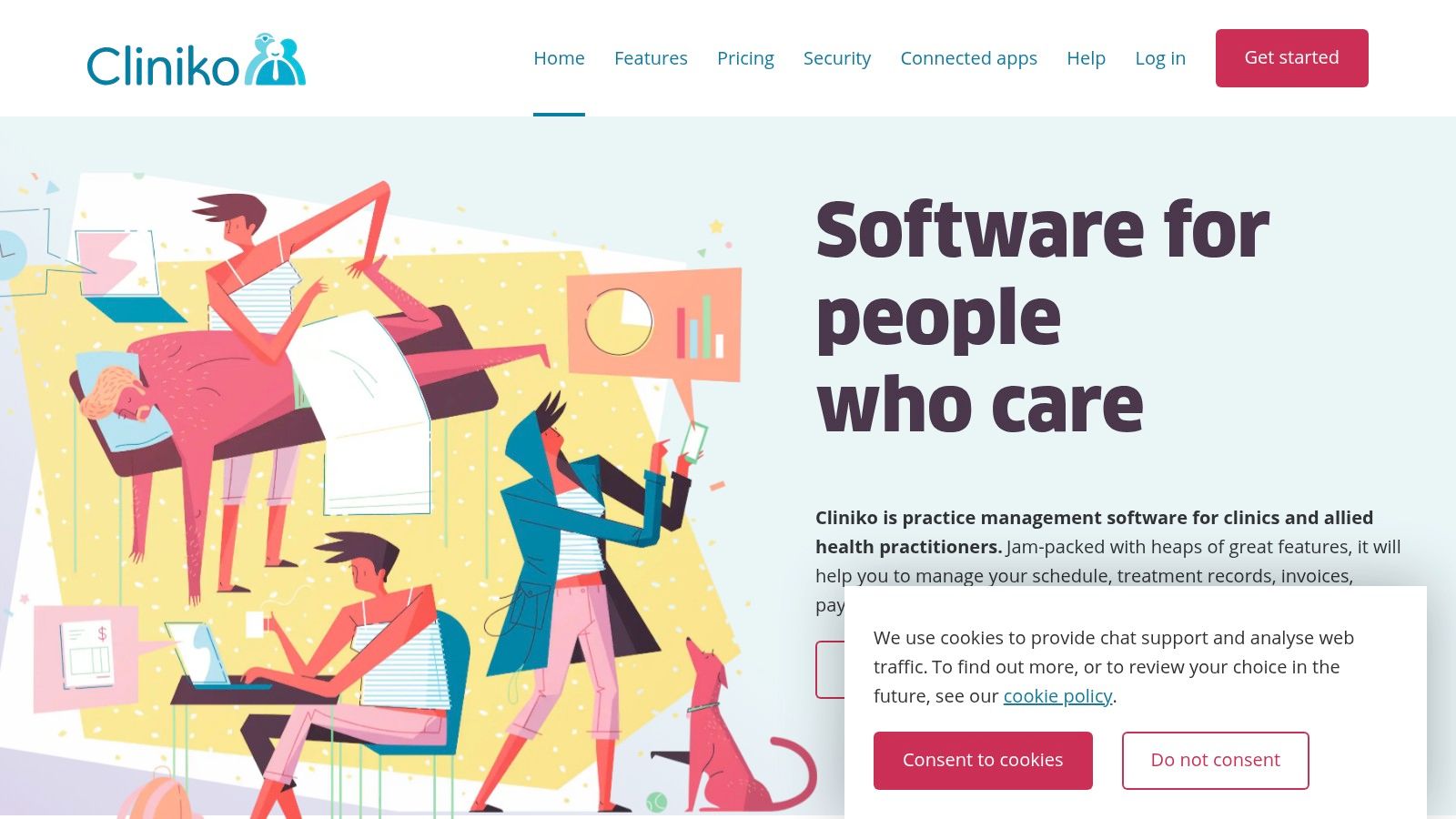
Cliniko is the allied-health workhorse: appointments, online bookings, clinical notes, invoicing and reporting, priced per practitioner with a 30-day free trial and no card required. Unlimited admin users and file storage in the listed plans remove the small-practice maths that usually kills a deal at the last minute.
Published pricing is in US dollars. That's the first hidden cost, and it moves with the exchange rate in a way your budget doesn't. SMS sits outside the subscription. So do some third-party integrations.
Then there's the local question. The Controller and Auditor-General's review reported that about 90% of GPs used a single dominant patient-management platform at the time of its review. A market that mature isn't buying its first system. It's replacing one, which pushes standards-based export, API access, audit trails, role-based access and clinical-document migration to the top of the assessment.
Practical rule: no signature until you've watched last month's invoices reconcile in their system, not in a demo database.
For a physio or psychology clinic, Cliniko fits. For anything touching ACC claiming or NZePS prescribing, check the local plumbing first. And if the front desk needs follow-up sequences as well as bookings, this overview of CRM and automation development is a sensible starting point.
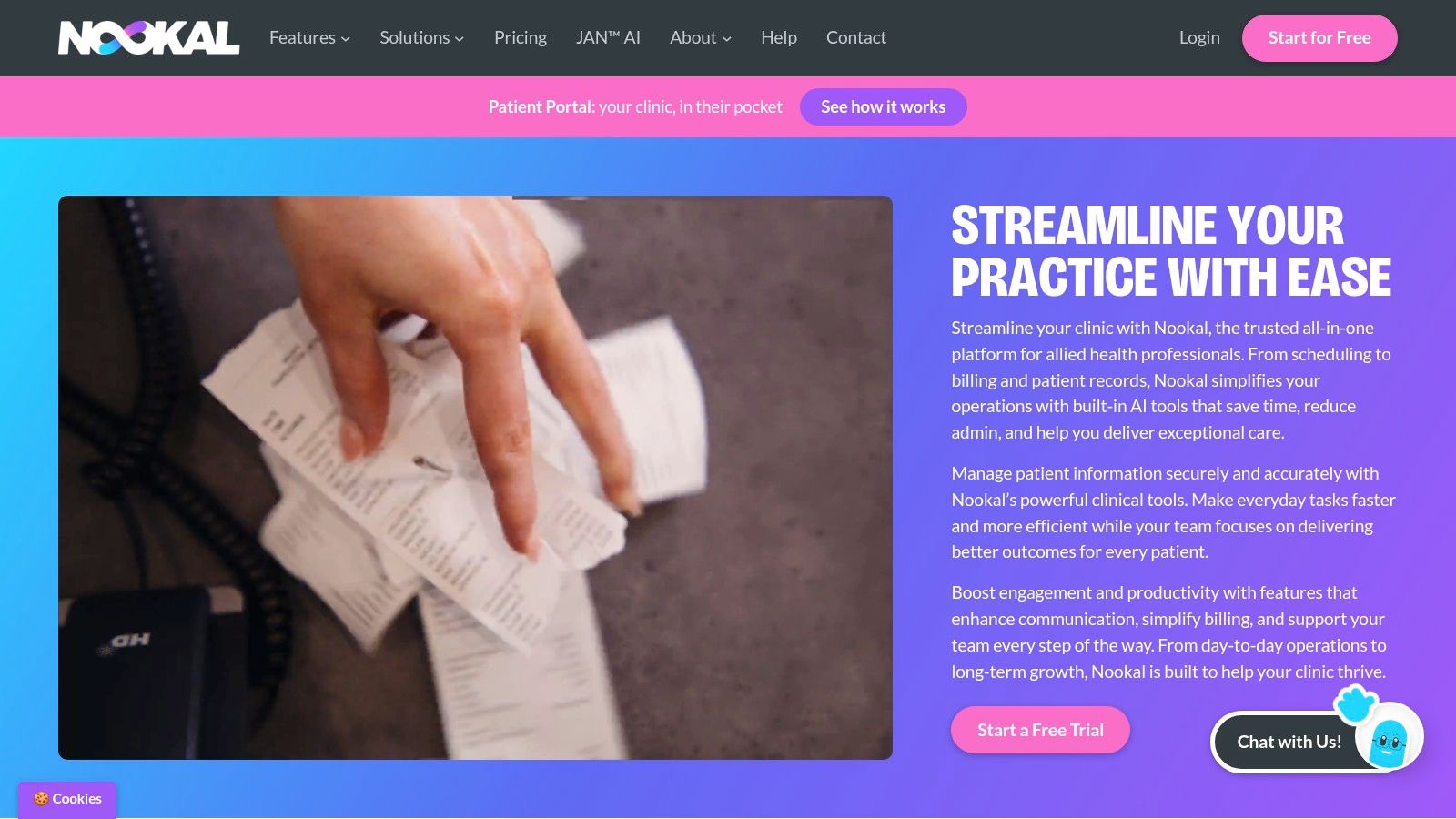
Nookal is built for the disciplines that live and die by repeat visits: physiotherapy, psychology, occupational therapy, chiropractic. Scheduling, clinical records, intake forms, billing and reporting sit in one system, and the New Zealand site leads with ACC claims, which is the right place to lead if you're a physio.
ACC is the tell. Claim submission depends on your plan, and ACC claims plus SMS can add usage costs. Published prices are in Australian dollars, so the exchange rate has an opinion about your software budget. A free trial without a credit card and no lock-in contract stated both help.
Any New Zealand practice handling identifiable patient information works within the Health Information Privacy Code 2020, which came into force on 1 December 2020 and sets sector-specific rules for collecting, using, holding and disclosing health information. Storage and security, patient access, and correction are named rules inside it.
Translated: a system that can't show who opened a clinical note, or who changed it and when, is a compliance gap waiting for an audit or a patient request. Test the audit trail yourself. Log in as a reception user and see what you can reach.
Add-ons vary by plan, so confirm the integrations you need before the trial ends.
Halaxy flips the pricing model. The core software is free, and the extras run on credits: diary, online bookings, invoicing, financial reports and patient management come with it, alongside paid SMS, telehealth and AI-scribe features, plus help with data migration if you're coming off something older.
Free is a starting position, not a total. Credits are not refundable, according to the New Zealand help guide, so estimate a realistic month of reminders, confirmations and telehealth minutes before you treat the subscription line as zero.
Here's where the free-tier story meets real life. The RNZCGP workforce survey snapshot cautions that technology is not a complete solution to workload problems, and the access numbers back that up: in December 2025, 26% of general practices were not accepting new enrolments. Meanwhile, 42% of GPs and 53% of rural hospital doctors who expected to retire within five years said they would begin reducing hours within one to three.
Software doesn't invent clinicians. It can protect the ones you have by cutting duplicate entry and dead-end admin, which is a narrower promise than the AI pitch implies. Automation moves work around. Someone still verifies the output, handles the exceptions and reconciles the duplicates.
For a solo practitioner or a small allied-health team, Halaxy's breadth is useful. For a practice with heavy SMS volume, run the credit maths first.
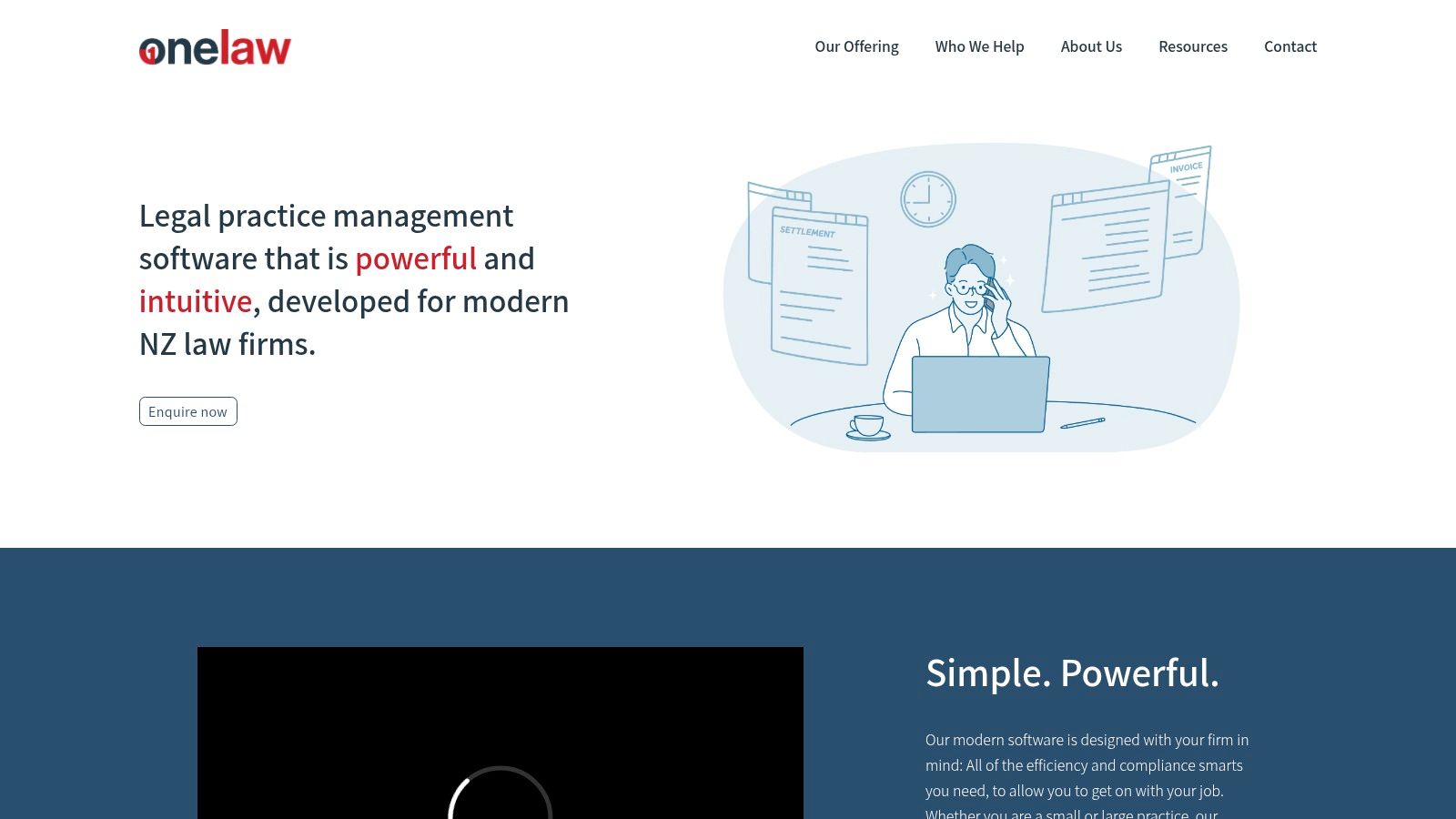
OneLaw is New Zealand-built for law firms and doesn't pretend to be anything else. Matter and client management, document assembly, billing and debtors, plus trust accounting, with local support and a migration path the vendor makes a noise about.
A law firm's books get scrutinised in a way most small businesses never experience. Trust accounting isn't a module you approximate. Solicitors' trust accounts are regulated, inspected and reconciled, so a system that treats trust entries as a separate ledger with its own audit trail is doing essential work rather than adding a tab.
So compare legal systems on the trust side first. Run a deposit through, reverse it, produce the reconciliation, then count the clicks and check whether the trail survives.
Trial this, not the dashboard: ask for a trust account reconciliation and a month-end report, then check both against the format your accountant already expects.
Two honest caveats. Pricing isn't listed publicly, so you'll need a quote. And testimonials praising local support are worth what testimonials usually are, which is to say read them, then book your own walkthrough with your own precedents and bank feeds.

Actionstep started in New Zealand and now sells to law firms further afield, which shows in the product's shape. Matter, case and client management, document workflow automation, time capture, billing and legal accounting sit in a cloud platform with configurable workflows and a healthy list of integrations.
The pricing model is the bit to read twice. Regional packages exist, but annual commitment and implementation are part of the deal, and implementation is often quoted separately. That's not a criticism, it's how legal software gets sold. Just put both numbers in the same row of your comparison.
A workflow engine is only as good as the person mapping your workflows into it. Actionstep's depth is a strength for a firm with a few practice areas it wants to systematise, and a cost for a two-partner outfit that wants to bill hours next week.
If your firm is small and steady, a simpler system may serve better. If you're chasing consistency across offices and matter types, the configuration effort pays back.
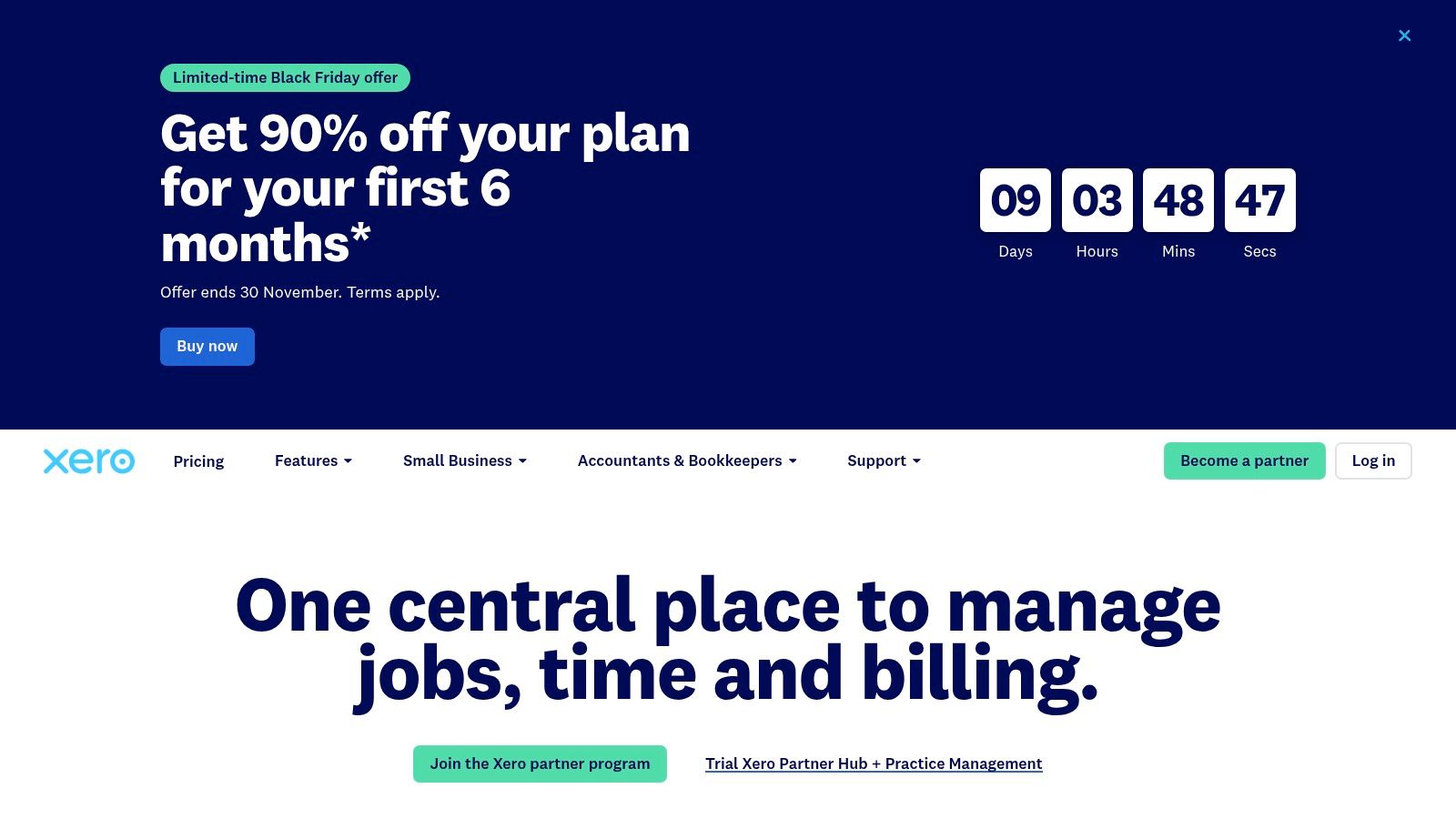
Different sector, same question. Xero Practice Manager is for accounting and bookkeeping firms, not clinics. Jobs, milestones, staff allocation, time tracking, invoicing and practice reporting sit alongside the Xero ledger, and for a firm already living in Xero the integration argument is strong. Published New Zealand pricing exists, which is more than several tools on this list manage. Qualifying Silver, Gold and Platinum partners may get it at no charge.
The Xero ecosystem is deep enough that most firms assemble a stack rather than buying one thing. Xero's 2024 survey of 184 New Zealand accountants and bookkeepers found that 73% of firms used Xero-integrated apps to run their practices, a figure Xero published in its New Zealand App Advantage report. Read that as proof of a connected ecosystem, and also as a warning that every app is another subscription to reconcile.
Where it falls short for outsiders: if you run a medical or legal practice, this isn't your product and configuration won't make it one. Even inside accounting firms, complex multi-entity structures need a closer look at workflow setup before adoption. For the accounting side, this guide to practice accounting software compares Xero Practice Manager and MYOB Practice Management on client records, billing and capacity planning.
If you want a scoring method rather than a gut feel when you line up the clinical systems, this EMR scoring framework for clinics gives you criteria to weigh.
| Item | Best For | Published Pricing | Free Trial or Free Plan | Sector Focus |
|---|---|---|---|---|
| Medtech Evolution | New Zealand general practices | Not publicly listed | Not specified | Primary care |
| indici | Practices needing a broad cloud-based health platform | Not publicly listed | Not specified | Primary and community care |
| MyPractice | New Zealand practices needing configurable workflows and reporting | Not publicly listed | Not specified | General practice, specialist and allied health |
| Elixir | Private specialist healthcare providers | Not publicly listed | Not specified | Private specialist care |
| Cliniko | Allied-health practices wanting transparent, practitioner-based plans | Subscription pricing based on practitioner count; US dollars | 30-day free trial | Allied health |
| Nookal | Allied-health clinics needing clinical and ACC workflows | Tiered pricing; Australian dollars | Free trial; no credit card required | Allied health |
| Halaxy | Health professionals seeking free core practice software | Core software is free; optional services use credits | Free core plan | Multiple health professions |
| OneLaw | New Zealand law firms managing matters, documents and trust accounts | Not publicly listed | Not specified | Legal |
| Actionstep | Law firms connecting legal workflows and accounting | Regional packages; quote-based implementation | Not specified | Legal |
| Xero Practice Manager | Accounting and bookkeeping firms using Xero | Published New Zealand pricing | No-charge access for qualifying Xero partners | Accounting and bookkeeping |
Back to that Wellington front desk. Same three windows, same Friday recall list, same GP checking a script twice. None of that gets fixed by a feature list. It gets fixed by a system that matches how your rooms run, and by a vendor who answers the phone in your timezone when a transfer fails at 8.40am.
So do this in order. Shortlist two or three tools for your sector, not ten. Confirm the one requirement that decides everything else before you look at another screenshot: NZePS e-prescribing for general practice, ACC claim handling for allied health, trust accounting for law firms, Xero connectivity for accounting firms. If that foundation isn't there, the prettiest diary on the market is a distraction.
Then price a full year, not a month. Subscription, implementation, data migration, training, SMS, usage credits, add-on modules and the exchange rate if the pricing page quotes in US or Australian dollars. Software that looks cheap at $49 a month can become the fourth-largest line in your expense sheet once reminders go out to 4,000 patients.
The walkthrough test: book a live session with your own data. Your appointment types, your recall templates, your ACC claim numbers, your trust ledger. Demos run on clean sample records because clean sample records never argue.
Ask about support while you're there. Who takes the call, what hours, what response time, and what happens when a transfer fails or a duplicate record blocks a consultation. Get the escalation path in writing. Reliability is the feature nobody advertises because it only shows up when something breaks.
You also want to know what leaving looks like. Ask for the export format, whether clinical notes and attachments come with it, and whether the data arrives structured or as a folder of PDFs. A vendor confident in their product won't flinch at that question.
Directories such as NZ Apps list New Zealand and Australian software companies side by side, which helps when you're trying to work out whether a vendor operates locally.
Sign nothing until you've watched a real workflow run end to end with real records. If a supplier won't do that, you've learned something useful about the support you're buying alongside the software.
NZ Apps is an independent media and directory covering app companies, SaaS tools and AI startups across New Zealand and Australia, and it publishes practical buying guides alongside its listings for founders and operators comparing local tools. If this list has narrowed your shortlist but you still want a second opinion on what's available in the New Zealand market, the team offers a free, no-obligation consultation. Visit NZ Apps to browse the directory and get the conversation started.
Add your NZ or Australian app or tech company to the NZ Apps directory and get discovered by founders and operators across the region.
Get ListedReach tech decision-makers across New Zealand and Australia. Sponsored and dofollow editorial links, permanent featured listings, and sponsored articles on a DA30+ .co.nz domain.
See Options