
So, what exactly is a website development company? Let's get right to it. Think of them as the architects and builders for your business's digital home. They don’t just grab a template off the shelf; they design, code, and launch websites that are not only beautiful but also functional, secure, and genuinely built to bring in customers. Easy, right?
But here's the thing. It's about more than just tech. It’s a genuine partnership, a collaboration to create one of the most important assets your business will ever own.
You know your business needs a proper website. Of course you do. But that feels like a huge leap, doesn't it? This is where a true web development partner comes in. They’re the ones who handle everything from the digital blueprints to the final coat of paint, so you don't have to.
They don’t just pick a theme and splash some colour on it. A good company constructs the entire building—the digital one, anyway—making sure the foundations are solid, it looks incredible, and it actually guides customers right through the front door. Honestly, this isn't just a tech decision; it’s a foundational business move.
Here’s something that might catch you off guard. In a country like New Zealand, with a massive 96.2% internet penetration rate, you'd think every business would be online. But there's a strange paradox at play. Research shows that only 53% of Kiwi businesses actually have a website, a figure that hasn't changed since 2022.
This is even more surprising when you learn that 61% of those same businesses call a website their most important digital tool. This reveals a massive gap between what business owners know they need and what they’ve actually managed to do. You can explore the challenges and opportunities for small businesses in New Zealand in our detailed guide. For Kiwi businesses, this gap isn't a problem; it's a huge opportunity. A massive one.
Now that we've cleared that up, let's talk about what really matters. A true website partner does more than just build something that looks good. They focus on the strategy behind it all—the stuff that actually gets results. It's about engineering a platform designed from the ground up to convert visitors into customers.
This means making the user's journey feel effortless, ensuring pages load in a snap, and building trust from the very first click. A great agency will integrate tools and design principles that essentially turn your website into an active member of your sales team. This involves thinking deeply about things like:
The best agencies even apply powerful conversion rate optimization techniques to make sure the traffic you’re getting actually turns into real business. It’s this strategic depth that separates a simple web designer from a genuine website development company.
So, you’ve decided to work with a website development company. It's a fair question to ask: what are you actually paying for? You're not just buying a website off the shelf; you're bringing a whole team of specialists on board to create something from the ground up.
Let’s pull back the curtain on what that process usually involves. It’s a lot more than just tapping away at a keyboard and writing code. Think of it like building a house—it starts with a detailed blueprint and ends with you getting the keys, with a whole lot of crucial steps in between. This process ensures your new digital storefront is built on solid ground.
Before a single line of code gets written, the design phase kicks off. This is where the architects of your website—the User Experience (UX) and User Interface (UI) designers—map out every single detail.
So what's the difference between the two?
UX Design is all about the feel of the site. How easy is it for a visitor to find what they're looking for? Is the journey from the homepage to the checkout smooth and intuitive? This is the invisible architecture that makes a website a genuine pleasure to use, rather than a frustrating chore.
UI Design focuses entirely on the look. This covers everything from the colour scheme and fonts to the buttons, icons, and spacing. It’s the visual layer that brings your brand to life and makes the site look professional and trustworthy.
Honestly, getting this part right is everything. A beautiful website that’s confusing to navigate won't get you very far. The goal here is to create a wireframe—a basic visual guide for the website's structure—that everyone agrees on before the real construction begins.
With the blueprint signed off, the builders get to work. This is where the design mockups are turned into a living, breathing website. This work is generally split into two distinct but deeply connected areas.
Front-End Development: This is everything your visitors can see and interact with. The layout, the animations, the clickable buttons—it's all front-end. Developers use languages like HTML, CSS, and JavaScript to make the site look and function exactly as the design intended, whether it's on a desktop, tablet, or phone.
This is the part that brings all the visual magic to life.
Then, of course, you have the engine room.
Back-End Development: If the front-end is the car's slick interior and paint job, the back-end is the engine, transmission, and all the complex wiring under the bonnet. It handles all the behind-the-scenes logic, like processing payments, managing user accounts, and connecting to a database. You don't see it, but you'd definitely notice if it wasn't working.
A website isn't complete just because it's been built. A professional web development company will also manage several other critical services to make sure your site is secure, easy for you to manage, and actually visible to your customers.
Content Management System (CMS) Integration: Let's be real, most businesses want to update their own content without having to call a developer every time. A CMS like WordPress or Shopify makes this possible. Your dev team will set it up, customise it to your needs, and show you how to use it.
Testing and Quality Assurance (QA): Before going live, the site goes through rigorous testing. The QA team will click every button, fill out every form, and check the site on different browsers and devices to find and squash any bugs. This step is completely non-negotiable for a professional launch.
Deployment and Maintenance: Finally, they'll launch the site. But the partnership doesn't end there. Good companies offer ongoing maintenance plans to handle security updates, backups, and any tweaks you need down the road. It's about keeping your digital investment safe, sound, and performing at its best.
Alright, let's get straight to it and talk about the big question on everyone’s mind—how much is this actually going to cost? It’s probably the number one thing people worry about when they start thinking about hiring a professional website development company.
The truth is, the price of building a website in New Zealand isn't a simple, flat fee you can just pull off a menu. Honestly, it’s a bit like asking, “How much does a car cost?” Are you after a reliable runabout, a sturdy ute for the farm, or a high-performance sports car? Each one has a completely different price tag for a very good reason.
It all boils down to what your business needs. Are you just after a simple brochure-style site to showcase your services and give people a way to contact you? Or are you dreaming of a powerful eCommerce store to sell your products across Aotearoa and beyond? Maybe you even need a fully custom web application with unique features nobody else has.
The price tag is directly tied to the complexity of the job. Think about it this way: a simple site might take a couple of weeks, but a complex one could be a months-long project involving a whole team.
Here are the main things that influence the final number:
To give you a clearer picture, this diagram shows the core phases every project goes through, from the initial design to the final bug squashing.
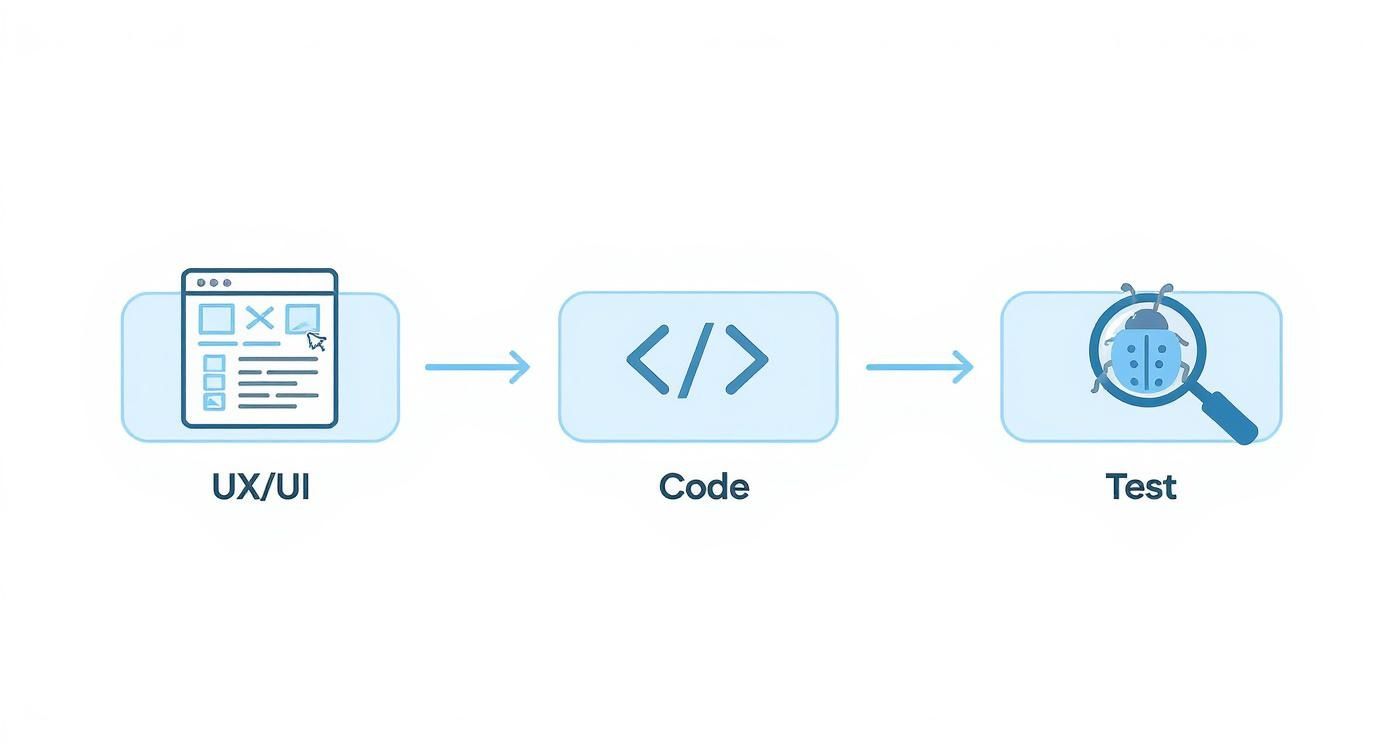
Each of these stages—UX/UI design, coding, and testing—requires specialised skills and contributes to the overall project timeline and budget.
Okay, okay, you want some actual numbers. While every project is different, this table should give you a general idea of what to expect for different types of websites here in New Zealand.
| Website Type | Estimated Cost (NZD) | Typical Timeline |
|---|---|---|
| Basic Brochure Website | $3,000 - $8,000 | 2 - 4 Weeks |
| Small Business Website | $8,000 - $15,000 | 4 - 8 Weeks |
| Custom eCommerce Store | $15,000 - $40,000 | 8 - 16 Weeks |
| Large-Scale Web Application | $40,000+ | 16+ Weeks |
Remember, these are ballpark figures. The final cost will always depend on your specific features and requirements.
This is where it’s super important to have a clear idea of your "must-haves" versus your "nice-to-haves" before you start getting quotes. Knowing your priorities helps you manage your budget effectively.
For a better understanding of potential investment, it's helpful to research various pricing structures for web development to see how different agencies package their services. And if you're looking for a more detailed local perspective, check out our guide on website design cost in NZ, which goes even deeper.
The goal isn't to scare you with big numbers. It's to help you walk into a conversation with a development company feeling informed, not intimidated. A good partner will be transparent about their pricing and work with you to find a solution that fits your budget and delivers real value for your business.

Choosing a website development company can feel a bit like hiring a key team member, can’t it? It’s a huge decision. You’re not just buying a one-off product; you’re starting a relationship with a partner who will be building a critical piece of your business. So, how do you pick the right agency from a sea of options?
Let me break it down. It’s about more than just finding someone who can write code. You need to find a team that’s the right cultural fit—a team that genuinely gets your vision and is as invested in your business goals as you are. It all comes down to trust, clear communication, and a shared drive to get results.
The most obvious place to start is their portfolio. Have a good scroll through the websites they’ve already built. Do you like their style? Does the work look polished, modern, and professional? That’s the easy part.
But you have to look deeper than just the pretty pictures. The real question is, have they helped businesses like yours achieve actual, measurable results? A slick design is great, but if it doesn't lead to more enquiries, sales, or customer engagement, then it’s just digital art.
Look for case studies where they talk about the why behind their work. A great website development company won’t just show you what they built; they’ll explain the business problem they were solving and how their solution made a tangible difference. Did they boost sales for an e-commerce store by 25%? Did they help a local service business double its online leads? That’s the real proof.
Once you’ve shortlisted a few agencies, it’s time to get them on a call. This is your chance to interview them—and remember, you’re the one in the driver's seat. Don’t just ask for a quote and call it a day.
Think beyond the price tag. A cheap website that doesn't work is far more expensive in the long run than a quality one that actually generates business. Your goal is to understand their process, their people, and their communication style.
Here are a few smart questions to get the conversation rolling:
Just as important as knowing what to look for is knowing what to avoid. There are a few classic red flags that should make you think twice. If an agency seems cagey about their process, can’t provide clear client references, or gives you a quote that seems way too good to be true, it’s probably a sign to walk away.
Another warning sign? A one-size-fits-all approach. Your business is unique, and your website should be too. If they’re just trying to push you into a pre-packaged solution without taking the time to understand your specific goals, they’re not the partner for you. A great website development company listens far more than it talks, especially in those first few conversations.
It’s a tempting thought, isn't it? You see an advert for a super-cheap overseas developer, and the price looks almost too good to be true. But when it comes to your business's digital front door, going local isn’t just about patriotism—it’s a huge strategic advantage.
A New Zealand-based website development company just gets it. They understand the local market, how Kiwis actually behave and shop online, and what your competitors just down the road are up to.
And let’s be honest, just being in the same time zone makes every conversation so much easier. Nobody wants to deal with 3 AM calls or email chains that take days to sort out.
When you partner with a local team in a place like Auckland or Christchurch, you’re getting more than just a shared time zone. You’re getting a team that truly understands the cultural nuances of doing business here in Aotearoa. They know what resonates with a Kiwi audience—the humour, the values, and the expectations.
This local knowledge seeps into every part of the project:
It’s the difference between having a website that just exists online, and having one that genuinely speaks to your customers. And isn't that the whole point?
Our tech sector is booming for a good reason. New Zealand is home to an incredible pool of talent, and choosing a local website development company means you're tapping directly into that world-class expertise.
The demand for digital services here is exceptionally strong. The local tech sector now employs over 114,000 people across more than 20,000 firms. With thousands of new digital jobs expected to open up each year, it's clear the industry isn’t just surviving; it’s thriving. This growth isn't just in Auckland, either. Cities like Christchurch are rapidly becoming tech hubs in their own right.
When you work with local developers, you're not just buying a service; you're getting accountability. These are people you can actually meet for a coffee, shake hands with, and build a genuine, long-term relationship with. They have a reputation to uphold right here in their own backyard.
You’re not just another client in a different time zone; you’re a neighbour. That changes the dynamic completely. You’re building a partnership, not just completing a transaction.
Supporting a local firm also means you're investing back into our own economy, helping to grow the very talent pool that makes New Zealand's tech scene so special. To get a better feel for the local talent out there, you might be interested in our overview of website developers in NZ. A local partner is invested in your success because it reflects directly on them, too. It’s a win-win.
Feeling a bit more prepared now? Good. That first step is always the toughest, but you're over the hurdle. You’ve now got a decent grasp of what a website development company does, a ballpark idea of what it’s likely to cost here in NZ, and how to tell a great local partner from a dud.
It’s time to put that knowledge to work. This final bit is all about what you do next.
Let's boil it all down. Choosing a website partner isn't just about finding someone who can write code; it's about finding a team that actually gets your business. They need to understand the local market, whether you're in Auckland, Christchurch, or anywhere else in Aotearoa.
Think of it this way: your website is the digital version of your shop's front counter. You wouldn’t hire just any random person to stand there, would you? Of course not. You'd want someone who understands your customers, speaks their language, and is genuinely invested in helping your business grow.
The key things to remember are:
Okay, enough theory. What should you actually do next?
The best move is usually just a simple, no-pressure chat. Most good agencies, including us here at NZ Apps, offer a free consultation. This isn't a high-pressure sales pitch. It’s a chance for you to talk about your ideas, ask all those nagging questions, and get some expert feedback on the spot.
Seriously, a conversation is the most valuable thing you can do right now. It helps clarify your own thinking and shows you what’s truly possible for your project.
You might find out your "crazy idea" is perfectly doable, or you might discover a simpler, smarter way to get where you want to go. Either way, you'll walk away with more clarity and confidence. The right digital partner can completely change your business's trajectory, and it all starts with that first, easy conversation.
Alright, let's tackle a few of the most common questions we get asked. It's totally normal to have a few things you're wondering about before you jump into a partnership with a website development company, so let's clear them up.
Honestly, this is a classic "how long is a piece of string?" question. It really depends on what you need. Think of it like building a house – a simple one-bedroom bach is going to be finished a lot quicker than a sprawling, multi-level home with a pool and custom joinery.
A straightforward marketing website with a handful of pages could be wrapped up in 4-6 weeks. But if you're after a complex eCommerce store with unique features and payment gateways, you're probably looking at something closer to 3-6 months. The final timeline always hinges on the complexity of the design, the number of custom features, and how quickly you can supply the content. A good partner will map out a clear project plan with you from day one, so there are no nasty surprises.
Great question. To get the ball rolling smoothly, it’s best to come prepared with a few key assets. It’s a bit like getting your ingredients ready before you start cooking – it just makes everything easier.
Ideally, you should have your branding materials sorted. This includes:
It's also super important to have a clear idea of your business goals. What do you want this website to actually do for you? Don't stress if your content isn't word-perfect; a good agency can help you nail the content strategy. But having the basics ready to go really helps to keep things moving.
You might think the launch is the finish line, but it's really just the start of the race. Your website isn't a "set and forget" project. It's a living, breathing part of your business that needs ongoing care.
Any decent website development company will offer support and maintenance plans. This isn't just an upsell; it's essential. These plans usually cover software updates to keep everything running smoothly, security monitoring to ward off any trouble, and regular backups – just in case the worst happens.
Think of it like a warrant of fitness for your website. It’s that regular check-up that keeps your digital investment secure, healthy, and performing perfectly as your business evolves.
This ongoing relationship is where having a local partner you can trust really shows its value.
Ready to get your website idea off the ground? The team at NZ Apps is here to help. We offer a free, no-pressure chat to run through your project and figure out the best way forward for your business. Let's build something great together.
Get Your Free Consultation with NZ Apps