
Your affiliate programme will outgrow a spreadsheet faster than you think. Picture a founder in Wellington with a handful of partners, a shared spreadsheet, and a payout run that eats a whole afternoon. I've been that person. The sheet looks fine on Monday. By Friday a coupon is missing, a refund never hits the commission column, and nobody wants the GST question.
New Zealand online shoppers spent NZ$1.73 billion during Q4 2024, a 9% increase from Q4 2023, according to NZ Post. A quarter like that makes a messy payout feel personal. A Shopify store with a few influencers and a B2B SaaS team with a partner channel do not need the same stack. They do need attribution that survives a second device, a late payment confirmation, and a human you can reach in NZ or Australian working hours.
This roundup helps you find the affiliate tool that fits your stage. You'll see ecommerce, SaaS subscription, and enterprise fits, plus the fees that hide beside the headline price. If you want the wider mechanics of links and cookies, read this guide to tracking software for affiliate campaigns. Then judge the best affiliate marketing software by the invoice, the currency, and the programme you run this quarter.
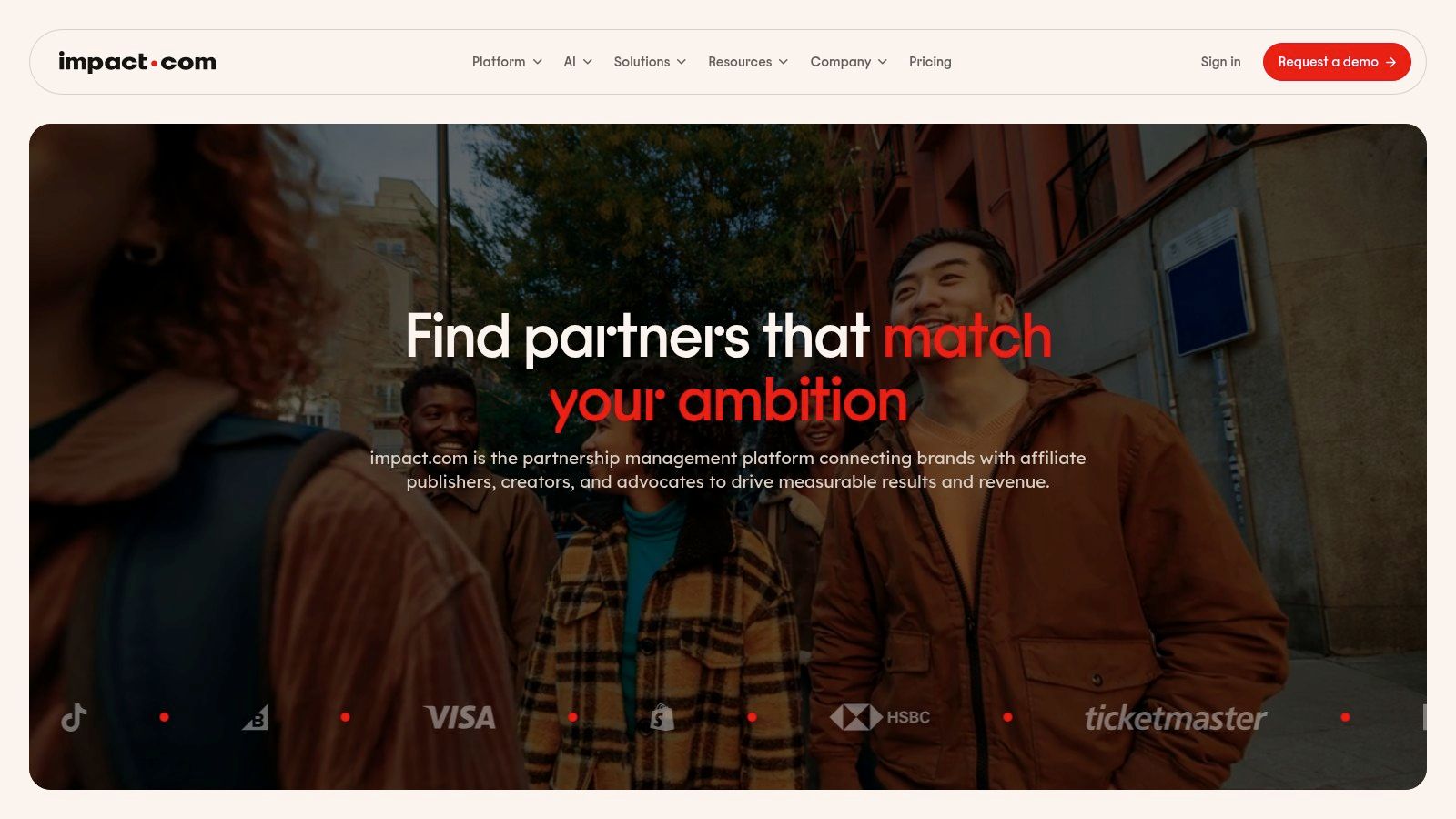
impact.com is a partnership desk, not a link toy. It tracks partner-driven sales, leads, app installs, and bookings. Affiliate, creator, and customer-referral programmes can live in one system, with partner discovery and ecommerce tracking. Higher tiers add reporting and partner deduplication. The Starter plan includes a 30-day trial.
Among 14,208 NZ sites analysed, Impact accounted for 21% of detected affiliate-platform installations, according to WMTips. That is a technology footprint, not a satisfaction score. Private or server-side setups never show in a script scan.
Ecommerce teams get catalogue-style tracking. SaaS teams can pay on leads and installs. Enterprise teams get cross-market controls. A small crew can drown in the menus.
Higher tiers need a sales conversation, and implementation can add cost. NZ and Australian buyers should check the reseller contracting and invoicing arrangement before GST lands on the wrong entity. Confirm NZD or AUD reporting, and whether support answers inside local hours. For a local view of partner programmes, see affiliate marketing in New Zealand.
You know what? A pretty affiliate link does nothing if the deal sits in a CRM for six weeks. PartnerStack is built for that B2B wait. It mixes affiliate tracking with lead and deal registration, a partner marketplace, onboarding, training, and payment workflows.
Pricing is custom and confirmed on a demo. That missing public price is the fee people forget, because a platform fee can dwarf commissions when partner activity is thin. I would not buy it on a hunch. Ask how invoices are raised for NZ or AU entities, whether GST is split out, and if payouts can sit in local currency. Also ask when support is available. Marketplace discovery can help partners find you. It will not invent demand.
A network is a hiring channel and a toll booth. You pay for both.
Awin gives advertisers campaign tools and a large publisher pool. You can search publishers, set commission rules, pay partners, and report on sales, revenue, and partner performance. NZ advertiser programmes are already on the network, which matters if you are tired of recruiting every site yourself.
The New Zealand advertising industry recorded total 2024 expenditure of NZ$3.592 billion, according to the Advertising Standards Authority industry revenue report. Affiliate is a slice of that, not the whole pie. Still, performance buyers are competing for attention, and a network can shorten the hunt.
Costs include a platform fee and a transaction-based tracking fee, on top of what you pay publishers. That stack stings if your average order is small. Ecommerce and performance programmes fit best. A SaaS team with a long sales cycle may hate network rules. Enterprise brands get reach, then spend time on category bans and banned promo methods. Check GST on the platform invoice, payout currency, and whether account managers work NZ or AU hours. Onboarding is real work. Budget a week, not a lunch break.
Rewardful stays in the SaaS lane. Stripe and Paddle connect referrals to recurring commissions, including upgrades and cancellations. You get links, coupon tracking, partner dashboards, and payout tracking. Public pricing and a 14-day trial make the first look cheap in time, which I like.
Core plans advertise no percentage transaction fee on affiliate-attributed revenue. Lovely. Then the limits show up. Plans cap monthly affiliate revenue, so a good month can push you up a tier. Optional managed payouts carry a separate processing fee, and your payment provider still charges its own cut.
For NZ and AU founders, confirm the invoice currency and how GST appears before finance sighs. Support hours matter when a webhook fails on a Monday morning in Auckland. If you are weighing referral tools beside this one, this referral programme software comparison is a useful side read. I would trial Rewardful before any custom-priced suite.
The sale is the easy part. The argument starts when a customer upgrades, pauses, or leaves. FirstPromoter is built for that subscription mess. It handles recurring, one-time, and tiered commissions, coupon tracking, and multiple links per affiliate. Billing integrations tie referrals to subscription revenue, and affiliate, referral, and influencer programmes can share the same tool.
Published self-serve pricing keeps the test honest. Price scales with affiliate-driven monthly revenue. That sounds fair until a launch blows the cap and you are upgrading mid-campaign. You still own the payout run under its terms. That is the cost finance feels, because reconciliation time never shows up on the pricing page.
A long cookie is weak comfort if consent is patchy. Build attribution on first-party events you can explain, especially when a customer opts out of marketing cookies.
Ecommerce-only stores should look elsewhere. SaaS teams on supported billing providers are the fit. Enterprise groups should confirm extra currencies, GST on the software invoice, and whether support overlaps NZ and AU business hours. I would not assume every billing vendor is covered. Ask, then run a test subscription through checkout, upgrade, and cancellation before you trust the commission file.
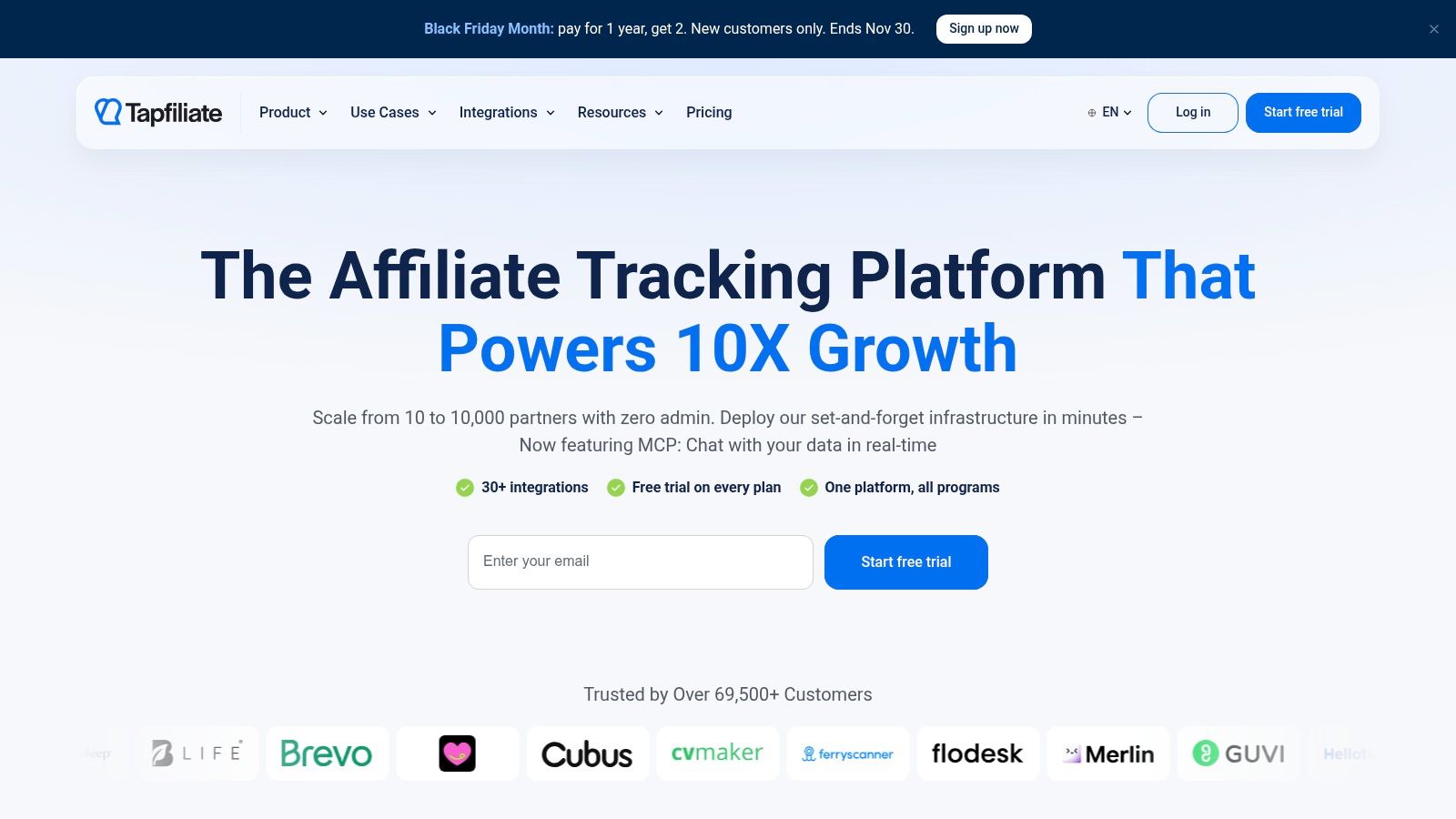
Tapfiliate sits in the middle of this list on both price and depth. Pre-built hooks cover Shopify, WooCommerce, BigCommerce, and Stripe. You get recurring commissions, coupon tracking, and real-time reporting. Higher tiers add affiliate groups and sharper commission rules. Scale adds automated payouts and multi-level marketing.
Digital wallets represented 29% of New Zealand e-commerce transaction value in 2025, while buy-now-pay-later represented 13%, according to CFO Tech. A cookie that fires only on a card payment will lie to you. Test a wallet checkout, a BNPL order, a late confirmation, and a partial refund before you trust the commission file.
Public plans are easy to compare, and trials exist, though the length changes by plan. Lower tiers cap affiliate numbers and tracking volume. Scale costs much more than Launch. Click and conversion caps can trigger overage fees, which is how a "simple" month gets expensive. Read the cap before the launch email goes out, not after the invoice lands.
Ecommerce and subscription brands both have a path here. A basic SaaS referral programme may not need the extra weight of group rules, and enterprise network features live further up the ladder. Automated payouts do not remove the reconciliation job either, since someone still has to match the run against your ledger. Check NZD and AUD figures, GST on the subscription, and whether support answers during NZ or AU working hours.
Want your own programme, with the knobs out? Post Affiliate Pro tracks clicks, sales, and other conversion events. Starter includes more than 125 plugins, and higher plans add integrations. Fraud protection, reporting, and interface tweaks are in the box. Relevant plans add multi-currency tracking and network features for several merchant accounts.
Guidance for NZ businesses says written affiliate deals should cover disclosure, approval rights, takedown rights, content ownership, reuse, commission maths, and cancellation, as Sprintlaw sets out. Software should make those rules visible. Approval flows, audit history, and a way to suspend a partner without wiping old sales are the practical bits.
Listed plans offer unlimited affiliates, a free trial, and setup help. Monthly tracking-request limits still vary, and overages cost extra. Extra currencies can be plan-locked or priced apart. That is the quiet line item.
Ecommerce stores can go deep on rules. SaaS teams can track more than a single sale. Enterprise or network operators are the ones who justify the heavier setup. A simple app will feel lighter for a first test. Confirm GST-ready invoices, local-currency settlement, and whether support picks up during NZ or AU hours. Configuration takes longer than a one-click Shopify app. Plan for that, or you will pay someone else to finish it.
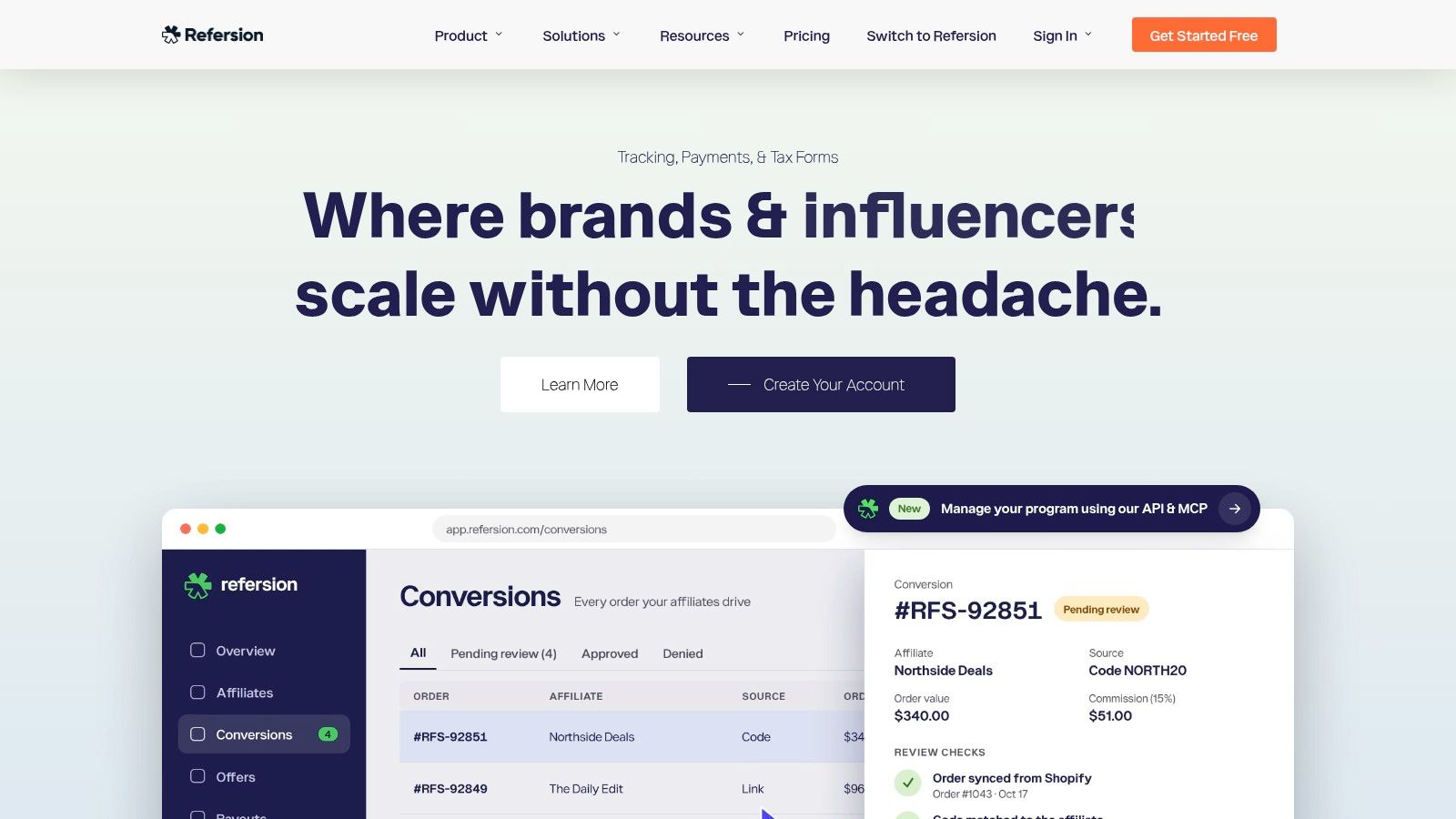
A hero product and a clearance line should not pay the same commission. Refersion is built for ecommerce brands that track at product level, using links, coupons, customer email, and product SKU. That lets a bestseller carry one rate and a clearance line carry another. It connects with Shopify, BigCommerce, and WooCommerce. Eligible plans add payments and multi-store options. A free marketplace listing can put the brand in front of partners.
Merchant reviews on the Shopify App Store are generally positive, but ratings do not guarantee payout accuracy. The practical test is whether the tracked sale, the commission, and the payout report agree when a return lands.
NZ-focused market data says 49% of consumers purchase after seeing a recommendation from a trusted creator, via Commission Factory's New Zealand ecommerce statistics. Creator programmes need clean product rules, or you overpay on the wrong SKU.
Launch adds a percentage fee on affiliate-driven sales. A flat subscription is easy to see. The percentage cut is the one that shows up after a good month. Some controls and support sit on higher tiers, and a marketplace listing alone does not give you full tracking and payouts.
SaaS subscription logic is not the centre of this tool. Enterprise teams may want multi-store, then should confirm GST treatment and whether invoices can be issued in NZD or AUD. Check support hours before a sale weekend. If your store platform is still an open question, compare options in this guide to ecommerce platforms. I would model the percentage fee on last month's affiliate sales before I picked a plan.
A Shopify store with ten affiliates and a tight budget should start on the free tier and stay there until the maths makes sense. UpPromote handles affiliate links and coupons, referral analytics, and fraud checks. Paid plans add an affiliate marketplace listing and customer-referral features. Payouts run through PayPal, Wise, or store credit, and automation changes by plan.
The Marketing Communications Code defines an affiliate link as a hyperlink where the marketer or influencer is paid commission or other compensation. It also says the commercial nature must be clear each time the message is shared. A footer disclaimer is weak. Check whether the app lets partners put a clear label beside the link in a Reel, a newsletter, and a comparison page. If the label only appears after checkout, that is too late.
Paid plans add a performance fee that varies by tier. Referral-review limits and features also change by plan. The free plan suits a basic test, not a busy creator roster. Model that fee against last month's affiliate sales before you approve a creator who can drive volume.
Shopify ecommerce is the natural fit. A SaaS company billing only through Stripe will feel the seams. Enterprise programmes usually need stricter approval and audit tools than a store app offers. Confirm the app matches your theme and checkout, how GST appears on a paid plan invoice, and whether payout currency suits NZ or AU partners. Support that only replies overnight US time will hurt on a local campaign day. Start free. Before a paid upgrade, ask for the fee schedule in writing, check the GST line, and test support during NZ business hours.
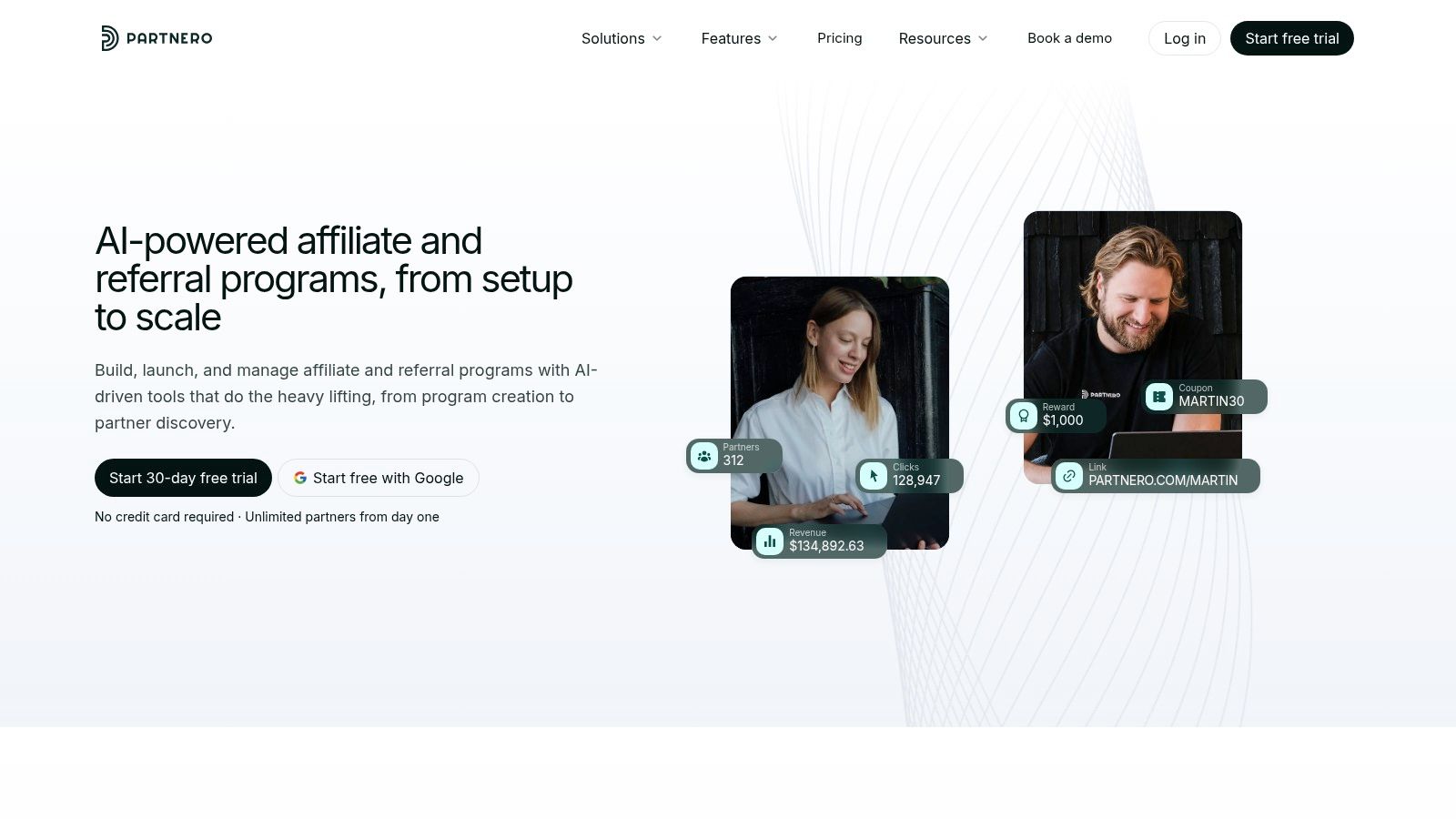
Partnero tries to cover SaaS and ecommerce without hiding the price. You get partner portals, signup pages, email templates, and tracking by link, coupon, or referral. PayPal and Wise can automate payouts. Stripe and Shopify are in the mix. There is a 30-day free trial, and a marketplace listing for programmes on the platform.
Listed plans say there are no overage fees for partners, transactions, or revenue. That is the rare line that makes me relax. Starter and Partner still limit how many programmes and team members you get. Extra seats cost more. Enterprise pricing and custom integrations need a sales conversation, which is where "simple pricing" goes fuzzy.
The Commerce Commission says the Fair Trading Act covers advertising in all forms, including online and social, and businesses must not mislead customers. Your tool should show who promoted what, on which code, and what you paid. A clean export beats a memory.
Ecommerce stores on Shopify can run a straight programme. SaaS teams on Stripe can pay recurring referrals. Enterprise buyers should price the extra seats and the custom work before they cheer the unlimited revenue line. Check GST on the NZ or AU invoice, payout currency, and whether support overlaps local working hours. I would use the trial on a real signup, not a demo script.
| Item | Free option | Best for | Fee model |
|---|---|---|---|
| impact.com | 30-day trial | Established businesses managing multiple partner types or markets | Tiered plans; higher tiers require a sales conversation, and implementation may cost extra |
| PartnerStack | No free option stated | B2B SaaS businesses managing referrals, affiliates, and reseller-style partnerships | Custom pricing confirmed during a demo |
| Awin | No free option stated | Ecommerce and performance-marketing programs seeking publisher discovery | Platform fee, transaction-based tracking fee, and partner commissions |
| Rewardful | 14-day trial | SaaS businesses using Stripe or Paddle for recurring commissions | Monthly plans with affiliate-revenue limits; managed payouts and payment-provider costs may be extra |
| FirstPromoter | 14-day trial | Subscription businesses with program-specific recurring commission rules | Self-serve plans scale with affiliate-driven revenue |
| Tapfiliate | Trial available; duration varies by plan | Ecommerce and subscription businesses needing flexible commission rules | Tiered plans with tracking limits and possible overage fees |
| Post Affiliate Pro | Free trial and setup assistance | Businesses needing detailed tracking, commission rules, or network features | Subscription plans with tracking-request limits and possible overage fees |
| Refersion | Free marketplace listing only | Ecommerce brands using product-level commissions and affiliate tracking | Plans may include a percentage fee on affiliate-driven sales |
| UpPromote | Free tier | Shopify merchants testing an affiliate or referral program | Free tier and paid plans; paid plans include tier-dependent performance fees |
| Partnero | 30-day trial | SaaS and ecommerce businesses seeking partner portals and automated payouts | Published subscription plans; extra user seats cost more and enterprise pricing is custom |
Start with the programme you run now, not the one you hope to run in two years. Match the platform to your store or your SaaS billing setup. If money moves through Shopify and a creator posts a code, an ecommerce app will teach you faster than an enterprise suite. If the sale lives in Stripe and the argument is churn, pick a subscription tool and ignore the catalogue features.
Check how fees and GST land on your invoices. A flat subscription can hide a percentage on attributed sales, a tracking fee, an overage, a payout charge, or an extra currency. I have paid for "unlimited" and then met a seat fee. Model last quarter, including refunds. A commission on a cancelled subscription is not revenue. It is a story you will have to unwind.
Book a trial before you commit. Run one wallet payment, one BNPL-style delayed confirmation if you sell in NZ, one partial refund, and one cross-device return. Export the statement and see if a human can explain it. Ask vendors for NZD and AUD reporting, a sample tax invoice, and the hours their support answers. If the reply is a form that sleeps while you are at your desk, that is your answer.
New Zealanders spent NZ$585 million online during November, including NZ$115 million across Black Friday and Cyber Monday, NZ Post reported. Seasonal spikes punish sloppy tracking. So does a normal month, once partners expect to be paid on time. The best affiliate marketing software is the one whose numbers survive that argument.
NZ Apps is an independent media and directory covering app companies, SaaS tools, and AI startups across New Zealand and Australia. We publish practical guides for founders comparing software, including how local billing and partner programmes behave. Use the trial, keep the spreadsheet as a shadow check for one payout cycle, then retire it when the totals match.
NZ Apps helps New Zealand and Australian founders compare practical software, with local tech context for affiliate and referral programmes as well as tools for running email campaigns. If you are weighing platforms, payouts, or a .co.nz presence for your own product, visit NZ Apps and see the guides and directory built for this region.
Add your NZ or Australian app or tech company to the NZ Apps directory and get discovered by founders and operators across the region.
Get ListedReach tech decision-makers across New Zealand and Australia. Sponsored and dofollow editorial links, permanent featured listings, and sponsored articles on a DA30+ .co.nz domain.
See Options