A founder in Auckland is choosing between a fast launch, reliable local delivery and a commerce stack that can handle wholesale orders later. The team wants a polished store this month, but it also needs NZD checkout, payment wallets, carrier rates, marketplace connections and sensible GST handling. Meanwhile, the budget is real, the catalogue is growing, and nobody wants to discover six months in that a “simple” platform needs twelve paid add-ons.
There isn't one universal winner among the best ecommerce platforms. The right choice depends on your catalogue, sales channels, team capability, budget and growth plans. A creator selling a small range of products has different needs from a retailer managing stores, wholesale accounts and several brands.
This guide compares 10 ecommerce platforms for New Zealand and Australia through a regional lens. It weighs payments, shipping, pricing structure, integrations, ownership and implementation effort, not only the headline feature list. New Zealand merchants also need to think about local delivery expectations, GST, marketplaces and the fact that domestic retailers captured 79.6% of all online spending in the country, according to NZ Post's ecommerce insights.
Prices, plan limits and regional availability can change, especially where platform information flags 2026 changes or quote-based pricing. Check the current commercial terms before procurement. If product photography is slowing the launch, Picjam's on-model imagery tool can help teams create consistent product visuals without arranging a fresh shoot for every campaign.
Shopify remains the easiest starting point for many NZ and Australian merchants because it combines storefront, checkout, payments, POS and a large app ecosystem in one hosted service. Its local footprint is substantial. One regional analysis reports Shopify on 28,547 of 41,679 tracked NZ stores, equal to 68.5%, while WooCommerce accounts for 31.5%. The same source notes that these figures come from a specific tracked dataset, so they shouldn't be treated as a census of every store in the country. Still, the signal is clear in the NZ ecommerce platform analysis.
Shopify Payments is available to New Zealand merchants, which reduces the work involved in setting up a third-party gateway. Shopify Checkout and Shop Pay are built for a quick buying path, while POS, social selling and marketplace tools help a retailer reach customers beyond the main website. NZ Post connections are generally handled through partner apps, so check the exact carrier workflow before launch.
The partner network is a practical advantage. Agencies, developers, logistics providers and app vendors across ANZ commonly support Shopify, which makes hiring and troubleshooting less painful. Its app marketplace covers subscriptions, B2B, tax, shipping, reviews and inventory, and this NZ ecommerce platform guide gives local founders another reference point.
The trade-off is app sprawl. A basic store can become an expensive stack once subscriptions, advanced search, loyalty, returns and complex shipping each acquire their own monthly fee. International tax and shipping rules may also need extra configuration.
Practical rule: Shopify is a strong default when speed, partner access and a familiar operating model matter more than deep code ownership.
Shopify suits a DTC brand, a growing retailer and a team that wants to launch without managing servers. It's less attractive when every business rule must be custom and the team already has strong engineering resources. For recurring revenue, compare the platform with specialist subscription ecommerce platform options.
BigCommerce is a good fit for merchants who want more commerce functionality built into the platform and fewer add-ons hanging off the side. Its SaaS model removes hosting and server maintenance, but its feature set is aimed at businesses with richer catalogues, more involved promotions or multiple storefronts.
Native multi-storefront tools, faceted search, promotions, APIs and headless capabilities give larger teams room to shape the customer experience. BigCommerce also supports B2B workflows and connects with channels such as Meta, Google and marketplaces. That makes it useful for a brand selling direct to consumers while also supporting trade accounts or separate regional storefronts.
The appeal is simple. If a feature exists inside the platform, the team may not need to find, vet and maintain another app. That can make the operating model cleaner than a Shopify store with a long list of extensions. It can also help a growing merchant delay a major replatforming project.
The caution is commercial rather than technical. 2026 plan and fee changes mean buyers should confirm the current total cost during procurement, rather than relying on an old review or a sales page saved in a browser tab. Enterprise features, custom work and higher performance needs may require a higher tier or a quote.
BigCommerce works well for a merchant with a serious catalogue, B2B requirements or a multi-store plan. It may feel heavy for a founder selling a small collection who mainly needs a handsome site and a clean checkout. The platform can do a lot, but capability alone doesn't make the work simpler.
BigCommerce is often strongest when the merchant wants fewer patches, fewer separate apps and more native commerce controls.
Payment gateways, NZD handling, carrier services and marketplace feeds still need testing in the actual region and account setup. A platform demo won't reveal whether the warehouse workflow behaves properly on a busy dispatch day.
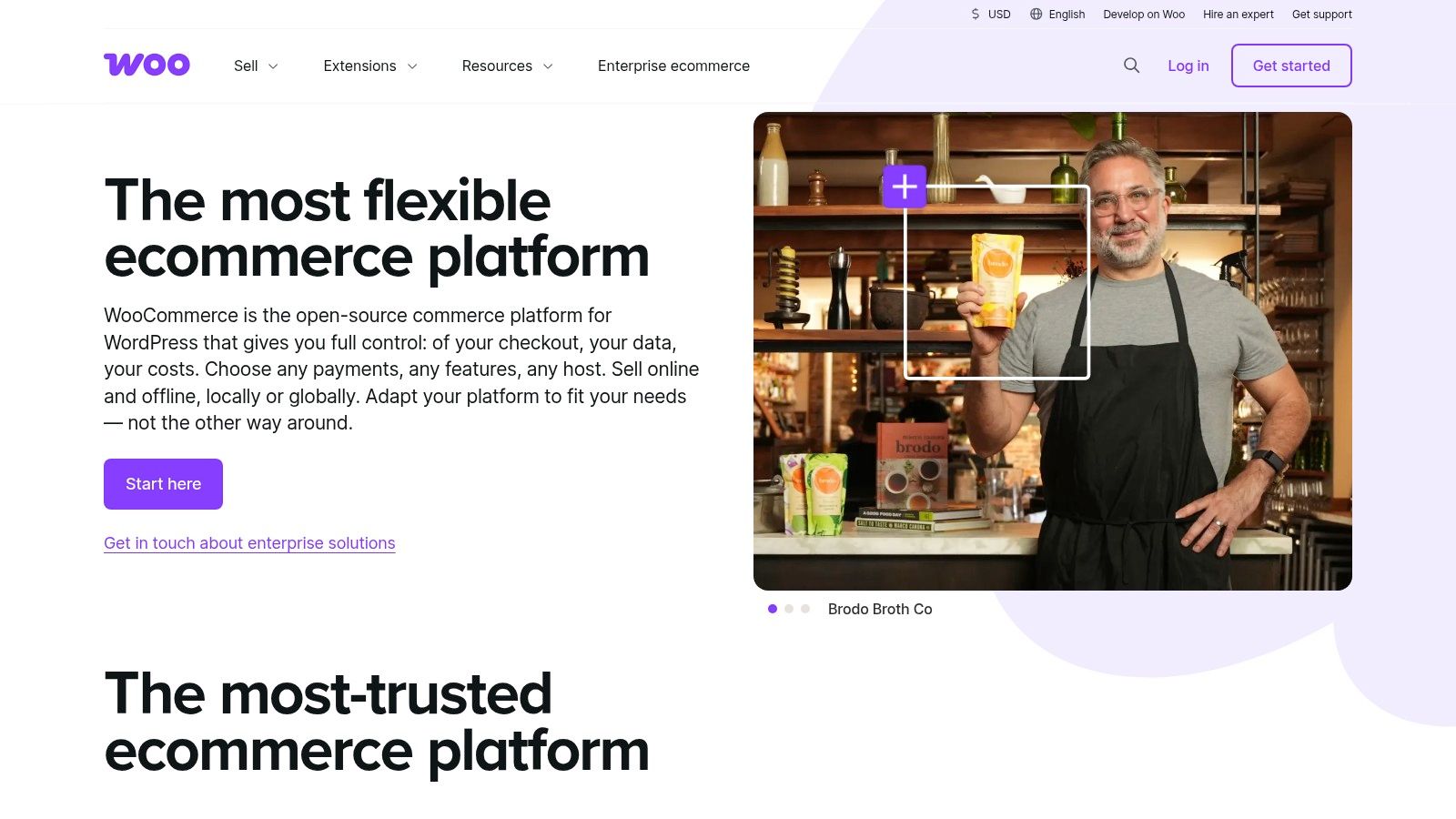
WooCommerce turns WordPress into a store, which makes it attractive to publishers, content-led brands and businesses that want full control over code and data. The core plugin is free, but that doesn't make the total project free. Hosting, security, development, backups, extensions and ongoing maintenance all sit somewhere in the budget.
That control is the main reason teams choose it. A developer can shape the product model, checkout, content structure and integrations without waiting for a SaaS platform to expose a particular setting. The extension ecosystem covers subscriptions, bookings, payments, shipping and tax, including NZ Post and GST workflows through suitable plugins.
WooCommerce is less a finished shop and more a kit of parts. That's liberating for an experienced team. It's also where weaker projects get into trouble. A plugin update can affect a theme. A hosting change can affect performance. A payment extension can conflict with another extension. Someone needs to own those risks.
A WordPress business with a strong technical partner can make WooCommerce work beautifully. A small team with no development support may spend too much time fixing the shop instead of selling products. The platform's flexibility doesn't remove complexity. It moves complexity into hosting, code and operational ownership.
For a useful local comparison of the two most common foundations, see Shopify versus WordPress in New Zealand. The choice often comes down to whether the team values convenience or control more.
Ownership test: If nobody is responsible for updates, backups and security, open source isn't freedom. It's an unattended building with the lights on.
WooCommerce suits content-rich businesses, specialist catalogues and teams with WordPress expertise. It can also suit merchants that need unusual workflows. It's a poor fit when the business wants a managed service and no appetite for technical housekeeping.
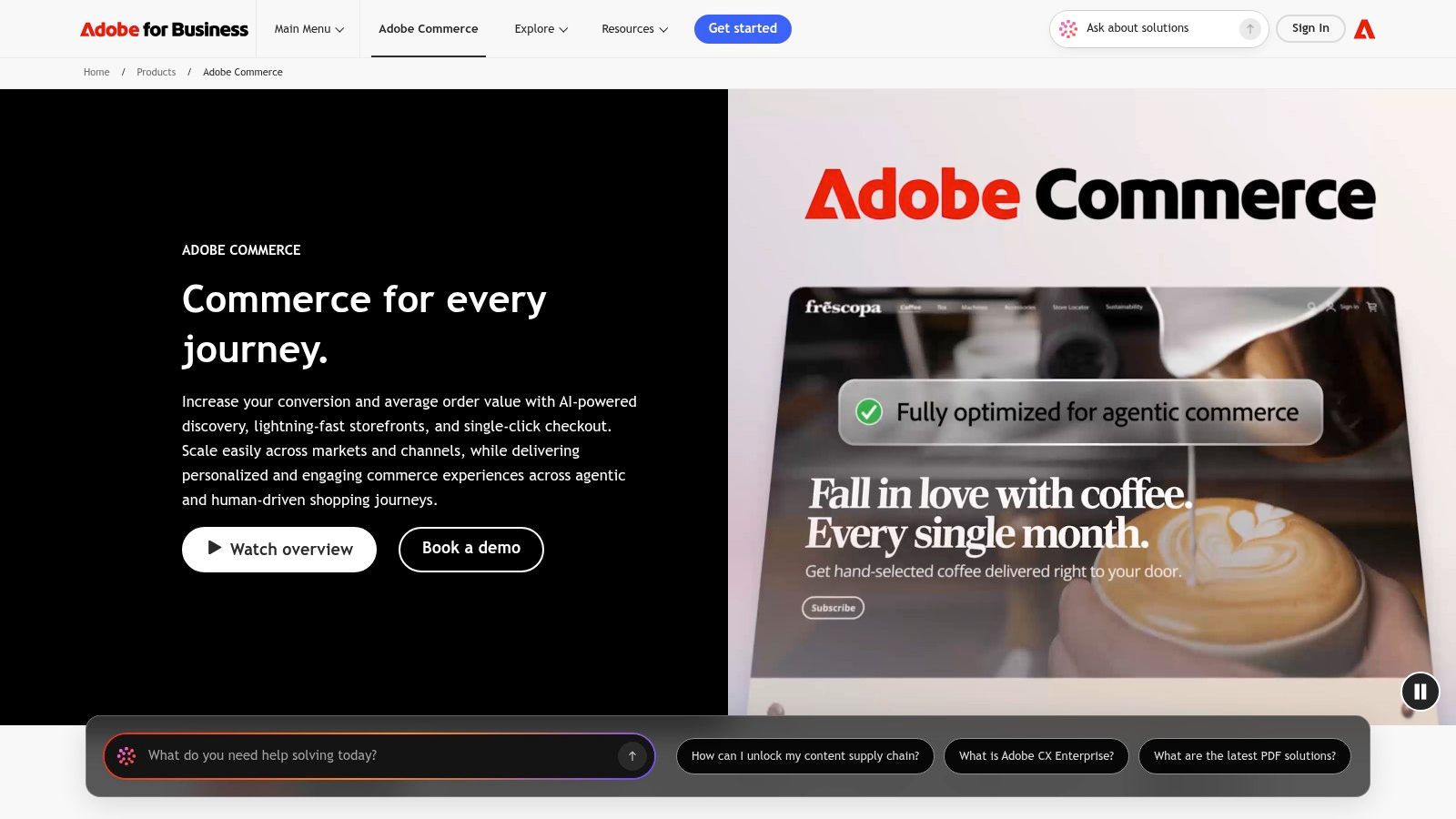
Adobe Commerce is built for commerce teams with complex products, customer groups, promotions and integrations. Magento Open Source shares the same codebase lineage, giving businesses a path to begin with the community edition and move toward licensed Adobe Commerce capabilities when the operating model demands more.
This is not usually the first platform for a small brand testing product-market fit. It becomes more compelling when the catalogue needs rich product modelling, B2B account logic, custom checkout rules, multiple brands or international storefronts. APIs and modern storefront approaches also support custom front ends where a standard theme isn't enough.
Adobe Commerce rewards a capable implementation team. Developers, solution architects, infrastructure specialists and an experienced agency may all have a role. That effort can be justified when the business needs rules that simpler SaaS platforms can't handle cleanly. It's hard to justify when the team mainly wants to publish products and accept orders.
The licensed edition is quote-based, so the subscription is only one part of the commercial picture. Include implementation, hosting, support, security, upgrades, testing and integration work in the total cost. Magento Open Source removes licensing costs, but it doesn't remove the cost of building and maintaining a dependable store.
Adobe Commerce is also a poor place to hide unclear requirements. Before signing, map pricing rules, customer accounts, stock locations, returns and fulfilment. A platform can support a complex process, but it won't invent a sensible process for you.
Choose Adobe Commerce because your operating model needs its depth, not because a large feature list looks impressive in a procurement meeting.
For a multi-brand retailer or a business with demanding B2B logic, this may be the right foundation. For a small catalogue and a lean team, Shopify, BigCommerce or WooCommerce will usually involve less implementation work.
Salesforce Commerce Cloud makes the most sense when Salesforce already sits at the centre of the organisation. Its B2C and B2B editions connect commerce with CRM, marketing and service data, which can give teams a joined-up view of customers, accounts and buying activity.
The platform supports multi-site operations, price books and enterprise governance. Salesforce's Einstein tools can support personalisation tied to Salesforce data, while AppExchange and partner services extend the wider stack. For a large organisation with established Salesforce ownership, that connected approach can be more valuable than choosing a standalone storefront with a lower entry cost.
The right question is not whether SFCC can run a store. It can. Ask whether the business will use the Salesforce connection to improve service, merchandising, account management and marketing. If the CRM team, ecommerce team and service team operate separately, the promised benefit may take substantial integration work to realise.
Licensing is quote-based and can be premium. Confirm edition limits, add-ons, order management needs, integration work and partner costs. A polished demonstration can make the platform look effortless, but enterprise implementation rarely is.
SFCC is a serious choice for established brands with governance requirements, multiple markets and a Salesforce-led technology estate. It's not a sensible first store for a small operator that wants to validate a product range. Paying for enterprise machinery before the business has a clear process is a little like buying a forklift to move one pot plant.
The platform can support B2B and B2C commerce, but the team needs a clear ownership model. Decide who manages catalogue data, promotions, integrations, analytics and release approvals before implementation begins.
commercetools is for teams that want to build a commerce experience rather than assemble a conventional theme. Its API-led architecture, microservices approach and MACH model give engineers control over the front end, applications, product experience and regional logic.
The platform includes core APIs and a Merchant Center for managing commerce operations. B2B features support large price lists, quotes and complex account models. This makes commercetools attractive for businesses selling through several interfaces, such as websites, apps, trade portals and custom experiences.
A headless approach separates the commerce engine from the customer-facing interface. That can help a business create distinctive experiences across channels. It also means the team must build, test and maintain more of the surrounding system. The storefront, search, content, checkout presentation, customer accounts and integrations may all need engineering work.
That's the core trade-off. commercetools gives a capable engineering team room to move, but it won't provide the comfort of a ready-made storefront in the way Shopify or Squarespace does. Commercial pricing is handled through sales, so the business needs a full cost model covering engineering, hosting, observability, design systems, support and ongoing releases.
The platform fits a large retailer, marketplace or international operation with a clear reason to use composable commerce. It's less suitable for a small team that wants to publish products quickly and focus on campaigns.
A headless platform can be a brilliant engine. It still needs a body, steering wheel and someone who knows how to drive it.
Before choosing it, document the experiences that require custom engineering. If the list is short, a simpler platform may deliver the same customer result with less effort.
Squarespace Commerce is a website-first platform for a business that cares very much about presentation and wants commerce without a major technical project. Its templates, editing tools and built-in marketing features make it a natural fit for designers, creators, consultants and small product brands.
The platform supports digital products, memberships and templates, and NZD is available for storefront pricing and checkout. Its updated Basic, Core, Plus and Advanced plan structure means the merchant needs to compare the exact commerce features at each level rather than choosing a plan by name alone.
Squarespace can take a business from idea to polished storefront quickly. That speed matters when the brand has a small catalogue and a direct fulfilment process. It also keeps the editing experience approachable for a founder who doesn't want every content change routed through a developer.
The limits appear around advanced operations. POS is limited to the United States, and higher-level commerce features may sit behind more expensive plans. Some plans include transaction fees, so calculate the effect across the expected order flow. Don't assume the monthly subscription tells the whole story.
A NZ brand also needs to test payment gateways, shipping rules, tax display, returns and dispatch notifications in a real checkout. A beautiful product page won't rescue a confusing freight charge at the final step.
For teams weighing design and store implementation together, ecommerce website design for NZ businesses may provide a useful local comparison point. Squarespace is strongest when content, brand and a modest store live together.
Wix eCommerce suits a service-heavy business that also sells products, bookings, events or subscriptions. Its drag-and-drop editor lowers the barrier to launch, while the Wix App Market adds tools for marketing, SEO, payments and customer management.
That mix is useful for a studio selling workshops, a venue accepting event bookings and product payments, or a consultant offering digital products alongside appointments. Wix also supports multi-channel selling and built-in marketing features, so a non-technical operator can manage more of the routine work without touching code.
Wix pricing, fees and plan limits can be nuanced. Confirm the plan required for the features you need, then check payment charges, storage, staff permissions, product limits and any app costs. A low entry price can look less appealing once the actual business workflow is included.
Shipping needs particular care for NZ merchants. NZ Post or Starshipit connections may require third-party apps, so test label creation, tracking notifications, rate rules and fulfilment status before committing. The store should make dispatch easier, not create a second spreadsheet for the warehouse.
Wix is a sensible choice for a small business that values ease of management and has a mixed service-and-product model. It's less convincing for a retailer with complex inventory, multiple warehouses, demanding B2B rules or a large integration estate.
Checkout test: Place a real test order from a mobile device, apply a discount, select delivery, request a refund and follow the tracking email. A demo store can hide operational gaps.
Wix gets many businesses moving quickly. Just keep a close eye on the point where convenience turns into workarounds.
Ecwid is a lightweight hosted cart that can be added to an existing WordPress, Webflow or custom website. That makes it useful for a business that already has a content site and doesn't want to rebuild the whole thing around a new ecommerce platform.
The storefront can connect with social channels and marketplaces, while the app market provides payment and shipping extensions. Ecwid is also a PCI DSS Level 1 provider. NZ plans show GST-inclusive pricing, which can make the subscription comparison clearer for local buyers, although gateway, app and transaction costs still need checking.
The main advantage is minimal disruption. A museum, publication, community organisation or service business can retain its existing site and add products, tickets or merchandise. The admin is straightforward, and the technical lift is usually smaller than replacing the website.
The compromise is depth. Ecwid is less extensible than a full commerce platform, and payment connectors or POS features can vary by region. A merchant planning advanced product rules, complex stock management or a large wholesale operation may eventually need a different foundation.
The platform works well when the website is already doing its main job and ecommerce is an additional channel. It's not the obvious choice for a retailer building a commerce-first business with elaborate fulfilment logic.
Before launch, check whether the chosen gateway supports the required local payment methods and whether the carrier connection passes accurate delivery information to customers. Small stores can still lose sales through vague shipping promises.
Maropost Commerce Cloud, formerly Neto, is an Australia-born platform built around ANZ retail operations. It combines storefront, catalogue, checkout and fulfilment functions with connections to POS systems, marketplaces and regional logistics providers.
That regional focus matters. NZ and Australian retailers often need more than a web shop. They may sell through their own site, Trade Me, Facebook Marketplace, physical stores and wholesale accounts, while managing local tax, stock and carrier requirements. NZ Couriers' 2025 merchant report found that Trade Me represented 45% of its merchants, while Facebook Marketplace represented 31%, showing how relevant marketplace mix remains for local sellers. The figures and channel changes are detailed in the NZ Couriers merchant report.
Maropost's strength is the operational layer. A retailer consolidating online and store activity may find its ANZ connections more useful than a global platform that needs several local extensions. B2B support and marketplace links also suit merchants with more than one route to market.
The ecosystem is smaller than Shopify's or BigCommerce's, which can affect agency choice, integration availability and the amount of community troubleshooting available. Pricing is often quote-based or billed annually, so confirm what the package includes. Ask about onboarding, support response, carrier connections, marketplace fees and data migration.
Maropost is worth serious consideration for an omnichannel ANZ retailer that wants regional logistics and marketplace capability close to the centre of the system. It may be more platform than a small DTC brand needs.
The practical test is simple. Put your catalogue, delivery rules, store inventory and marketplace orders through a pilot. If the team can manage the whole flow without manual double entry, the regional focus is doing useful work.
Maropost Commerce Cloud
| Platform | Core features / capabilities | 👥 Target audience | 🏆 Key strengths & ✨ unique selling points | 💰 Price / ★ quality |
|---|---|---|---|---|
| Shopify | All‑in‑one SaaS, Shop Pay, large app marketplace, POS & multi‑channel | SMB → growth merchants, ANZ agencies | 🏆 Fast converting checkout, native Shopify Payments in NZ, massive partner ecosystem ✨ | 💰 Subscription + paid apps; TCO rises with add‑ons · ★★★★ |
| BigCommerce | API‑forward SaaS, native B2B, multi‑storefront, headless tooling | Fast‑growing brands needing built‑in features | 🏆 Rich native features reduce app sprawl; scales for growth ✨ | 💰 Tiered plans; confirm 2026 fee changes · ★★★★ |
| WooCommerce (WordPress) | Open‑source WP plugin, vast extensions, modular pricing | Teams wanting code control, ownership & customisation | 🏆 Maximum flexibility & data ownership; large dev ecosystem ✨ | 💰 Core free; hosting/extensions paid; variable TCO · ★★★ |
| Adobe Commerce / Magento OS | Enterprise B2B/B2C, advanced catalog, headless APIs | Enterprises with complex catalogs & integrations | 🏆 Highly flexible for multi‑brand & custom logic; upgrade paths ✨ | 💰 License + implementation costs (quote‑based) · ★★★ |
| Salesforce Commerce Cloud | Commerce + Salesforce CRM, Einstein personalization | Large enterprises standardising on Salesforce | 🏆 CRM‑driven personalization, enterprise governance & ISV ecosystem ✨ | 💰 Quote‑based, premium TCO; strong for Salesforce users · ★★★ |
| commercetools | Headless, MACH architecture, microservices & robust APIs | Engineering teams building composable headless stacks | 🏆 Extreme flexibility & scale for complex B2B/B2C builds ✨ | 💰 Commercial pricing; engineering effort high · ★★★ |
| Squarespace Commerce | Website‑first builder, templates, NZD checkout support | Creators & design‑driven SMBs seeking quick launch | 🏆 Fast path to polished storefronts, built‑in marketing tools ✨ | 💰 Plan‑based; some plans add transaction fees · ★★★★ |
| Wix eCommerce | Drag‑and‑drop editor, Wix App Market, bookings & events | Small businesses & service‑driven sellers | 🏆 Very easy to launch, broad built‑in functionality ✨ | 💰 Affordable tiers but nuanced limits/fees · ★★★ |
| Ecwid by Lightspeed | Embeddable cart, social/marketplace sync, PCI DSS | Sites wanting to add ecommerce without rebuild | 🏆 Embed into existing sites quickly; NZ GST‑inclusive pricing ✨ | 💰 Low‑cost plans; less extensible than full platforms · ★★★ |
| Maropost Commerce Cloud (Neto) | ANZ‑focused commerce, unified storefront, local logistics | ANZ omnichannel retailers & wholesalers | 🏆 Built for ANZ tax, carriers & marketplaces; strong local ops ✨ | 💰 Quote/annual billing; validate inclusions · ★★★ |
The best ecommerce platform is the one your team can operate on an ordinary Tuesday, not the one with the longest feature page. A quick launch can be more valuable than theoretical flexibility when a founder needs to start trading, test demand and learn from real orders. For many NZ and Australian SMBs, Shopify offers broad support, local payment access and a familiar partner network. BigCommerce is worth a closer look when more capability needs to sit inside the platform rather than in a pile of apps.
Content-led sellers may prefer Squarespace, Wix or Ecwid. Squarespace suits a design-first brand with a modest range, Wix works well where bookings, events or services sit beside products, and Ecwid lets an existing website add commerce without a full rebuild. These platforms reduce implementation effort, but they may become awkward when stock, fulfilment, B2B pricing or marketplace operations grow more demanding.
WooCommerce is the open-source choice for teams that value code-level control and data ownership. It can be a very capable foundation, but the business must own hosting, security, updates, backups and performance. Adobe Commerce belongs further up the complexity ladder, where rich product rules, multi-brand operations and deep integrations justify more implementation work.
Maropost Commerce Cloud deserves attention from ANZ retailers focused on stores, marketplaces and local fulfilment. Salesforce Commerce Cloud fits organisations already committed to Salesforce and able to support enterprise implementation. commercetools is for engineering-led businesses that need custom experiences across several channels and are prepared to build much of the surrounding system.
New Zealand's online market also rewards careful local planning. Shoppers made nearly six million more online transactions in 2025 than in 2024, a 6% increase, while traditional in-store spending rose 2%, according to NZ Post retail data reported by ClickPost. In the first half of 2026, online spending was up 12% year on year, transactions rose 10%, average basket value rose 1%, and the average online transaction value reached $120. Those figures point to a market where checkout quality, delivery visibility and local trust deserve more attention than a generic global feature list.
Use this selection sequence:
Run a small pilot before a major launch. Use a real product range, real delivery zones, real payment methods and a realistic return. The pilot should expose the boring problems early, because boring problems are the ones customers meet at checkout.
NZ Apps can remain a useful regional reference point for founders, operators and technical decision-makers comparing ecommerce providers and implementation partners. Platform choice is a business decision, not a popularity contest. Pick the system that fits the work your team can perform consistently, then leave enough budget and time to make the customer experience feel local.
NZ Apps covers ecommerce website design, payment gateway integration, inventory systems and shopping cart improvement for businesses in New Zealand and Australia. Visit NZ Apps to compare regional technology providers and find practical ecommerce resources before you choose a platform or start a rebuild.
Add your NZ or Australian app or tech company to the NZ Apps directory and get discovered by founders and operators across the region.
Get ListedReach tech decision-makers across New Zealand and Australia. Sponsored and dofollow editorial links, permanent featured listings, and sponsored articles on a DA30+ .co.nz domain.
See Options