
You're a Wellington candle maker with stock ready, labels printed, and a plan to sell online within a month. Then you open a few website-builder tabs. Suddenly, you're buried in plan names, USD price tags, payment fees, and promises of easy setup.
Nearly every builder claims to be simple. The key question is whether it stays simple when you need to charge for rural delivery, refund an order, or work out why your subscription bill is higher than expected. A tidy homepage doesn't tell you much about the work behind the checkout.
Start with the daily jobs. A builder should make taking payment, packing orders, and keeping stock straight easier, not give you another admin shift.
For businesses seeking an ecommerce website builder NZ businesses can rely on, the useful comparison is cost, payment choices, local shipping connections, and who handles hosting and security. Design matters too, but it shouldn't hide those trade-offs.
Search visibility also needs a place in your launch plan. Whether you handle it yourself or use ecommerce SEO services, write clear product names, useful descriptions, and sensible category pages before launch. You don't need a sprawling store. You need one customers can find, trust, and buy from.

Shopify is my starting recommendation when selling products is the website's main job. Its storefront, checkout, hosting, product records, inventory, and orders sit within the same retail platform. That's useful when you'd rather pack candles than maintain a server.
Shopify's New Zealand website lists plans in USD, while its local payment information includes NZD card rates. Shopify Payments is available to eligible businesses, but check your business category and payment needs before committing. Other payment providers can bring additional platform transaction fees.
Shopify's broad integration range helps when you want to connect social selling, marketplaces, fulfilment, or accounting. Don't assume every connection is included in your subscription, though. Apps, themes, and custom work can turn a modest starting bill into something less cosy.
For a closer look at build support, the NZ guide to Shopify website builders is a useful next stop.
Best fit: a product-led business that wants strong retail tools without managing its own hosting. The compromise is paying for convenience and keeping a firm grip on recurring app costs.
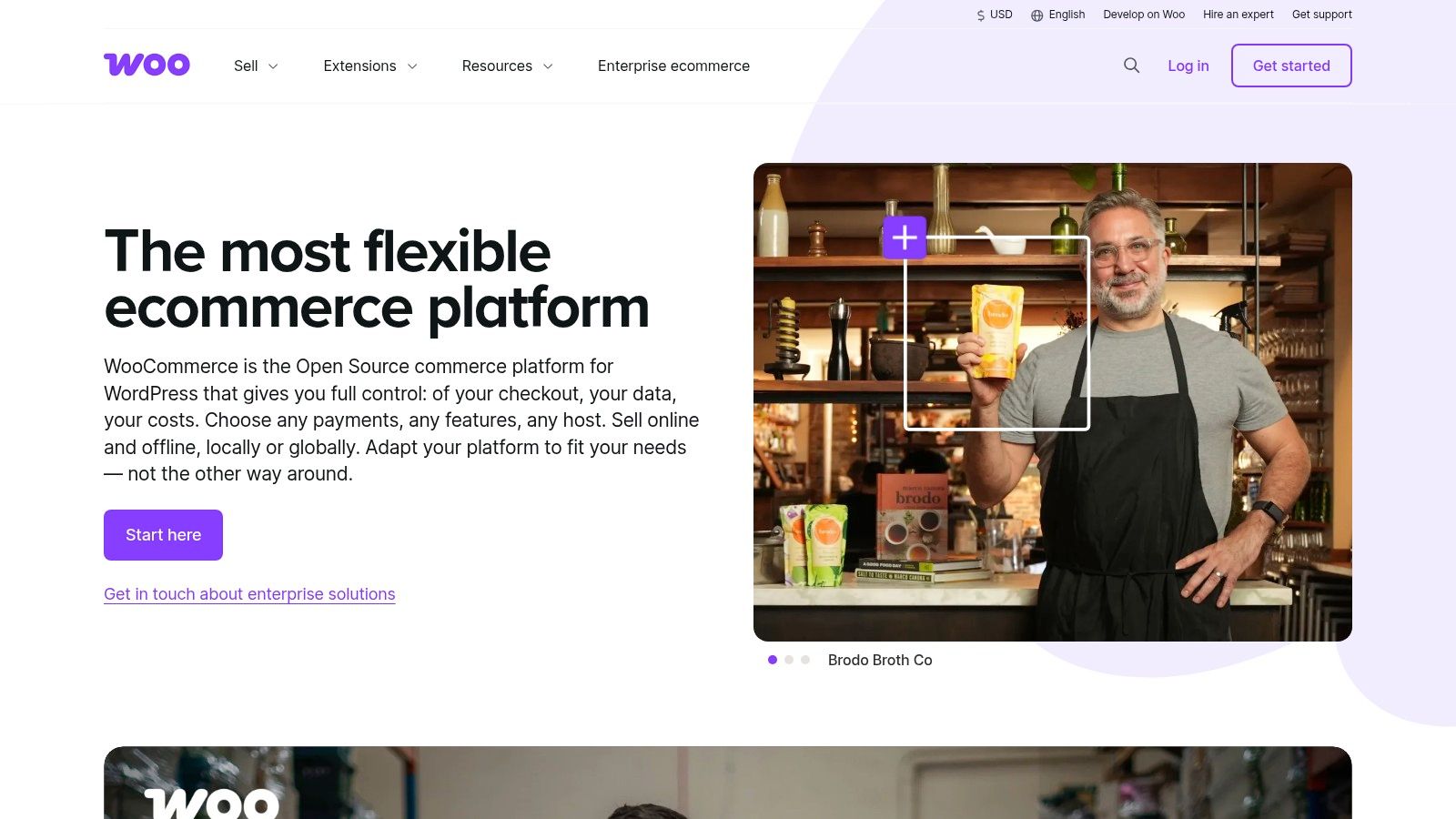
Already have a WordPress site with useful content and steady enquiries? WooCommerce lets you add a store without abandoning that foundation. It's an open-source plugin, not a hosted builder, so you choose the hosting, theme, extensions, and technical support.
The core WooCommerce software is free and doesn't charge a WooCommerce transaction fee. Payment processors still charge their own fees, and paid extensions, hosting, backups, and developer time belong in your budget. Free software isn't the same as a free shop.
WooCommerce can handle physical goods, downloads, services, bookings, and subscriptions through its core tools or extensions. You retain control of your store's data and code. That's attractive for unusual product rules or a business that needs content and commerce to work closely together.
The NZ cost picture depends on your suppliers. Local hosting or support may be billed in NZD, while extensions may be billed overseas; check each renewal currency rather than treating the whole stack as a local purchase.
Before adding another plugin, name the person who'll update it, test it, and fix it if checkout breaks.
For shipping and payments, check the exact extension's compatibility and support history. Run updates on a staging copy before touching the live store.
The Shopify versus WordPress NZ comparison helps frame that ownership decision. Choose WooCommerce for control, provided you have the skill or paid support to maintain it.
A florist selling bouquets, taking workshop bookings, and publishing care guides doesn't always need a retail-heavy setup. Wix suits businesses where the shop shares space with services and content. Its visual editor lets a non-developer manage pages and branding without assembling a WordPress stack.
Wix includes store management and checkout on eligible paid plans, with payment providers subject to country availability. Plan names, features, and pricing can vary by region. Check the billing currency shown at purchase, not a price copied from an overseas review.
The drag-and-drop editor is approachable, but design freedom needs a little restraint. Build a product page, basket, and checkout before spending hours nudging homepage graphics. Then use your phone to buy something.
In a July 2024 survey of New Zealand online shoppers, 62% said they switch products or brands to find cheaper alternatives, according to the IAB Australia and New Zealand Ecommerce Report. Make prices, delivery charges, and offers easy to compare.
Wix is a sensible choice for a mixed small business. It's less appealing if you already expect complex fulfilment or a platform move, since rebuilding the design and store elsewhere takes work.
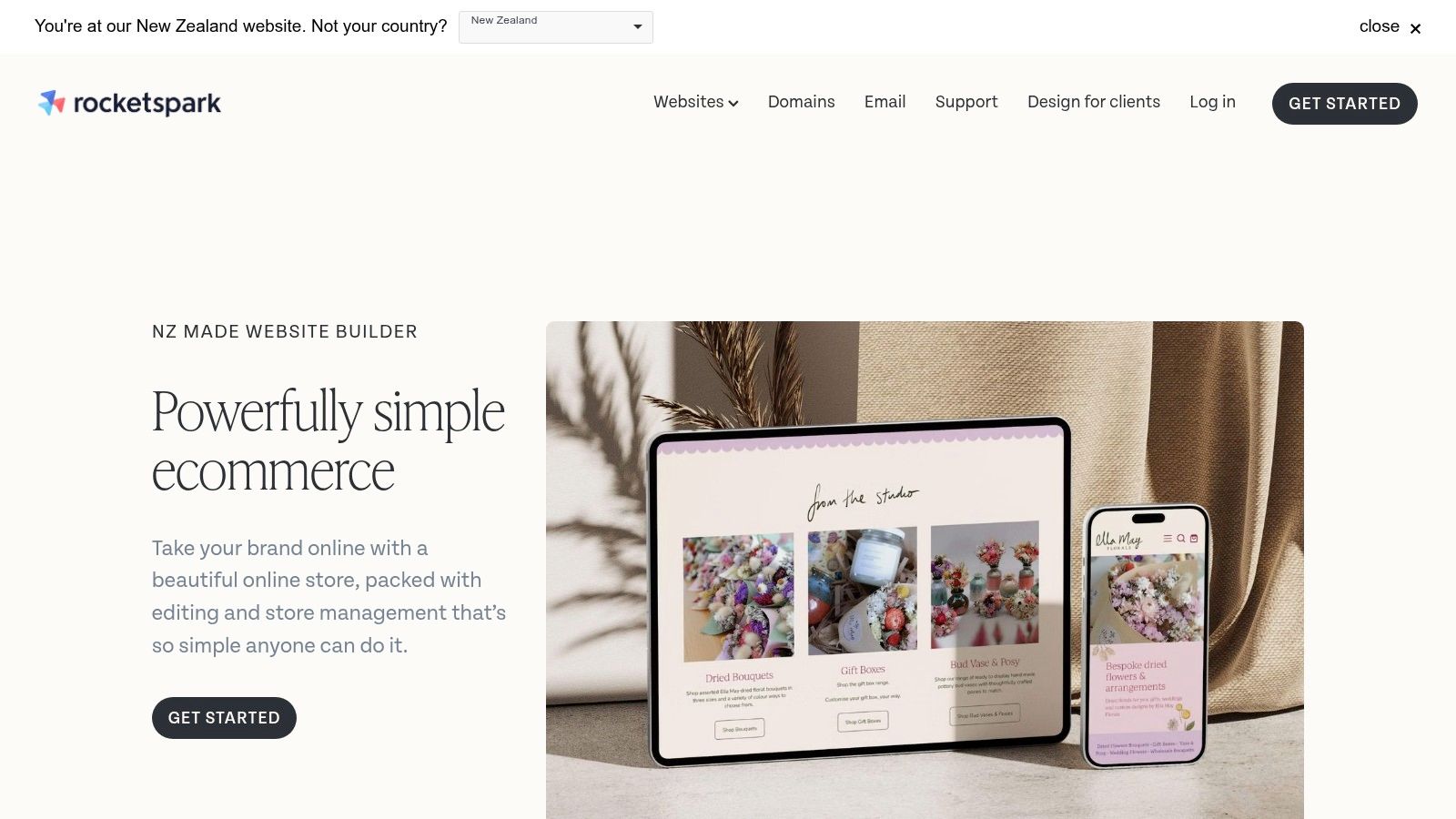
Local support can matter more than another page of features. Rocketspark is a New Zealand-founded builder with hosted ecommerce plans and local support. It's worth a close look if you want a managed shop with connections relevant to Kiwi businesses.
Rocketspark's ecommerce platform combines website building with inventory, shipping, and tax rules. The company states that website hosting is in New Zealand, and managed hosting and SSL are included. Its ecommerce plans don't list a Rocketspark transaction fee, although payment-provider charges remain separate.
Product limits and features vary by plan. Higher tiers add tools such as coupons, customer accounts, Xero, product CSV imports, and New Zealand shipping integrations. A local connection is only useful if it's included in the plan you can afford.
For the candle maker, that means checking the plan against the whole workflow. Can you import the catalogue, send orders to your shipping service, and pass clean records to accounting without retyping them?
The guide to ecommerce in New Zealand offers wider local context.
Rocketspark suits a small or medium retailer that values local support and managed hosting. You give up some of the open-ended control of self-hosted software, but you also avoid owning the server maintenance.
BigCommerce belongs on the shortlist when your operation has more moving parts. Think a growing catalogue, several sales channels, and staff who need a retail system rather than a basic shop attached to a brochure site.
BigCommerce provides a hosted storefront, catalogue tools, and sales-channel connections including Google, Meta, TikTok, and Pinterest. Its self-service plans list chat and email support. Hosting is managed, so your team can focus on store operations rather than server upkeep.
The main budgeting wrinkle is that plan eligibility is tied to trailing annual sales volume. Prices are shown in USD, and an additional fee can apply to eligible orders using open payment providers. Model the bill against expected sales and your chosen payment arrangement, not just the entry plan.
That approach suits a serious retail decision. Stats NZ found that 78% of retail businesses received online orders in 2022, according to its Business Operations Survey. The practical question isn't whether online selling matters, but how well your system supports the work.
Test channel connections with real product variants, stock changes, and cancelled orders. A product feed that publishes correctly is only part of the job; stock and order records need to remain consistent too.
Best fit: a merchant with broader channel needs and someone responsible for operations. For a tiny shop, it may be more platform than you need. For a growing retailer, the bigger concern is understanding when sales growth changes the subscription bill.
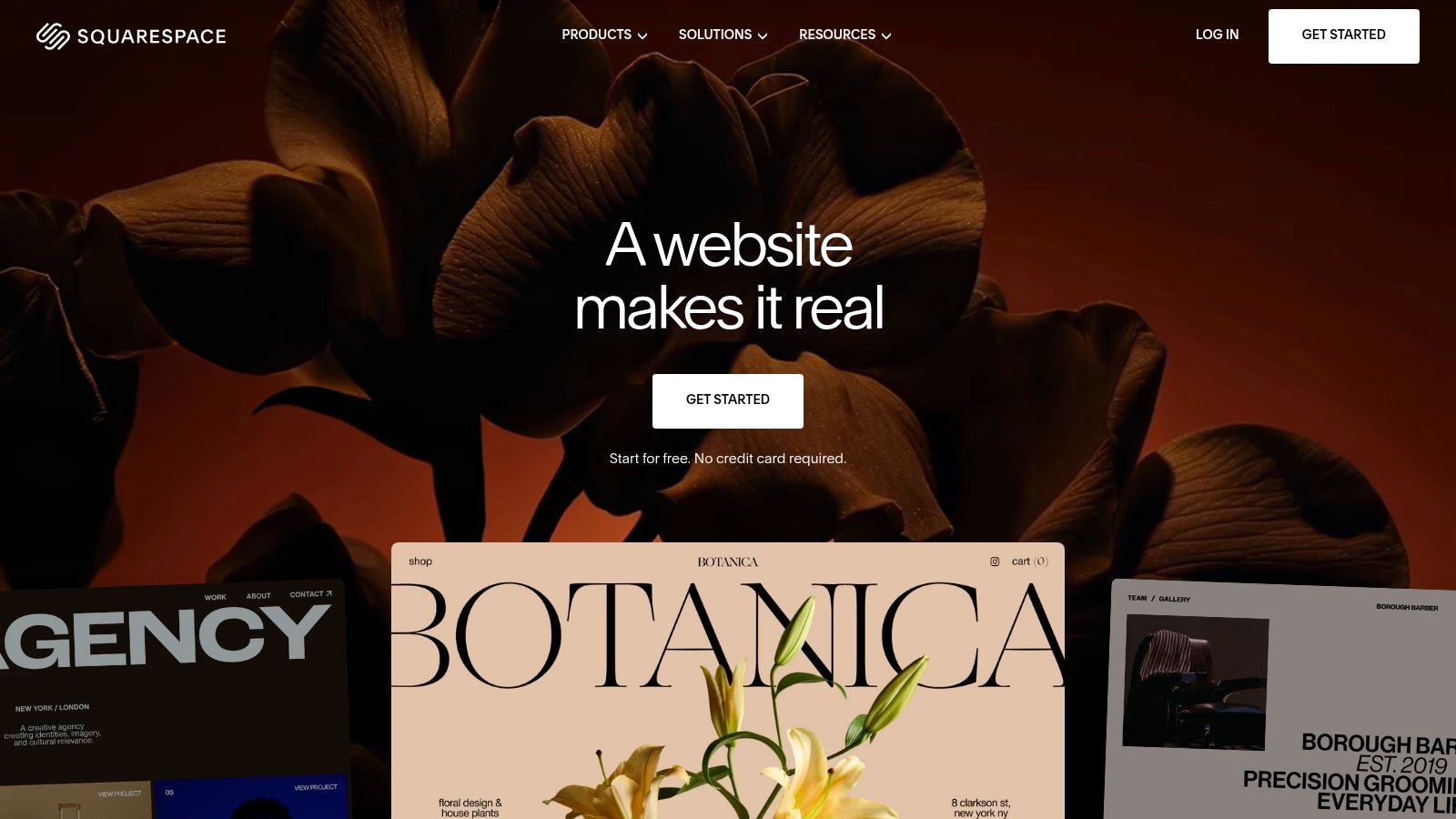
For a ceramicist or clothing label, the story around the product can matter as much as the product grid. Squarespace works well when visual presentation and editorial content carry a lot of the sales pitch. Your website, blog, and shop live together in a hosted platform.
Squarespace offers template-led design and visual editing, with commerce features depending on the plan. Some eligible annual plans include an initial domain-registration period. Check renewal costs, billing currency, and payment availability for your NZ business before paying.
A simple catalogue can suit Squarespace nicely. More complex delivery rules, international selling, or specialist retail connections deserve a proper test rather than a hopeful assumption.
There's also a less glamorous design task. The Commerce Commission's online-shopping guidance says online traders must identify themselves as being in trade and avoid misleading claims about products, prices, promotions, and delivery.
Make room for that information where customers need it:
Managed hosting removes infrastructure work, not your duty to keep offers accurate. A gorgeous banner announcing a sale is no help if the checkout tells a different story.
Choose Squarespace for a design-led brand with straightforward commerce needs. Choose a retail-focused platform if fulfilment and channel management are already the harder part of your week.
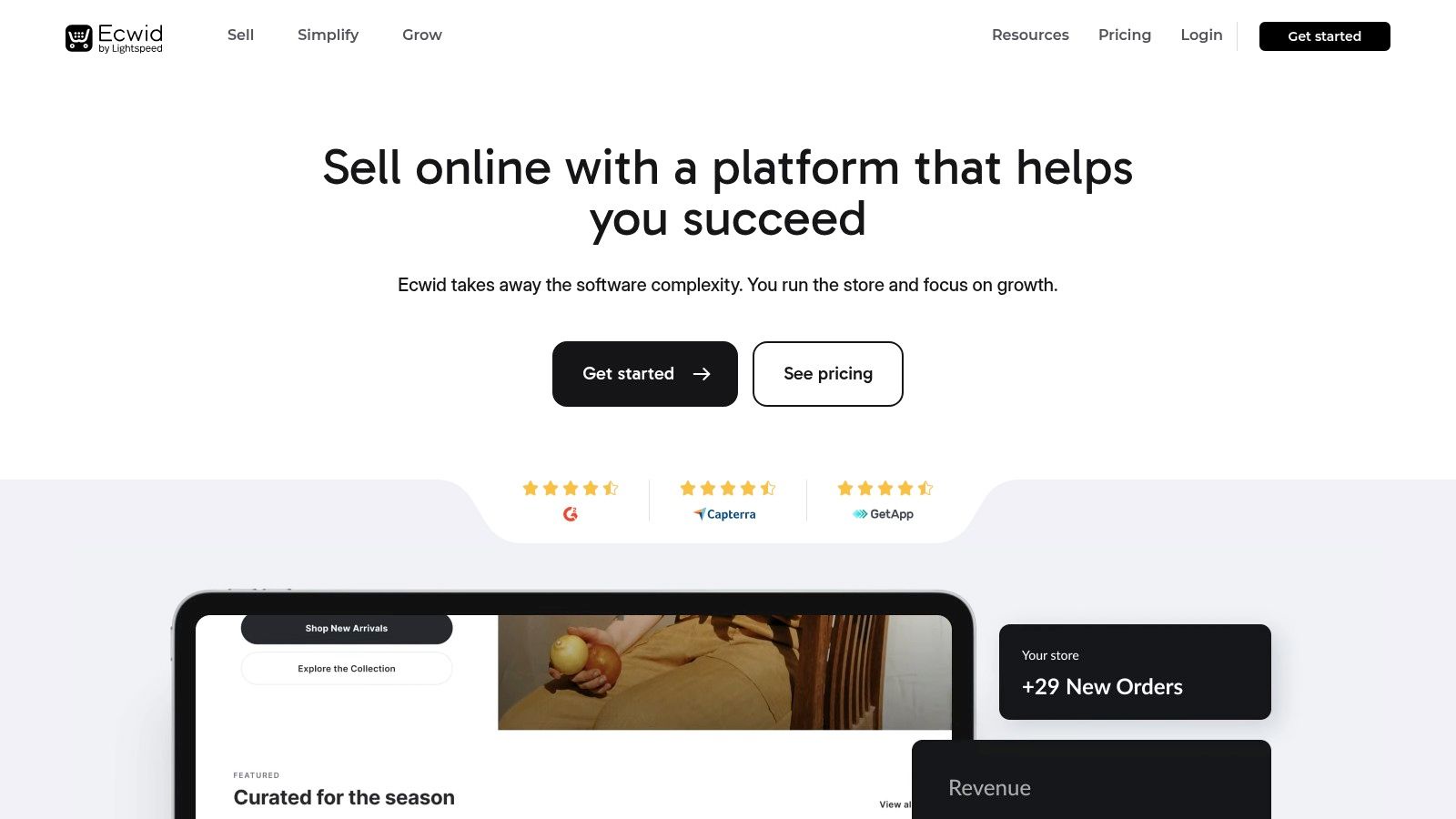
Don't rebuild a useful website just to add a shop. Ecwid can add commerce to an existing site or provide a storefront of its own. That makes it interesting for a business whose current website already does a good job of explaining the offer.
Ecwid has tiered product limits and sales features. Higher tiers add capabilities such as marketplace selling, subscriptions, staff accounts, and abandoned-cart recovery, while mobile store management is available on eligible plans. Check the billing currency, since pricing may be shown in something other than NZD.
Adding a hosted store doesn't remove the maintenance needs of your existing website. If that site runs on self-hosted WordPress, someone still needs to handle its updates, backups, and security. Be clear about where the shop ends and the host website begins.
Keep the hand-off clean. Customers shouldn't need to understand which system runs your product pages and which system takes their payment.
Test navigation, mobile display, confirmation emails, and analytics across that boundary. Check the NZ payment provider and shipping workflow within the actual plan you'll use, including any paid connection.
Product limits deserve attention too. Count the catalogue you intend to sell, not only the items ready on launch day, and check how the platform treats variants.
Ecwid is a practical fit when keeping the existing site has real value. It's less compelling if the old website is already awkward, slow to edit, or due for replacement.
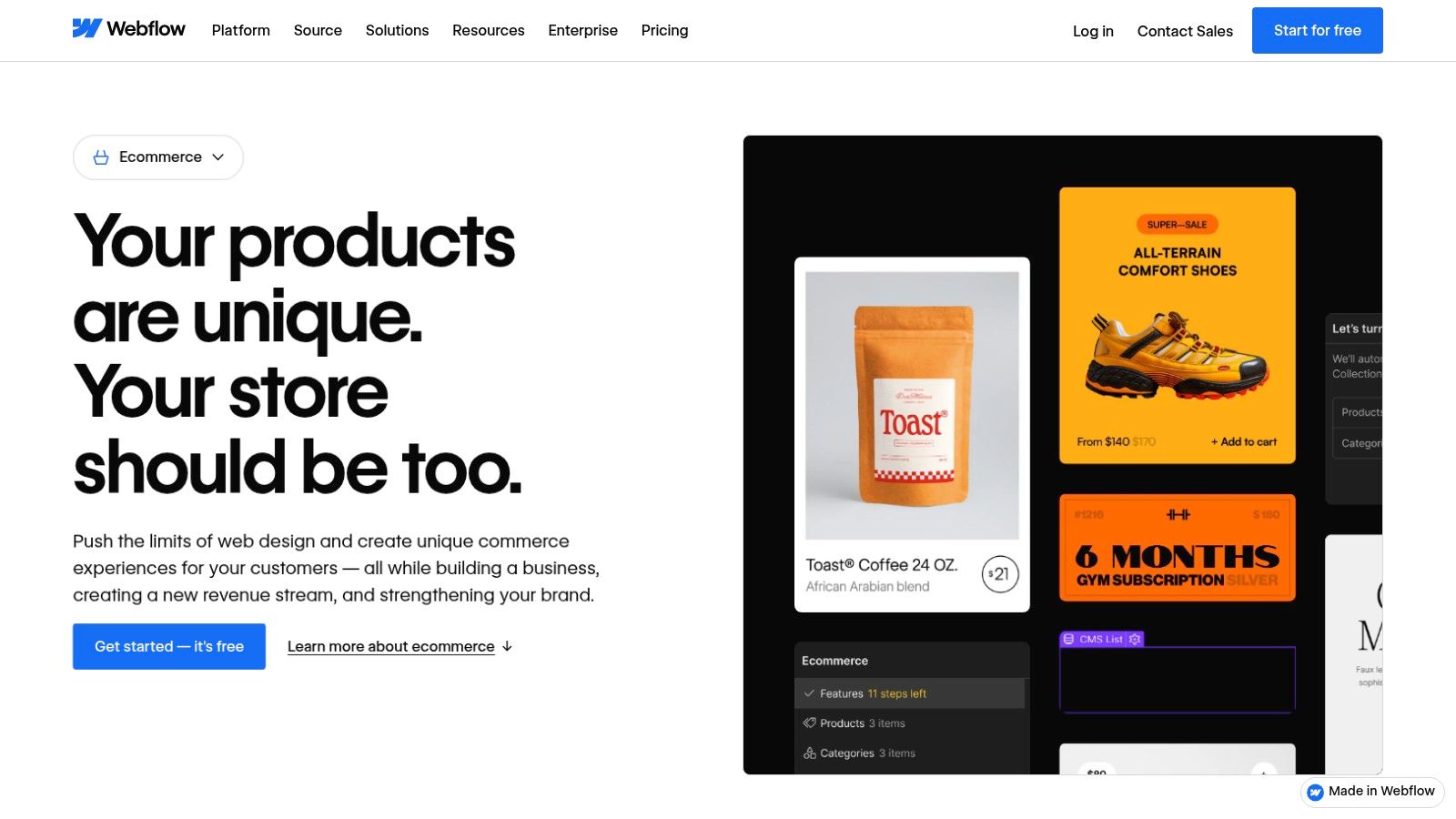
Some stores need layouts that don't feel like a standard retail template. Webflow Ecommerce gives design-conscious teams strong visual control, particularly when the shop forms part of a broader brand or content website.
That freedom comes with a learning curve. A founder who enjoys a simple drag-and-drop editor may find the design workflow more demanding. Hosted publishing takes care of infrastructure, but it doesn't make every store change a beginner task.
Webflow Ecommerce prices ecommerce plans in USD, sets different product limits, and lists a 2% transaction fee on its Standard plan, which higher ecommerce plans remove. Compare that platform charge with payment-processing costs rather than treating them as the same fee.
Before choosing it, build a representative product page and complete the whole order journey. Custom layouts are valuable only if customers can still choose variants, understand delivery, and pay without friction.
Visa's New Zealand consumer research found that 55% considered transaction security important and 50% valued trust in the business, according to Visa's consumer-trust report. Put clear delivery, returns, and privacy information beside the polished design.
Check NZ payment compatibility and your intended shipping process early. Don't leave those tests until the brand site is finished.
Webflow suits a smaller, design-led catalogue with capable design support. It's a harder sell when complex retail operations matter more than layout control.
PrestaShop is for merchants who want to own more of the machinery. Its open-source software can be installed on hosting you choose, and you can modify the code. That gives a technically capable team room to shape the store around specific needs.
The open-source PrestaShop project is free to download, with catalogue, order, and inventory tools. Modules extend payment, marketing, and other functions. There's no required platform subscription for the open-source project, but hosting and implementation still cost money.
Your team owns hosting, maintenance, backups, and security, whether staff do the work or you pay a service provider. Paid modules can also introduce separate renewal bills and support arrangements. Check their currencies alongside your hosting contract.
For NZ selling, prove that your chosen payment and shipping modules work with the software version you'll run. Test refunds, failed payments, dispatch updates, and accounting exports as well as successful orders.
Tax needs the same care. Inland Revenue's guidance for overseas businesses explains that non-resident businesses supplying NZ customers may need to register when taxable activity reaches NZ$60,000 in a twelve-month period.
Choose PrestaShop when control solves a clear business problem. Don't choose it merely to avoid a hosted subscription, then discover you've bought yourself an unpaid technical role.
An OpenCart store can look inexpensive on paper because the core software is free. The better question is who'll keep it running. Like PrestaShop, it's a self-hosted choice for merchants who want control over their ecommerce stack.
OpenCart lets you choose hosting, customise the store through themes and extensions, and select payment integrations. The self-hosted platform doesn't require a monthly software subscription. Extensions, development, hosting, and maintenance can still add substantial work and cost.
A technically confident operator may like that arrangement. A solo maker with a launch deadline may not. Put responsibility for security patches, backups, checkout tests, and outage response in writing before the store goes live.
For NZ payments and delivery, inspect the exact extension rather than assuming the platform name guarantees compatibility. Check its supported software versions, maintenance history, billing currency, and refund behaviour. Local support is useful, but only if it covers the connections you run.
Reliable order records matter too. Consumer Protection's online-safety guidance explains that electronic contracts can be legally binding and that rules govern electronic communications. Keep accessible terms, order timestamps, and dependable confirmation emails.
OpenCart makes sense when your team prefers managing its own system and has the skills to do so. It's not the low-admin route. If you want to spend your evenings developing products rather than checking extension compatibility, a hosted builder is likely to be a calmer choice.
| Item | Hosting Model | Ecommerce Access | Best For |
|---|---|---|---|
| Shopify | Hosted, all-in-one platform | Built-in storefront, checkout, and retail tools | Retailers seeking an easy-to-manage store with multiple sales channels |
| WooCommerce | Self-hosted WordPress plugin | Ecommerce through a flexible plugin and extensions | Merchants wanting control and customisation, with technical support or experience |
| Wix | Hosted website builder | Store tools on eligible paid plans | Businesses combining products, services, and content in one site |
| Rocketspark | Hosted, managed platform | Built-in ecommerce with plan-dependent features | New Zealand businesses seeking local support and a straightforward store setup |
| BigCommerce | Hosted ecommerce platform | Built-in storefront and sales-channel tools | Businesses needing extensive commerce features and broader operations |
| Squarespace | Hosted website builder | Ecommerce on eligible plans | Visually driven brands with relatively simple catalogues |
| Ecwid | Hosted ecommerce tool that can integrate with an existing site | Add a shop to a current website or create a storefront | Businesses adding ecommerce without rebuilding their website |
| Webflow Ecommerce | Hosted visual web design platform | Built-in ecommerce with plan-dependent product limits | Design-conscious teams and smaller catalogues |
| PrestaShop | Self-hosted, open-source platform | Ecommerce software extended with modules | Technically capable teams seeking control and customisation |
| OpenCart | Self-hosted, open-source platform | Ecommerce software customised with themes and extensions | Technically confident merchants managing their own ecommerce stack |
Match the builder to your technical comfort, catalogue, and sales channels. For a product-first shop without an in-house technical team, I'd start with Shopify and Rocketspark. Add BigCommerce if broader channel management and a more involved retail operation are already part of the plan.
For a service business with products on the side, compare Wix and Squarespace. Keep Ecwid in the mix if your existing website is worth retaining. Webflow suits a design-led store with capable design support, while WooCommerce, PrestaShop, and OpenCart need someone who'll own maintenance.
Narrow the choice to two or three builders, then give each the same practical test. Add a representative product, a variant, a discount, and a realistic delivery rule. Use a rural NZ address as well as an urban one, and see whether the final charge makes sense.
Test checkout with a real NZ card before you commit, using a small purchase and then a refund. Check what the customer receives, what appears in your bank settlement, and what lands in your order records. A successful payment isn't the whole transaction.
Consumer rights also belong in that test. Consumer Protection's online-shopping guidance explains that the Consumer Guarantees Act applies to purchases from businesses operating in New Zealand, including online sellers. Your returns content and customer-service process need to support those rights, not hide behind a blanket refusal.
Write down subscription costs, billing currency, payment charges, shipping connections, accounting tools, and technical support. NZD storefront prices don't mean your platform bill is in NZD. If a supplier bills in USD, allow for exchange-rate changes rather than treating today's conversion as a fixed cost.
Then name the person responsible for hosting and security. Hosted platforms reduce infrastructure work, but you still manage access and settings. Self-hosted platforms give you more control, along with the duty to maintain and recover the store.
For the Wellington candle maker, the right choice is the shop that can take payment, charge delivery correctly, and stay manageable when orders arrive. Not the one with the flashiest demo. If you'd rather talk it through, we offer a free, no-obligation consultation at NZ Apps, and the site's Get a Quote button starts the conversation.
We offer web design and SEO services for Kiwi businesses, with a free, no-obligation consultation for website projects. Visit NZ Apps and use the Get a Quote button to discuss your store, your technical comfort, and the payment and shipping workflows you need.
Add your NZ or Australian app or tech company to the NZ Apps directory and get discovered by founders and operators across the region.
Get ListedReach tech decision-makers across New Zealand and Australia. Sponsored and dofollow editorial links, permanent featured listings, and sponsored articles on a DA30+ .co.nz domain.
See Options