
Picture a homewares shop in Christchurch. A loyal local crowd, a few hundred orders a month, and a growing pile of Australian requests sitting in the inbox. The owner has a decent site, a part-time marketer, and a nagging suspicion the store has outgrown its own plumbing.
That shop is the reason this list exists. SaaS ecommerce platforms carry the dull, load-bearing work: hosting, checkout, tax rules, payment gateways, stock sync. What separates one retailer from another isn't the subscription. It's what they did behind the storefront.
So here are seven NZ and Australian retailers, each on a different setup, each solving a problem you'll probably recognise. For every one, I'll spell out what changed under the hood, the move a smaller store can copy this quarter, and where the headline number deserves a raised eyebrow. Vendor case studies are marketing documents. Useful ones, mind you, but marketing all the same.
Mocka is the New Zealand home and lifestyle retailer that moved off BigCommerce onto Shopify in 2024. The migration itself is unremarkable. What's interesting is that Mocka runs an online store, a physical shop in Christchurch, and a cross-border operation into Australia on one system, with store teams able to rebuild collections and swap campaign content without waiting on a developer.
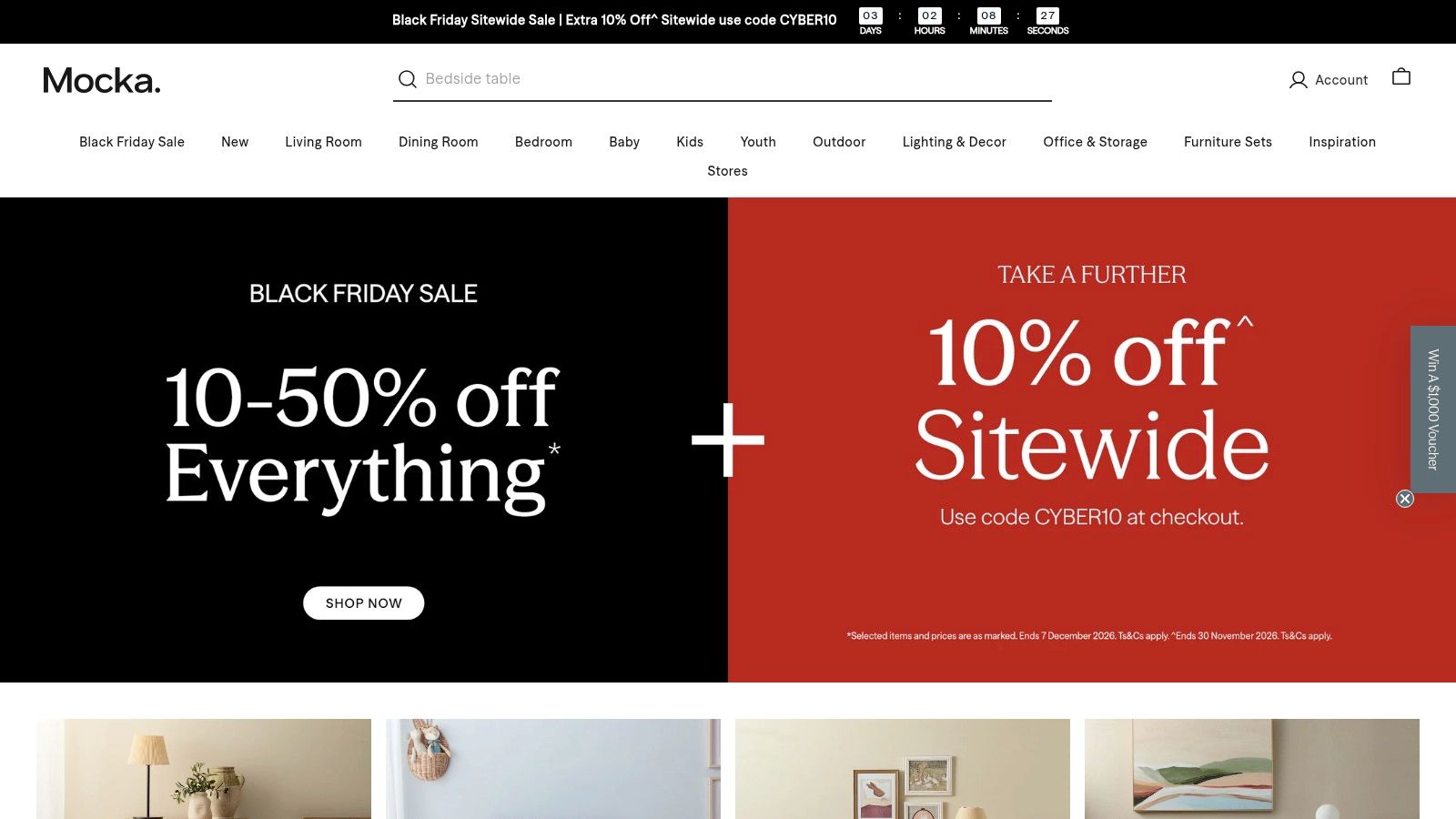
That last detail matters more than it sounds. Seasonal retail moves fast, and a content change stuck in a ticket queue for four days is a content change that misses the weekend. Shopify Flow and Launchpad handle the scheduled promotion side of things, which is unglamorous and exactly what a lean team needs.
The numbers, with the caveat attached. Shopify's published case study credits the move with strong growth in Australian sales and a healthier average order value. Treat both as vendor-reported. No independent audit sits behind them, and a platform case study naturally picks the merchants and the windows that flatter it. The direction of the result is believable enough. A retailer that can localise its Australian storefront and push promotions live without developer bottlenecks should convert cross-border shoppers better. I'd just want to see the trading figures before quoting any percentages in a board paper.
Replicable move: if you sell into Australia, localise the small stuff before you spend a cent on ads. Currency, delivery thresholds, GST display, returns wording. Those are the friction points that strangle cross-border conversion, and none of them require a migration to fix.
Why the timing makes sense. New Zealand's ecommerce market grew 12.3% in 2023 to roughly US$7.5 billion, or NZ$12.1 billion, with internet penetration at 95.7% in early 2024, according to the US International Trade Administration country guide. Nearly everyone can buy. The fight is over who makes it easiest. You can poke around the store yourself at mocka.co.nz.
A rest home ordering mobility scooters does not want the retail version of the job. It wants its agreed price, its approved catalogue, the last invoice, and a reorder button. That is why Allied Medical earns a place among SaaS ecommerce examples. The healthcare supplier runs wholesale accounts and direct sales on Shopify, with customer-specific catalogues and pricing, company profiles, invoice history and reordering built in.
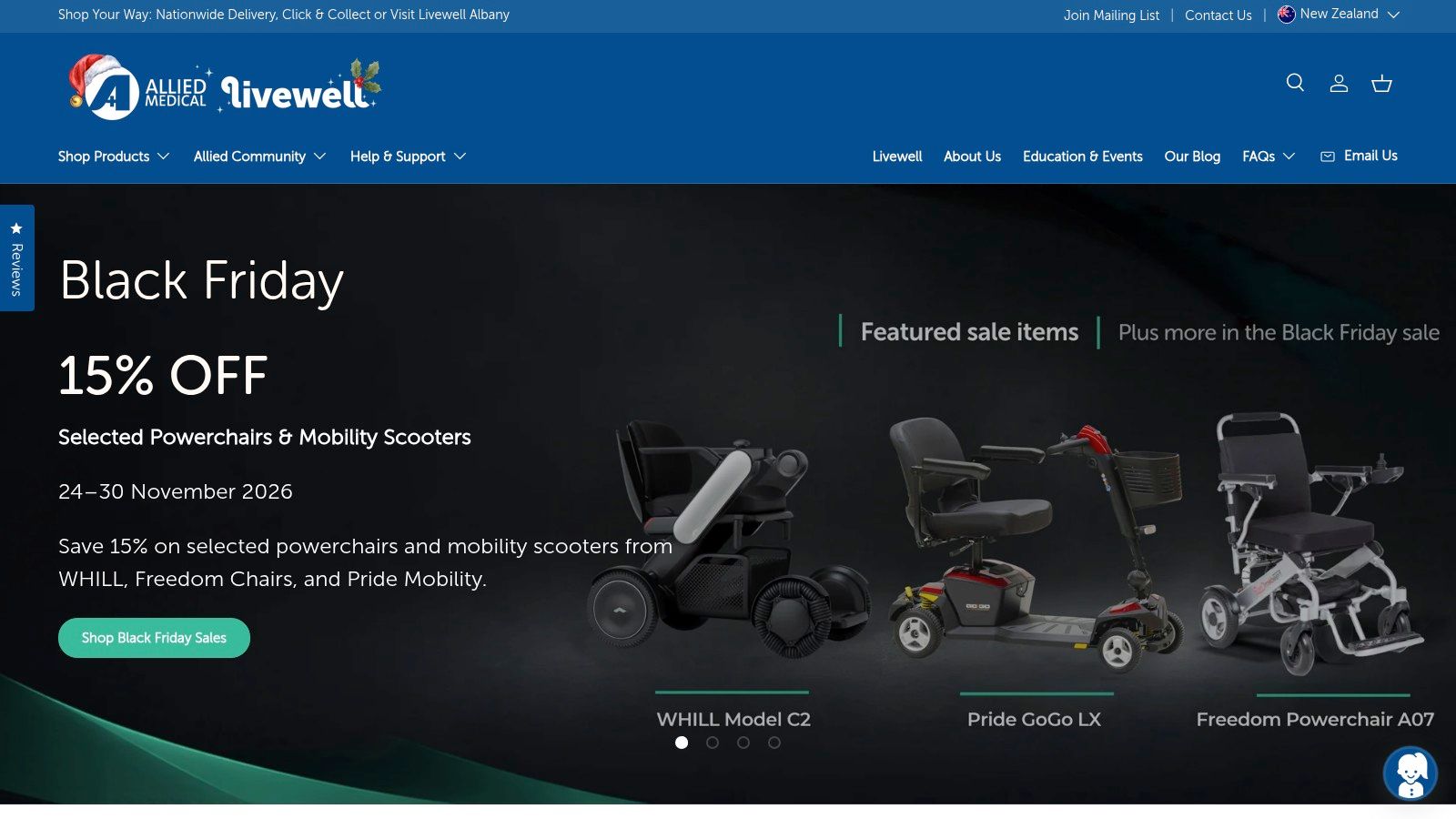
Read that feature list as a set of operational demands, not a platform brochure. Behind the scenes, staff need fewer manual price lists, fewer emailed quotes, and fewer calls asking what was ordered last time. Moving B2B ordering online reduces that manual backend work. The gain is practical, even if vendor case studies tend to make the before-and-after look tidier than reality.
B2B on a consumer platform is a fit question, not a feature checklist. The hard part is whether account rules survive the messy middle between quote, cart, checkout and invoice.
Ask three things before you commit.
Get those wrong and the work lands in spreadsheets, inboxes and phone calls within a quarter. That is the trade-off. Shopify gives you a strongcommerce base, but wholesale rules still need careful mapping. Customer-specific pricing is only useful when the right buyer sees the right catalogue at the right moment, without calling sales to fix it.
The B2B test: if a wholesale buyer can't see their own price and reorder last month's invoice in under two minutes, your store is a catalogue, not a sales channel.
I would start with reordering before adding clever front-end touches. It turns a business site from a brochure into a habit, because repeat buyers have a reason to come back. If you're scoping a store like this, the Shopify website builders comparison is a reasonable place to check what each option handles natively before you commit to a build. Treat any vendor claim about time saved as a prompt to inspect the workflow, not as the business case on its own.
Australian fashion house Aje made a bet plenty of mid-size brands get wrong: it treated the website as a flagship, not a catalogue. The Shopify Plus build runs localised Australian and New Zealand storefronts plus a global site, with regional currencies and international shipping wired in.

The harder work sits underneath. One brand identity, several market contexts. Sizing conventions, delivery promises, returns policies and currency display all shift by region, and the storefront has to hold that without looking like three separate companies wearing the same logo.
Aje reported a sharp jump in conversion after the redesigned site launched. Striking, yes. It also arrived alongside new photography, faster pages, different navigation and a reworked checkout, all at once. Attribution to any single factor is guesswork, and the figure is the brand's own.
That last part is worth sitting with. When a brand changes five things in one relaunch, no honest analyst can tell you which one moved the needle. Fashion conversions live and die on imagery and fit confidence as much as on platform plumbing, so treat vendor case studies as direction, not proof.
The playbook underneath the number is still sound. Localised storefronts let a shopper in Auckland see prices in dollars they recognise, shipping costs that make sense, and a delivery window that reflects reality. Hesitation drops when nothing feels foreign.
Replicable move: localise the buying signals first. Currency, shipping cost and expected delivery date, all visible before checkout. Those three remove more hesitation than a new homepage banner ever will.
Caveat: Shopify Plus is scoped and priced for larger operations. Under a few hundred orders a month, the same playbook runs on standard Shopify. If you're weighing bigger builds, it pays to compare Shopify Plus agencies on portfolio and handover terms before anyone sees a signature.
Vinomofo took the least fashionable route on this list: a headless build on BigCommerce, where the customer-facing storefront sits separate from the commerce engine underneath. BigCommerce's case study frames it as support for expansion across Australia and Singapore plus a broader product offering.

Headless means the front end talks to the backend through APIs. You get real control over design and content without rebuilding checkout, tax and inventory logic from scratch. You also get a longer build, scarcer skills, and a permanent maintenance conversation.
DHL data cited in global ecommerce statistics puts smartphones at 65.7% of New Zealand ecommerce sales in 2025. NZ Post, cited in the same roundup, recorded nearly six million more online transactions in 2025 than in 2024, a 6% increase that outpaced 2% growth in traditional in-store spending.
That's the honest argument for a custom frontend. Not "headless is modern", but "most of my buyers are on a phone and my template is fighting them".
Headless is a budget decision wearing an architecture costume.
Replicable move: test your checkout on a mid-range Android phone over 4G before you commission anything clever. If a template gets you to a fast, clean mobile purchase flow, you probably don't need headless yet.
Caveat: BigCommerce's public case study says almost nothing about cost or operating trade-offs. Ask any agency pitching headless what monthly maintenance looks like in year two. Compare the best ecommerce platforms on total cost of ownership rather than feature lists.
Coco Republic has been selling furniture and homewares for decades, and now runs stores and ecommerce across Australia, New Zealand and the United States on BigCommerce. The move came after earlier platforms couldn't keep pace with the catalogue. That's the honest reason most furniture retailers replatform: not features, weight.
A sofa isn't a t-shirt. Every product carries dimensions, fabric options, lead times, delivery zones and freight costs that vary by postcode. Multiply that by a few thousand SKUs and the platform's job shifts from "display products" to "hold structured data other systems can read".
Furniture and homeware accounted for 23% of retail activity online in 2023, according to the New Zealand digital economy guide from the US International Trade Administration. That's a category where buyers research online and often want a human, a showroom, or a firm delivery promise before they commit.
Replicable move: write your delivery rules before you choose a theme. Freight logic, rural surcharges and assembly options generate more support tickets than product photography ever will.
Caveat: vendor case studies rarely include a cost comparison, and multi-market catalogues usually drag in integration work with ERP, product information and freight systems. Budget for the plumbing, not just the subscription. Coco Republic's own store is worth a browse at cocorepublic.com to see how a considered-purchase catalogue is merchandised.
Signet sells packaging to everyone from a single cafe to a corporate with twelve sites, and that spread is the entire design problem. Its Adobe Commerce build handles a catalogue running into the thousands of products, navigation shaped around customer profiles, and an omnichannel experience for business buyers.
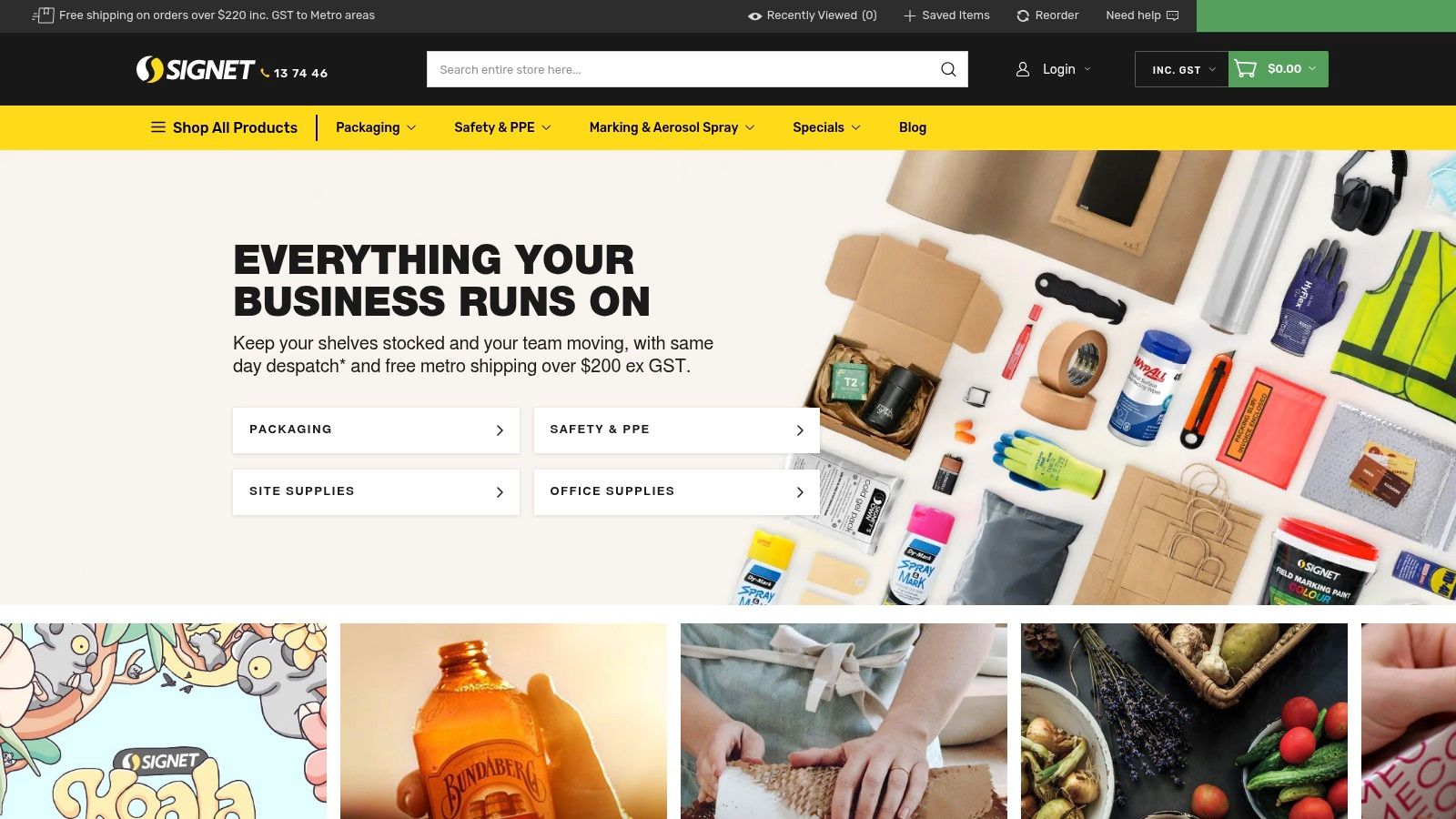
Catalogue size isn't the impressive bit. Plenty of platforms hold thousands of SKUs. The harder trick is making a first-time buyer and a procurement manager see different, useful paths through the same inventory. Signet's navigation splits by customer type, so a cafe owner hunting coffee cups isn't wading through pallet quantities of industrial wrap.
Adobe's case study credits the rebuild with meaningful digital revenue growth over two years and a customer base that now does most of its buying through the website. Those figures are vendor-published and unaudited, so treat them as directional rather than audited. The direction still matters for distributors: the site stopped being a brochure and became a channel with its own revenue line.
Why now. NZ Post data cited by the New Zealand e-commerce market analysis from Research and Markets puts New Zealand online spending above NZ$12.7 billion in 2025, up nearly NZ$1.1 billion year on year, at almost 23% of physical retail spending. Business buyers moved online along with everyone else. A distributor without a working self-service site is asking its customers to phone in orders they would rather place themselves at 9pm.
Practical rule: product discovery beats product count. A large catalogue with bad navigation is a warehouse with no aisles.
Replicable move: tailor navigation to account type before you tailor pricing. Splitting browse paths by buyer type costs less than a pricing engine, and it tells you which segments use the site. Fix the browse path and the pricing conversation gets dramatically easier.
Caveat: Adobe Commerce implementations are heavier than hosted storefronts, in both build cost and ongoing maintenance. One salesperson and 200 SKUs? This is a sledgehammer for a walnut. If the build side is where you're stuck, our ecommerce website design work covers storefronts, payment gateways and product structure.
Oroton has been selling bags and accessories in Australia since the 1930s, which makes it a useful test case for a specific question: can a heritage brand modernise digital sales without gutting the in-store experience? Its BigCommerce build leans on omnichannel, and the case study reports a twofold increase in overall site performance after the platform change.
Doubling site performance is a vendor-published figure with no independent comparison behind it. Read it as "the old site was slow" rather than "this platform is twice as fast as the alternative". Speed comes from theme weight, image handling, app count and hosting configuration, and you can wreck a quick platform with a heavy theme inside a fortnight.
For a second data point, look at Slinger's Shopify case study. The New Zealand brand cut its purchase journey from six clicks to three, and within four months reported revenue up 43.5%, conversions up 20% and traffic up 20%, with NZ$1 million in orders in the first 30 days. Also vendor-published. Also pointing at the same lesson: friction, not features.
A platform change is a hypothesis. Speed, clicks, conversion. Pick the one you're actually testing before you migrate.
Replicable move: count the clicks from landing page to paid order on your own phone, right now. If it's more than four, fix that before you touch anything else.
Caveat: performance and conversion gains rarely come from the platform alone. Design, merchandising and checkout logic do the heavy lifting. Oroton's site at oroton.com shows the brand work; the migration is only half the story.
| Item | Platform | Market Focus | Best For | Reported Result |
|---|---|---|---|---|
| Mocka | Shopify | Australia and New Zealand; home and lifestyle retail | Cross-border and omnichannel retail | Australian sales increased 31% in FY25; quarterly average order value rose 13% year on year (vendor-reported) |
| Allied Medical | Shopify | New Zealand; healthcare B2B and consumer sales | Suppliers serving business buyers and direct consumers | Backend task time reduced 40% (vendor-reported) |
| Aje | Shopify Plus | Australia, New Zealand, and international fashion markets | Larger fashion brands expanding across markets | Conversion rate increased 135% in the weeks after the redesign |
| Vinomofo | BigCommerce | Australia and Singapore; online wine retail | Retailers seeking a customised headless storefront | No specific numerical result reported |
| Coco Republic | BigCommerce | Australia, New Zealand, and the United States; furniture and homewares | Multi-market retailers with large product catalogues | No specific numerical result reported |
| Signet | Adobe Commerce | Australia; B2B packaging and business supplies | Distributors with extensive catalogues and varied business buyers | Digital revenue rose 25% within two years; 6 in 10 customers used the website to buy (vendor-reported) |
| Oroton | BigCommerce | Australia; premium accessories and physical retail | Established retailers combining online and in-store experiences | Overall site performance increased twofold (vendor-reported) |
Strip the percentages away and each of these seven made one change that mattered. Mocka rebuilt its cross-border storefront so the team could act fast. Allied Medical gave trade buyers their own prices and a reorder button. Aje localised by market. Vinomofo bought frontend control. Coco Republic moved to carry catalogue weight. Signet rebuilt navigation around customer type. Oroton chased speed and omnichannel discipline.
Notice what's missing from that list. Nobody won by adding more apps.
Start with the constraint, not the platform. Write down the one thing your current site makes hard. Freight quoting. Wholesale pricing. A slow mobile checkout. A content team that can't publish without a developer. Then find the example above that solved the same problem and copy the move, not the stack.
Small markets aren't a ceiling either, and the local software sector proves it. The 2024 kiwiSaaS report puts sector growth at 15% compound annual growth since 2016, about NZ$2.4 billion in revenue, and average revenue of NZ$214,802 per full-time employee. Vend, the New Zealand point-of-sale company, served about 25,000 retailers worldwide before Lightspeed acquired it in a deal valued at NZ$455 million, as the kiwiSaaS explainer on SaaS records. Neither started with a global roadmap. They started with a messy local problem.
One more thing worth saying plainly: don't buy a platform to fix a process. If your product data is a shambles and your freight rules live in someone's head, Shopify Plus won't save you and Adobe Commerce definitely won't. Fix the data model first, automate the repetitive lifecycle and risk workflows second, then add markets.
If you want a second pair of eyes before you commit, our free, no-obligation consultation is a sensible first step, and the SaaS Pricing Models guide for NZ and AU founders is worth reading before you sign anything. There's also a solid acquisition checklist on BootstrapArena if you're weighing build versus buy.
NZ Apps builds websites and digital solutions for Kiwi businesses, including ecommerce storefronts with payment gateway setup, customer accounts and product-level SEO, and we publish the platform comparisons behind articles like this one. If you're deciding between a hosted storefront and something heavier, tell us your catalogue size and monthly order volume and we'll say which of these setups fits. Start at NZ Apps or request a quote and we'll point you in the right direction.
Add your NZ or Australian app or tech company to the NZ Apps directory and get discovered by founders and operators across the region.
Get ListedReach tech decision-makers across New Zealand and Australia. Sponsored and dofollow editorial links, permanent featured listings, and sponsored articles on a DA30+ .co.nz domain.
See Options